
Last updated November 14, 2026
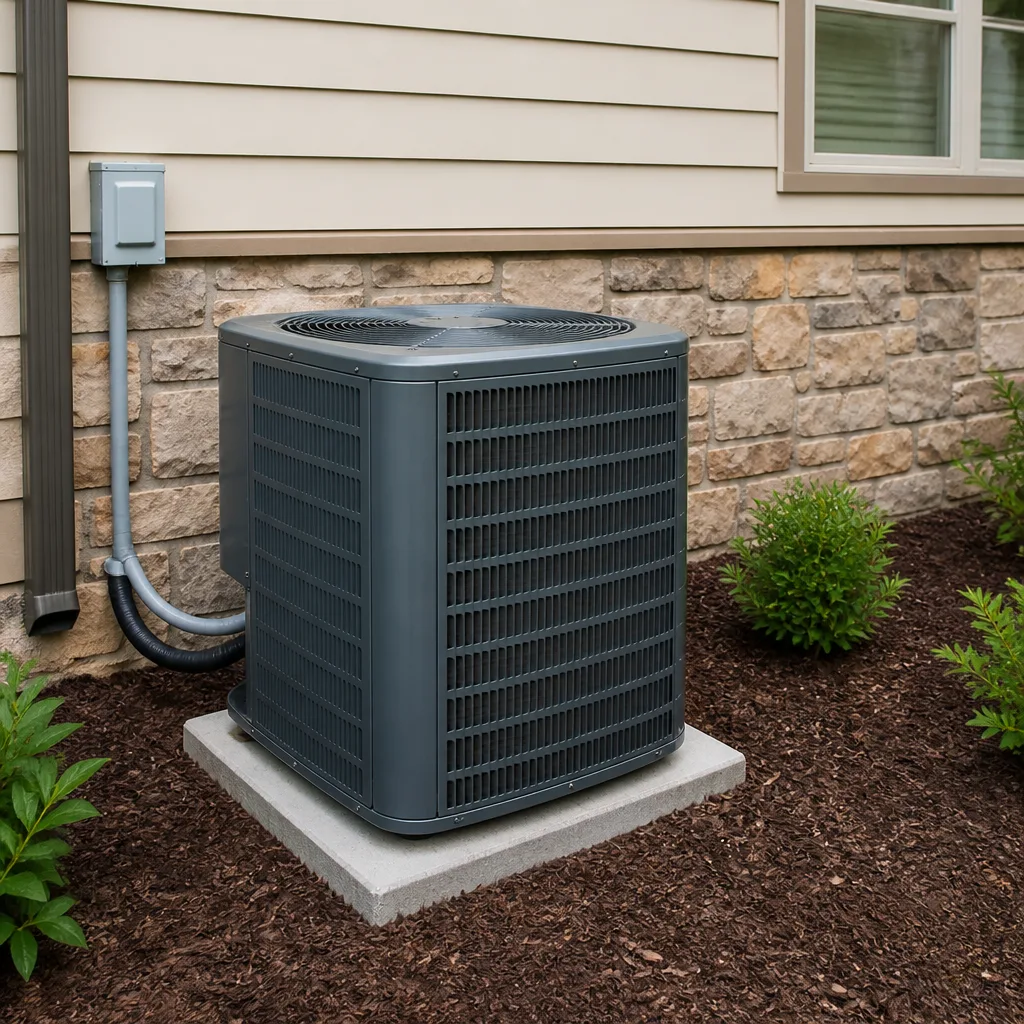 AC repair
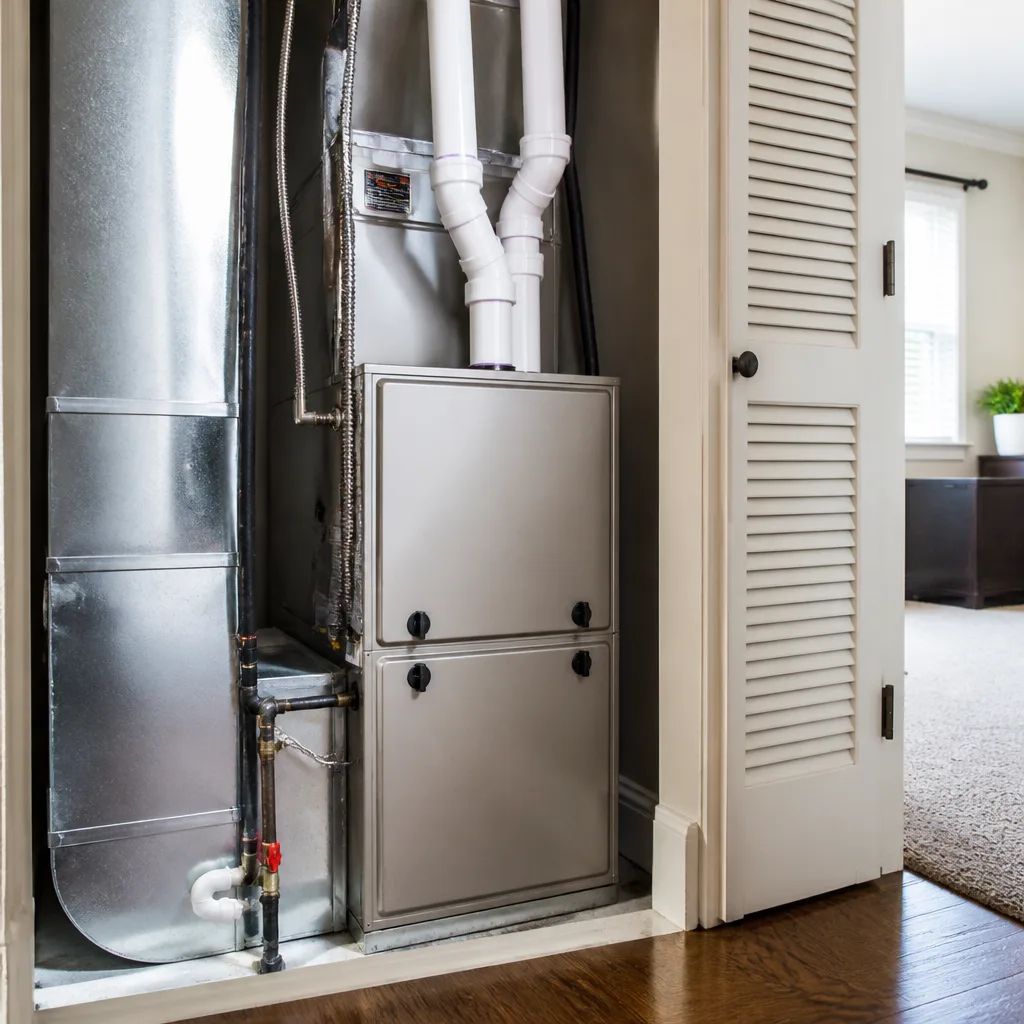 Furnace & heating
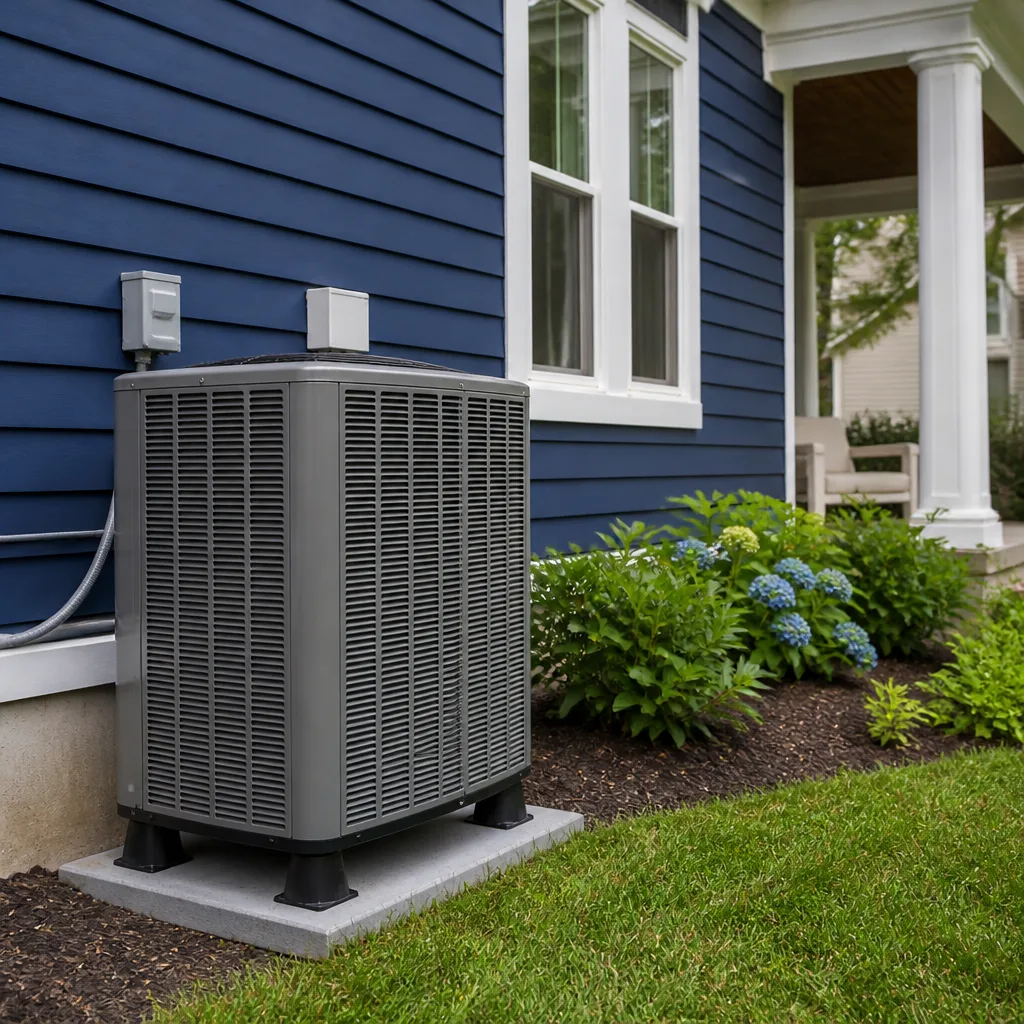 Heat pumps
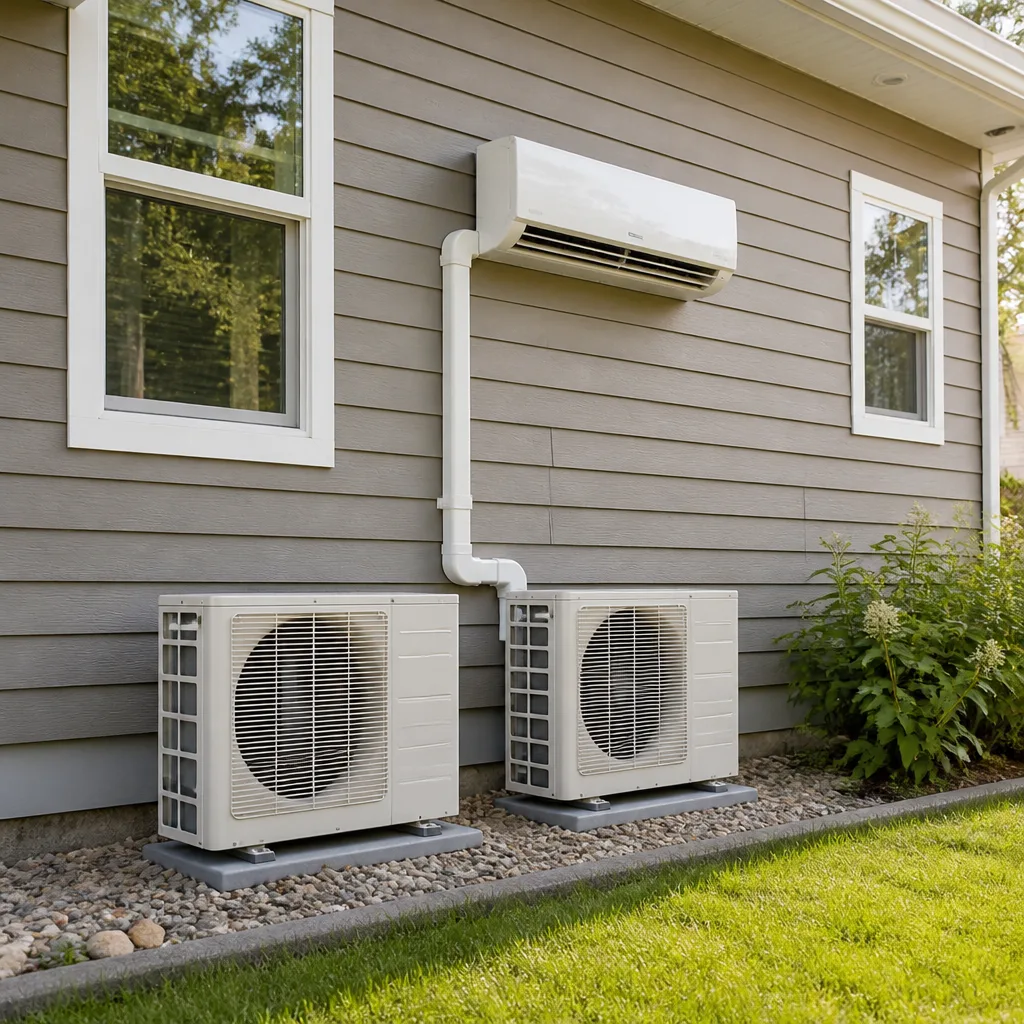 Ductless mini splits
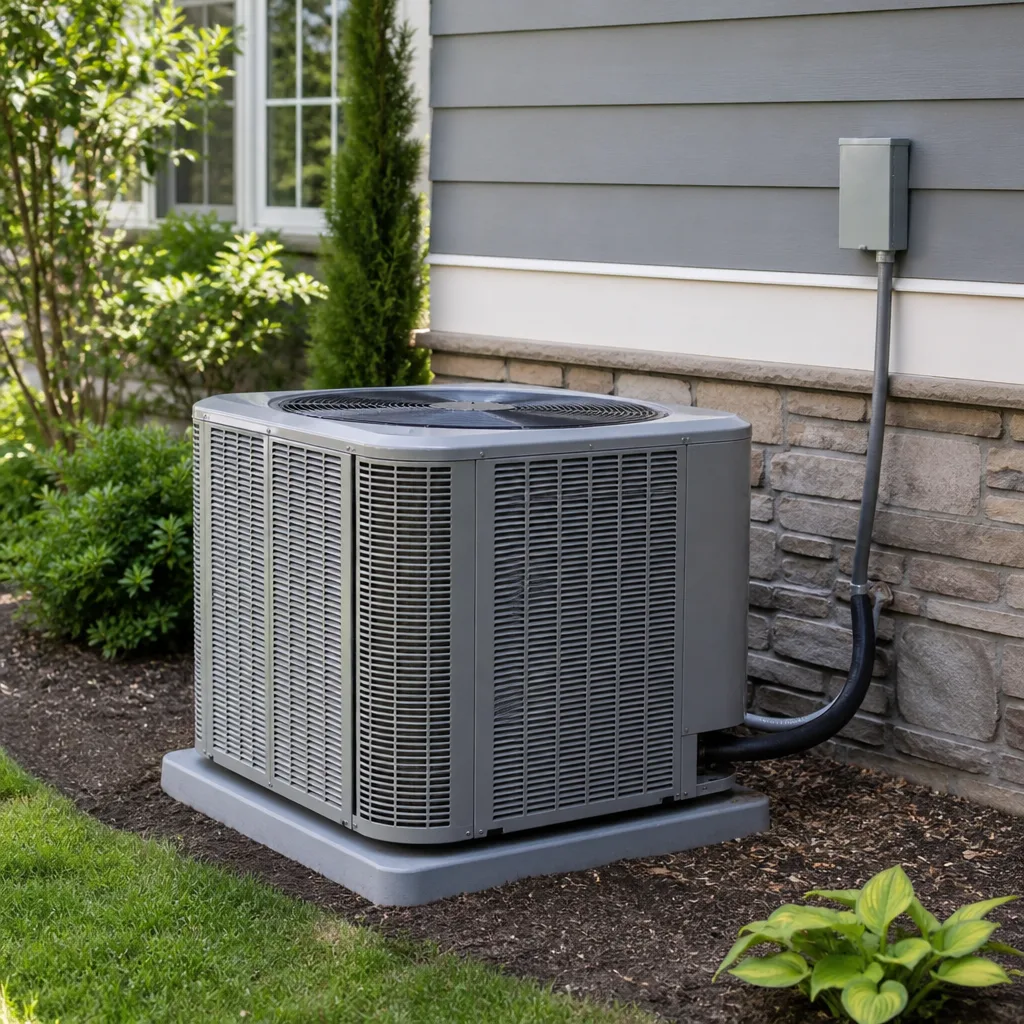 Carrier
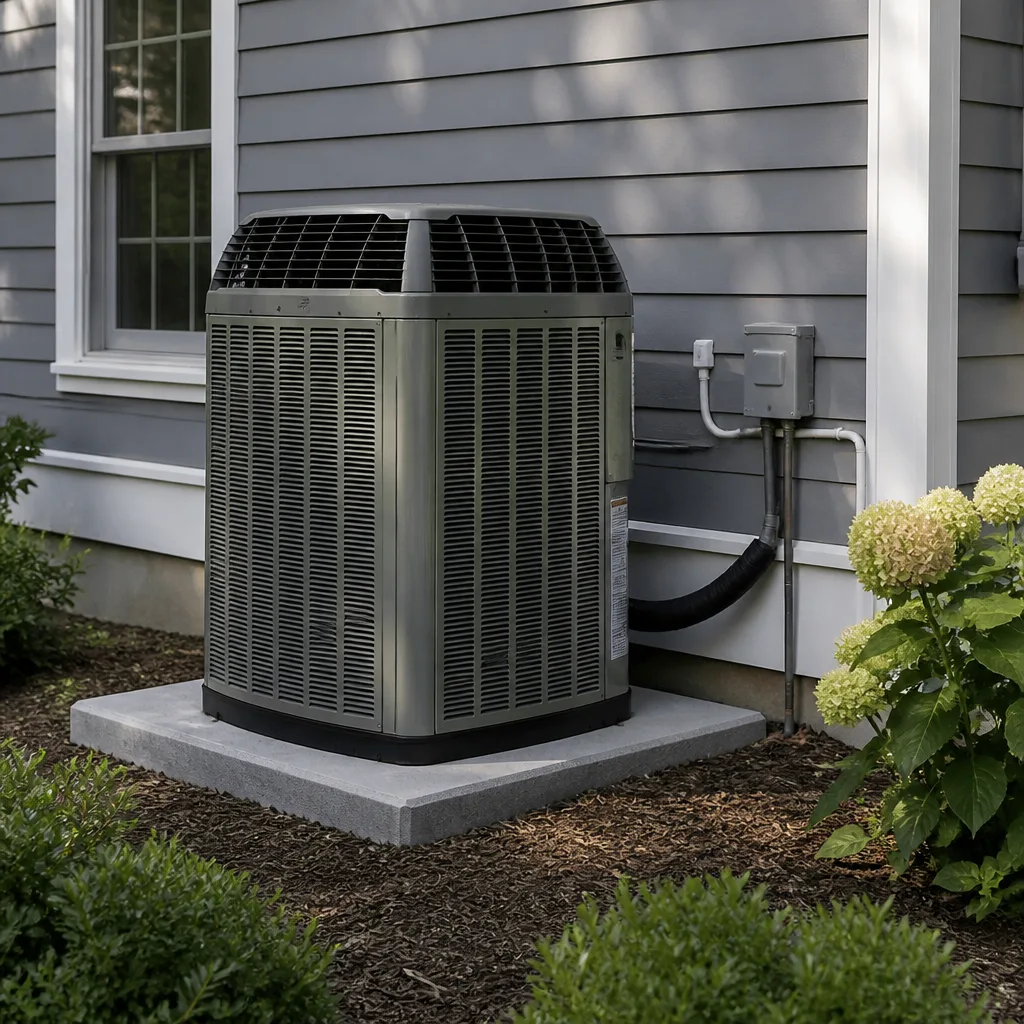 Trane
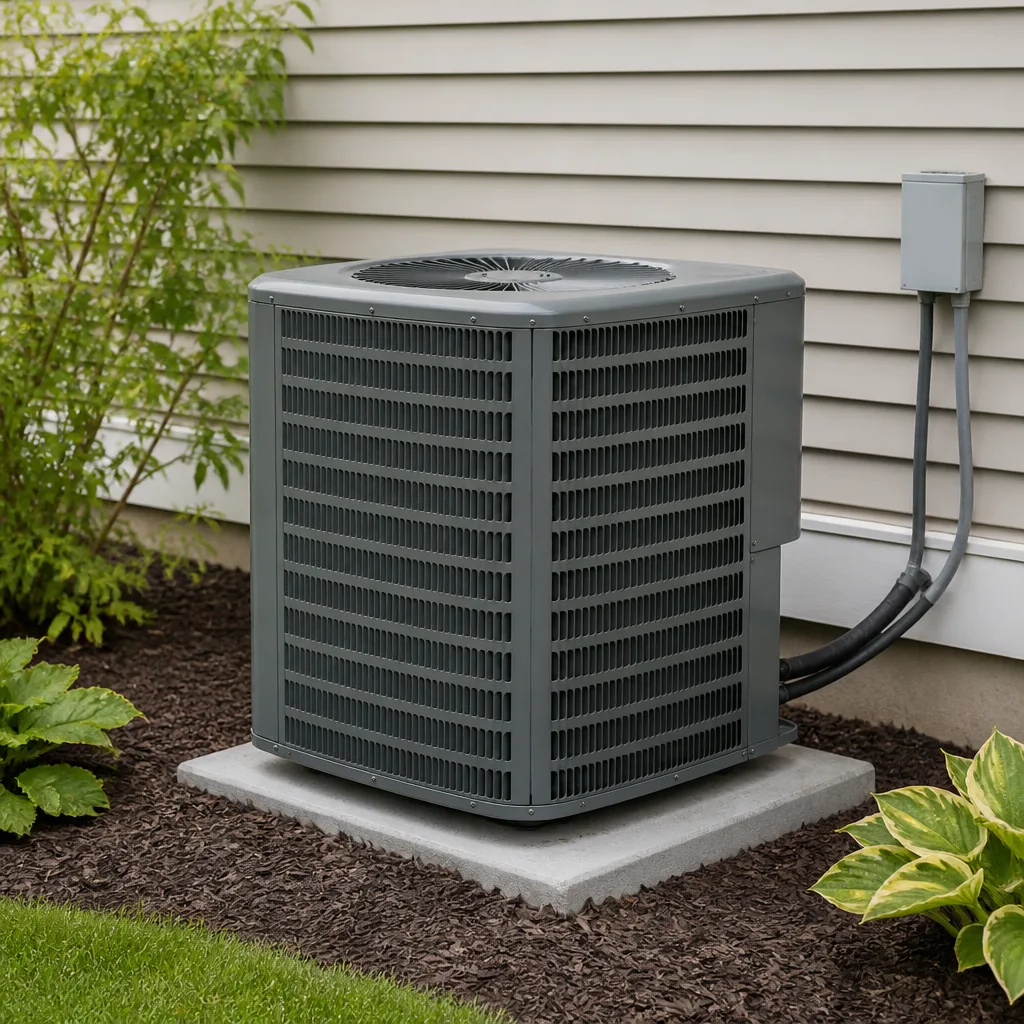 Goodman
Seasonal tune-up and full diagnostic on your Carrier, Trane, or Goodman system - readings shown to you before any repair is proposed
Diagnosis first, numbers second - you approve the repair price before a single part goes in.
Get your free estimateAC Repair Maintenance Checklist for Santa Clara Homeowners
Replacing a failed capacitor is one of the most common AC repairs we handle in Santa Clara. It’s also one of the most preventable, and the step that prevents it is not changing the filter. Capacitors live in the harsh part of the system: the outdoor unit, where summer temperatures climb and electronics bake. The maintenance task that protects them is an electrical and performance check most homeowners never perform and plenty of quick tune-ups skip. This guide gives you a checklist ordered by what actually causes failures here, not by what’s easiest to reach. You’ll find the measurements worth recording each year, when to schedule service around PG&E’s demand windows, and which tasks void your warranty if you attempt them yourself.
Quick Answer
A proper AC maintenance checklist in Santa Clara runs in this order: verify refrigerant charge and subcooling, measure the temperature split between supply and return air, check static pressure, test capacitor capacitance and outdoor amp draw, then clean the condenser coil. Filter changes and hose-downs are useful, but they sit near the bottom of the list because they rarely prevent a breakdown on their own. Do the measurements yearly, schedule a full tune-up in spring before peak demand season, and treat any change from last year’s readings as the signal to call.
Styles & brands we work with
- AC repair
- Furnace & heating
- Heat pumps
- Ductless mini splits
- Carrier
- Trane
- Goodman
Table of Contents
- Why the Order of Maintenance Tasks Matters
- The Ordered AC Maintenance Checklist
- Measurements to Record Every Year
- What a Contractor Should Actually Do During a Tune-Up
- Seasonal Timing in Santa Clara and PG&E Peak Demand
- DIY Tasks That Are Safe vs. Tasks That Void Your Warranty
- Notes on Carrier, Trane, Lennox, and American Standard Systems
- When to Call a Professional
Why the Order of Maintenance Tasks Matters
Most checklists are written from the easiest task outward. The filter is in the return grille, the condenser sits on a pad outside, and both can be handled in a few minutes. That’s why these two tasks dominate nearly every “AC maintenance” article you’ll read. But they sit downstream of the failures that actually strand Santa Clara homeowners in July.
Two forces drive most failures in this city. First, high-ambient heat starts. The outdoor unit here runs in temperatures that push capacitors, contactors, and compressor windings toward the edge of their ratings. A capacitor that reads slightly low in March will fail under a hot afternoon load in August, and the homeowner experiences it as a sudden breakdown. Second, dust. Santa Clara sits in a valley that collects airborne particulate, and that dust fouls the condenser coil and the indoor evaporator coil gradually. A fouled coil raises head pressure, which shortens compressor life and makes the system run longer than it should.
Both of these failure paths are measurable before they become repairs. Refrigerant charge, capacitor capacitance, and coil cleanliness produce numbers you can compare year over year. When you sequence a checklist around those numbers, you catch degradation while it’s still a maintenance item. When you sequence around the filter, you catch almost nothing until something clicks off and stays off.
The Ordered AC Maintenance Checklist
Work through these in sequence. The first four items require gauges, a multimeter with capacitance testing, and some training. The later items are homeowner-friendly. Ordering is intentional: you establish baseline performance before you clean anything, because cleaning changes the readings.
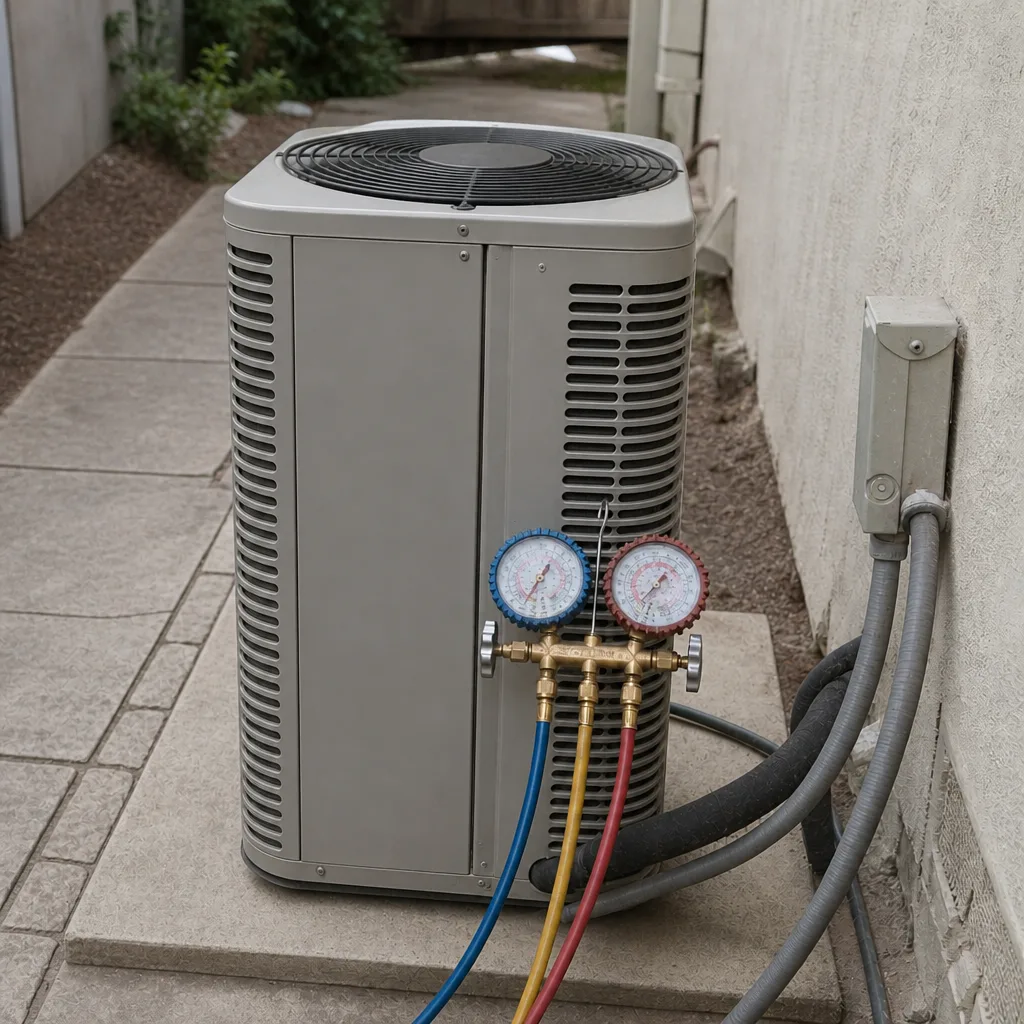
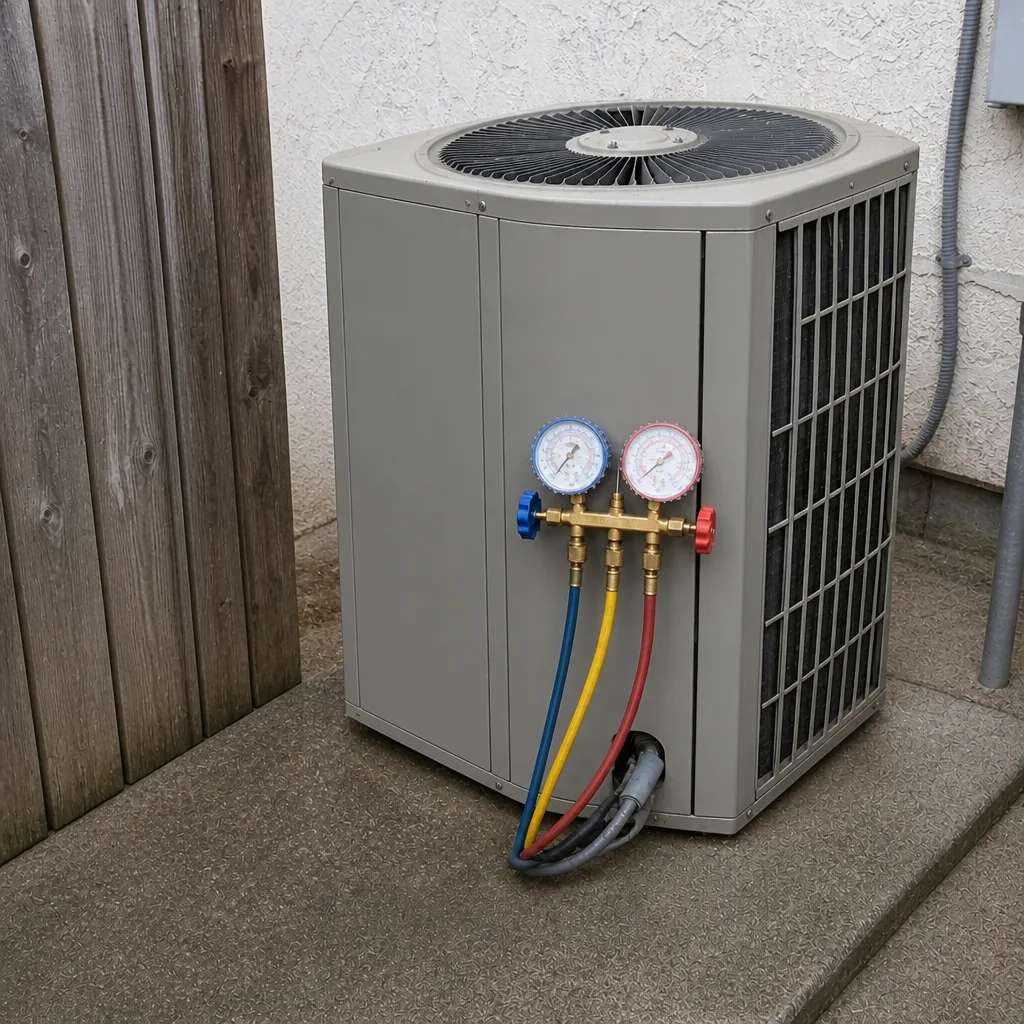
- Verify refrigerant charge and subcooling. Connect gauges to the service ports and read suction and liquid pressures, then convert to superheat and subcooling using the outdoor temperature. A system that’s slightly low on charge runs hotter and longer than it should. Catching a slow leak early is cheaper than catching a failed compressor later.
- Measure the temperature split. Take a thermometer reading at the return grille and again at the supply register closest to the air handler. A healthy split sits in the high teens to low twenties in degrees Fahrenheit. If yours drops, the system is losing cooling capacity.
- Check static pressure. A manometer reading across the air handler tells you whether the system is moving the airflow it was designed for. High static pressure starves the coil and stresses the blower motor. This is the single most-skipped measurement in a tune-up.
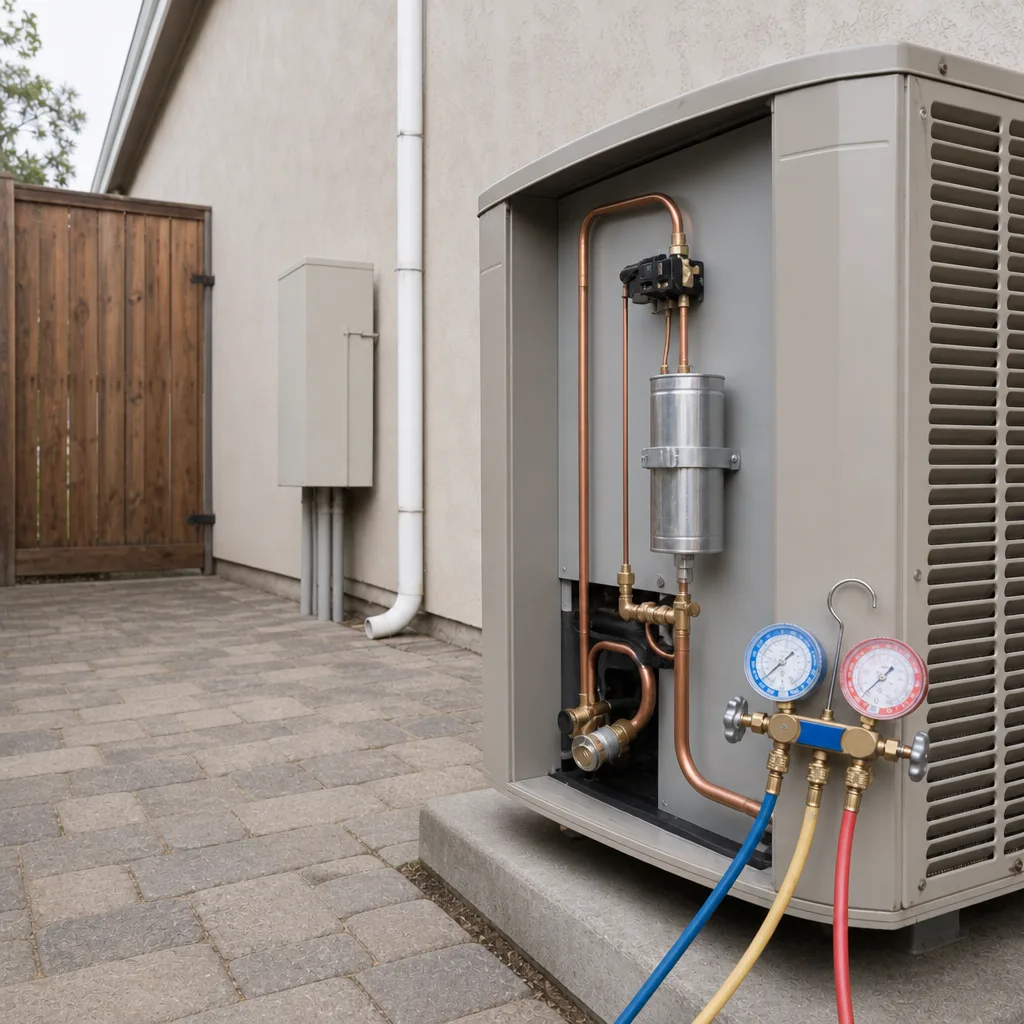
- Test capacitor capacitance and outdoor amp draw. A capacitor tester reads microfarads; compare against the rating printed on the capacitor label. Clamp the compressor and fan motor leads to record amp draw and compare against the data plate. These are your early-warning numbers for the failure described in the opening.
- Clean the condenser coil. Rinse from the inside out with a garden hose, not a pressure washer. Pressure washers bend fins and drive debris deeper. In a dusty valley, this coil warrants a rinse at least once before cooling season and often a mid-season touch-up.
- Inspect and clear the condensate drain. Pour a cup of water through the drain line to confirm it flows. A clogged drain triggers the float switch and shuts the system down, which looks like a major failure and is usually a five-minute fix.
- Inspect the indoor evaporator coil. Shine a light through the coil face. If you can’t see light through it, the coil is fouled and needs a proper cleaning, not just a filter swap.
- Replace the filter. Last on the list because it’s the least diagnostic. Use the size and MERV rating the manufacturer specifies; a filter that’s too restrictive raises static pressure.
- Check the thermostat calibration and schedule. Confirm the setpoint, the schedule, and that the batteries are fresh. A thermostat that’s reading two degrees off will run the system longer than it needs to.
If your system is showing signs of failure during any of these steps, our AC repair technicians can diagnose what the readings mean before they become a breakdown call.
Measurements to Record Every Year
A maintenance log turns guesswork into trend analysis. Write these numbers down every year in the same order and compare. A single reading tells you where you are today. Three readings over three years tell you where the system is heading.
- Supply/return temperature split. The single best indicator of cooling performance. Record it at the same register and same outdoor temperature each year so the comparison is honest.
- Subcooling and superheat. This is refrigerant charge in numbers. Trends matter more than single readings.
- Outdoor unit amp draw (compressor and fan). Rising draw means rising friction or a failing motor. Both are cheaper to address early.
- Capacitor microfarads. Compare against the label rating. A capacitor that has drifted 10% below its label is on borrowed time.
- Static pressure at the air handler. The blower-facing number that tells you if the system is working against too much resistance.
- Filter change dates and MERV rating. Note these even though they’re low on the priority list. They explain the other numbers.
Keep the log somewhere the whole household can find it. When we arrive for service, a customer with a written log helps us work faster because we can see which numbers changed and when. We focus only on heating and cooling, so those readings are exactly what our technicians know how to interpret.
What a Contractor Should Actually Do During a Tune-Up
A tune-up that only includes a filter swap and a hose-down is not a tune-up. It’s a visual inspection. Here’s what belongs in a proper service visit, and what to look for on the invoice to verify the work happened.
Our technicians have up to 11 years of experience, and in that time we’ve seen the same gaps in third-party tune-ups repeatedly: no static pressure reading, no capacitor capacitance test, no subcooling measurement. Those three tasks are the ones that predict failures. Here’s what a complete visit should cover.
- Refrigerant pressures and temperatures recorded in writing. Not just “checked” but recorded. You should see numbers on the invoice.
- Static pressure measured with a manometer. Ask whether it was measured. It should be on the report.
- Capacitor tested with a capacitance meter. A visual inspection doesn’t tell you the capacitor’s actual capacitance.
- Outdoor amp draw recorded on compressor and fan. Both numbers, not just one.
- Condenser and evaporator coils inspected and cleaned if fouled. “Inspected” on the invoice is not enough. Ask whether the evaporator was cleaned if it was dirty.
- Condensate drain cleared and float switch tested. Pour-through check, not a glance.
- Electrical connections tightened and contactor inspected for pitting. Most tune-ups skip the contactor. Pitting leads to stuck contacts and burned windings.
- Blower motor and wheel inspected for debris and balance. A dirty blower wheel pushes static pressure up and airflow down.
A written report is the standard we expect to hold, and it’s how customers hold us to the same standard. If a technician can’t list what was measured, ask them to walk you through the readings before they leave.
Seasonal Timing in Santa Clara and PG&E Peak Demand
Santa Clara’s cooling season runs longer and hotter than people expect, and the demand-driven reasoning behind scheduling is worth knowing. PG&E’s peak demand windows fall in the hottest summer afternoons, and that’s when the grid is under the most strain and when a struggling AC is most likely to fail. Scheduling maintenance before that window protects you against being one of the customers who call when the system quits on the worst day of the year.
Here’s how we think about timing on this side of the bay.
- Late winter to early spring (February through April). The best window for a full maintenance visit. Outdoor temperatures are cool enough that the system can be tested under a controlled load, and there’s room on the schedule to address small issues before they compound.
- Late spring (May through early June). Still a good window, but demand starts rising as homeowners turn the system on for the first time. If you’re going to schedule one visit this year, put it here rather than waiting.
- Peak summer (July through early September). PG&E’s demand is at its highest, outdoor temperatures push equipment near its limits, and repair crews across Santa Clara are at their most backed up. This is when a maintenance issue that was missed in spring becomes a same-day repair call.
- Fall (September through October). Good for a heating-side check before furnace season, and a useful second look at the cooling system after a hard summer. Our same-team service covers both sides of the system, so a single visit here can catch what summer stressed and what fall will test.
The practical rule: book cooling maintenance before the first sustained hot week, not during it. Santa Clara homes in neighborhoods like Old Orchard, Santa Clara University, and the Rivermark area see the same pattern each year. If you wait until the first hot stretch, you’re booking into the same backlog as everyone else.
DIY Tasks That Are Safe vs. Tasks That Void Your Warranty
Some maintenance is genuinely safe for a homeowner. Filter changes, condenser rinses, and visual inspections cost nothing and help. But there’s a category of work that’s both physically dangerous and warranty-voiding, and knowing which is which protects both your safety and your coverage.
Safe for a homeowner:
- Replacing the filter at the size and MERV rating the manufacturer specifies.
- Rinsing the condenser coil from the inside out with a garden hose, with power off at the disconnect.
- Pouring water through the condensate drain to check for clogs.
- Keeping vegetation and debris clear of the outdoor unit.
- Recording your thermostat setpoints and confirming schedules.
Not safe, and often warranty-voiding:
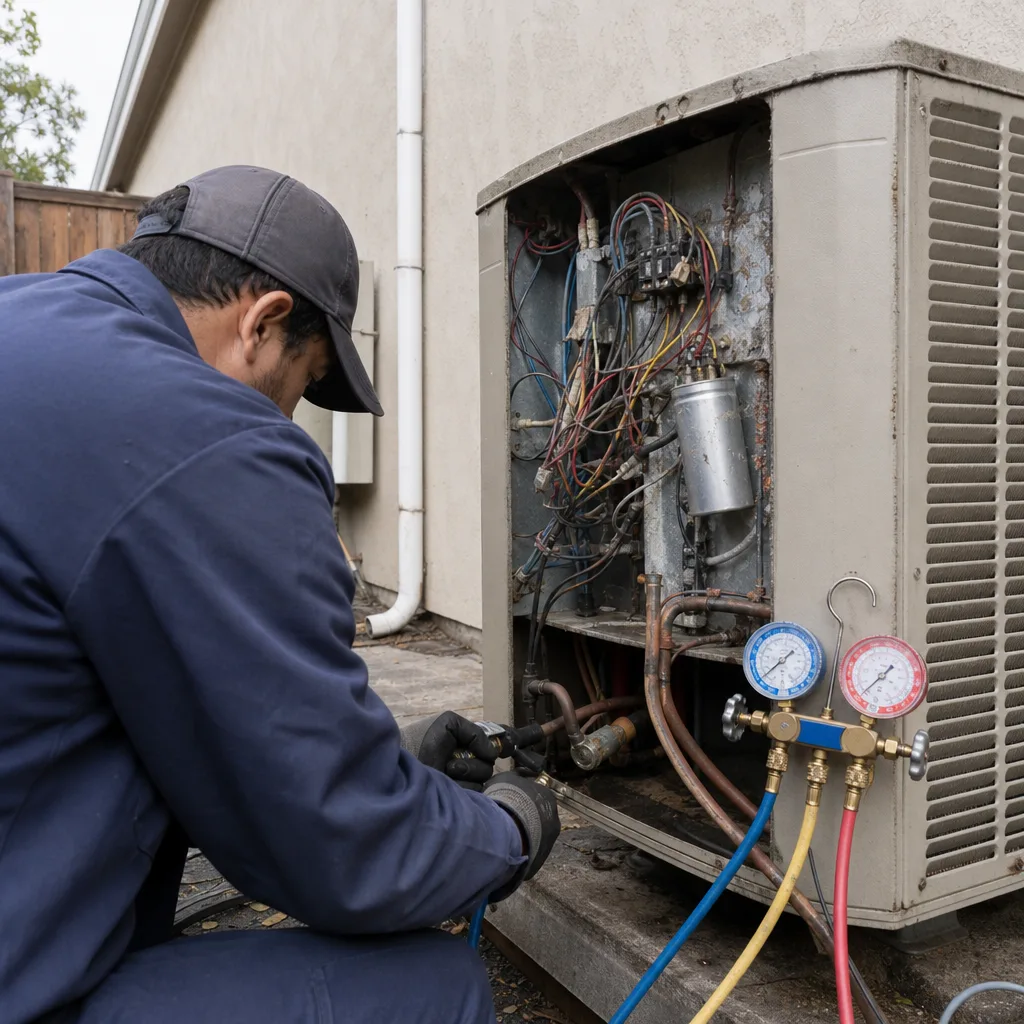
- Opening the electrical panel on the outdoor unit. A capacitor holds a stored charge even after power is off, and touching the terminals can deliver a serious shock.
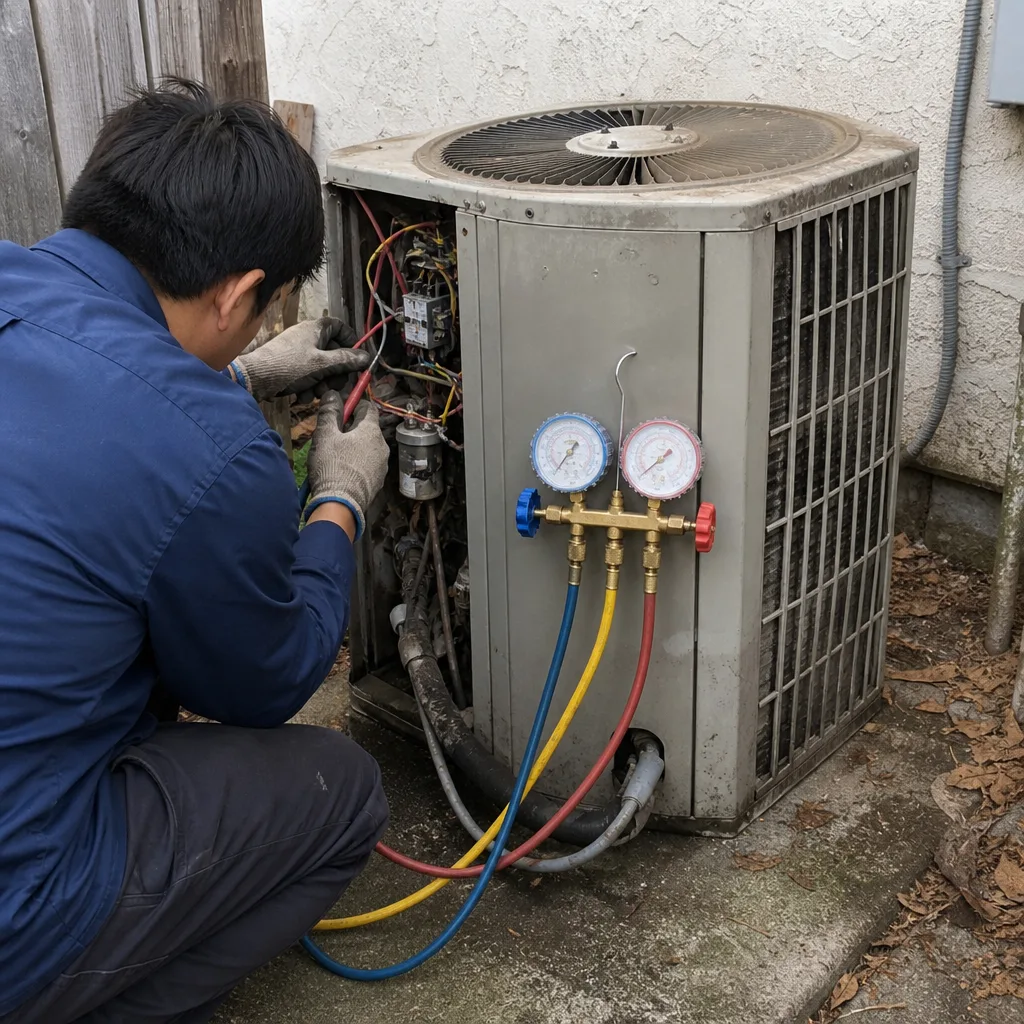
- Connecting manifolds to refrigerant service ports. Refrigerant is under pressure, and mishandling it can injure you and contaminate the system.
- Adding refrigerant yourself. The system needs a specific charge measured by weight and temperature, and improper charging damages the compressor.
- Removing or adjusting the blower assembly. Beyond the electrical hazard, misalignment stresses the motor and voids the manufacturer’s warranty on blower components.
- Any work on the compressor, contactor, or control board. These are the highest-risk, highest-cost components in the system, and manufacturer warranties typically exclude failures arising from unlicensed repair.
If you’re not sure whether a task is safe, it isn’t. Our AC installation team is also the team that services systems, so we know which components on your specific brand are covered by what warranty terms.
Notes on Carrier, Trane, Lennox, and American Standard Systems
Every major brand has its own failure patterns, and the maintenance checklist above assumes a technician who knows what to look for on your specific equipment. Our technicians are trained on nine major residential brands, including Carrier, Trane, Lennox, and American Standard, and the differences are worth knowing even if you never touch the system yourself.
Carrier systems, particularly the multi-stage and variable-speed units, are sensitive to static pressure. If a Carrier system is running against too much resistance, the ECM blower motor works harder and can fail earlier than a comparable single-stage system. That’s why the static pressure reading on the checklist is not optional for these systems.
Trane and American Standard units share a great deal of engineering. Their compressors are robust, but their capacitors and contactors are the same consumable components that fail on any brand under high-ambient heat. The capacitance test and contactor inspection matter here as much as anywhere.
Lennox systems often use a communicating control design that behaves differently when a capacitor or thermostat starts to drift. A homeowner who notices unusual behavior from a Lennox system should treat it as a maintenance signal rather than waiting for a full failure.
If you’re not sure what brand or model you have, the data plate on the outdoor unit and on the air handler will tell you. When you call for service, mention the brand: our dispatch notes it so the technician arrives familiar with the equipment. For neighbors across the Santa Clara service area, this kind of match matters more than a low advertised price.
Common Mistakes to Avoid
- Replacing the filter and calling it maintenance. A fresh filter is good, but it doesn’t test the capacitor, refrigerant charge, or static pressure. Treat it as one item on a longer checklist, not the whole checklist.
- Waiting until it fails to book a visit. Santa Clara’s cooling season is long enough that a system limping through July will see real breakdown risk by August. Spring tune-ups catch the problems that mid-summer repairs cost more to fix.
- Ignoring a small change in the temperature split. A split that drops a few degrees from last year’s reading is an early warning. Waiting for a total failure skips the cheap window for repair.
- Pressure-washing the condenser coil. Pressure washers bend fins and drive debris deeper into the coil. A garden hose rinses effectively without damage.
- Skipping the condensate drain check. The drain clogs slowly, and the first sign is usually the system shutting down on a float switch. It looks like a major failure and is usually a fast fix.
- Trusting a tune-up that only lists “checked” without numbers. Ask for the readings. A maintenance visit without recorded measurements can’t reveal degradation year over year.
- Attempting electrical or refrigerant work yourself. Beyond the injury risk, unlicensed work can void the manufacturer’s warranty on the components that fail most often.
See the difference
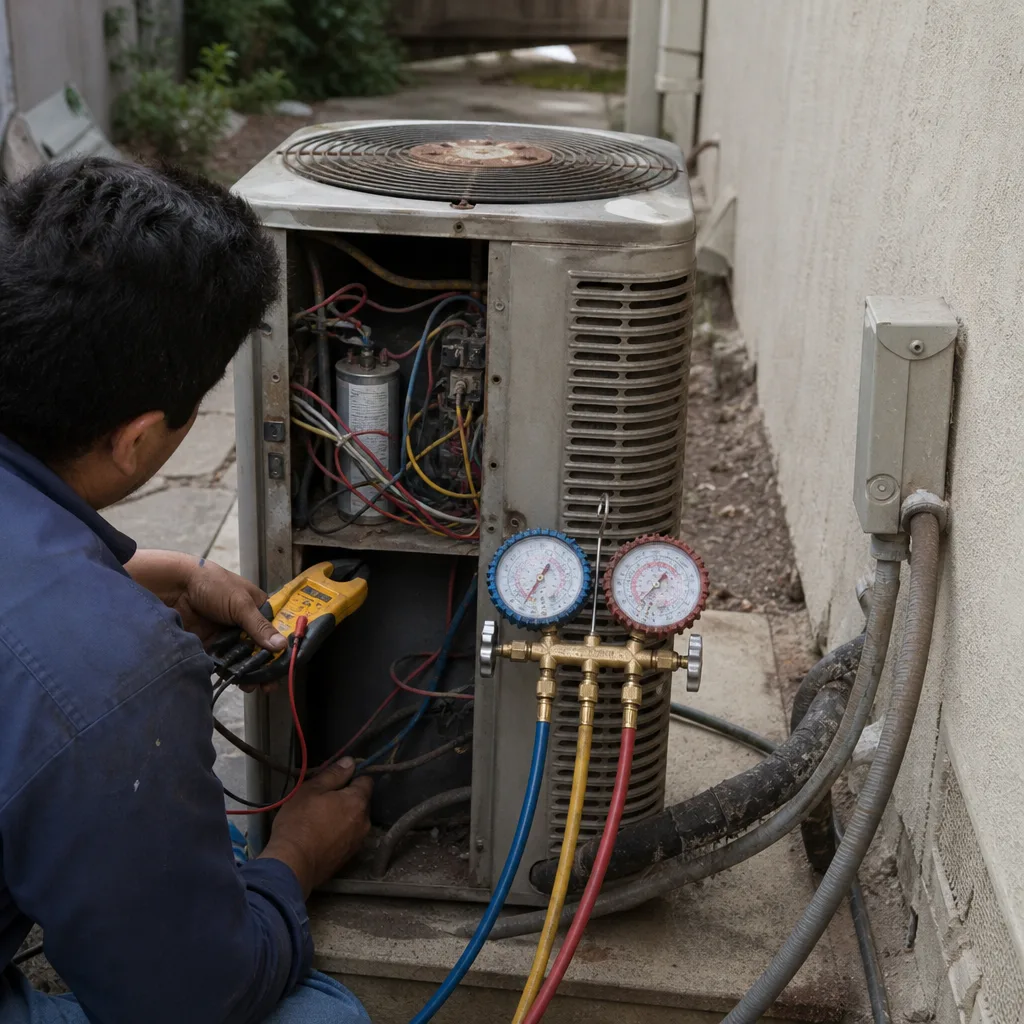 Before
 After
 Before
 After
 Before
 After
When to Call a Professional
Call a professional the moment your system does any of these: blows warm air with the thermostat set to cool, trips the breaker, runs continuously without reaching the setpoint, makes a grinding or buzzing noise from the outdoor unit, leaks water around the indoor unit, or shows a temperature split that has dropped meaningfully from last year. Also call before you attempt any electrical or refrigerant work, because the components involved can hurt you and the work can void your warranty. If your maintenance log shows a capacitor that has drifted or amp draw that has climbed, that’s the call to make before cooling season, not after the system fails.
AC Repair Santa Clara offers free estimates in Santa Clara. Call (833) 439-0749. We answer 24/7. Fast dispatch from 7am to 7pm, Sunday through Friday. We work on Carrier, Trane, Lennox, and other major brands, and our technicians recommend the right fix for your existing equipment rather than defaulting to replacement.
Frequently Asked Questions
Once a year before cooling season. Santa Clara’s long, hot summers and valley dust mean the system runs hard and accumulates fouling quickly. A single annual visit in spring or early summer catches degradation while it’s still a maintenance item. If your system is older or has a history of capacitor or refrigerant issues, a second look in fall is worth it.
A proper tune-up includes refrigerant pressures and temperatures recorded in writing, static pressure measured with a manometer, capacitor capacitance tested with a meter, outdoor amp draw recorded on compressor and fan, condenser and evaporator coils inspected and cleaned if fouled, condensate drain cleared, and electrical connections checked. A visit that only lists “checked” without numbers is a visual inspection, not a tune-up.
You can safely replace the filter, rinse the condenser coil with a garden hose, clear the condensate drain, and keep the outdoor unit clear of debris. You should not open the electrical panel, connect refrigerant gauges, or adjust the blower assembly. Those tasks risk serious injury and often void the manufacturer’s warranty. When in doubt, call (833) 439-0749. We answer 24/7, with fast dispatch from 7am to 7pm, Sunday through Friday.
Record the supply-to-return temperature split each year and compare. A healthy system sees a split in the high teens to low twenties in degrees Fahrenheit. A drop from last year’s reading is an early sign of charge loss, coil fouling, or airflow restriction. Also track capacitor microfarads and outdoor amp draw: drifting capacitance and rising draw are early failure signals that show up weeks or months before a breakdown.
Yes, in subtle ways. Carrier variable-speed systems are especially sensitive to static pressure. Lennox communicating systems can behave unusually when a capacitor or thermostat drifts. Trane and American Standard units share much of their engineering and have similar failure points in capacitors and contactors. Brand familiarity helps a technician know where to look first. Our technicians are trained on Carrier, Trane, Lennox, American Standard, and five other common residential brands.
Schedule in late winter or early spring, before PG&E’s peak demand window and before the first sustained hot week pushes repair backlogs up. February through April is the best window because the system can be tested under controlled conditions and any issues can be resolved before the cooling season starts. Waiting until July means booking into the same queue as everyone whose system failed on the hottest day.
The Bottom Line
A maintenance checklist earns its keep by preventing the failures that actually happen. In Santa Clara, those are capacitor failures driven by high-ambient heat and coil fouling driven by valley dust. Both show up as numbers before they show up as breakdowns. Sequence your checklist to measure refrigerant charge, temperature split, static pressure, capacitor capacitance, and amp draw first, and treat the filter change and condenser rinse as the finishing steps. Record the numbers each year and compare. Schedule the annual visit before peak cooling season. Do the safe homeowner tasks, and leave electrical and refrigerant work to a technician trained on your brand. That approach catches degradation early and keeps the system in the range it was built to run in.
When you’re ready to book a maintenance visit or you’re seeing a reading that worries you, call (833) 439-0749 for a free estimate. We answer 24/7. Fast dispatch from 7am to 7pm, Sunday through Friday. We service Carrier, Trane, Lennox, American Standard, Goodman, Rheem, York, Daikin, and Bryant systems, and we focus only on heating and cooling.
Written by the team at AC Repair Santa Clara.