
Last updated November 14, 2026
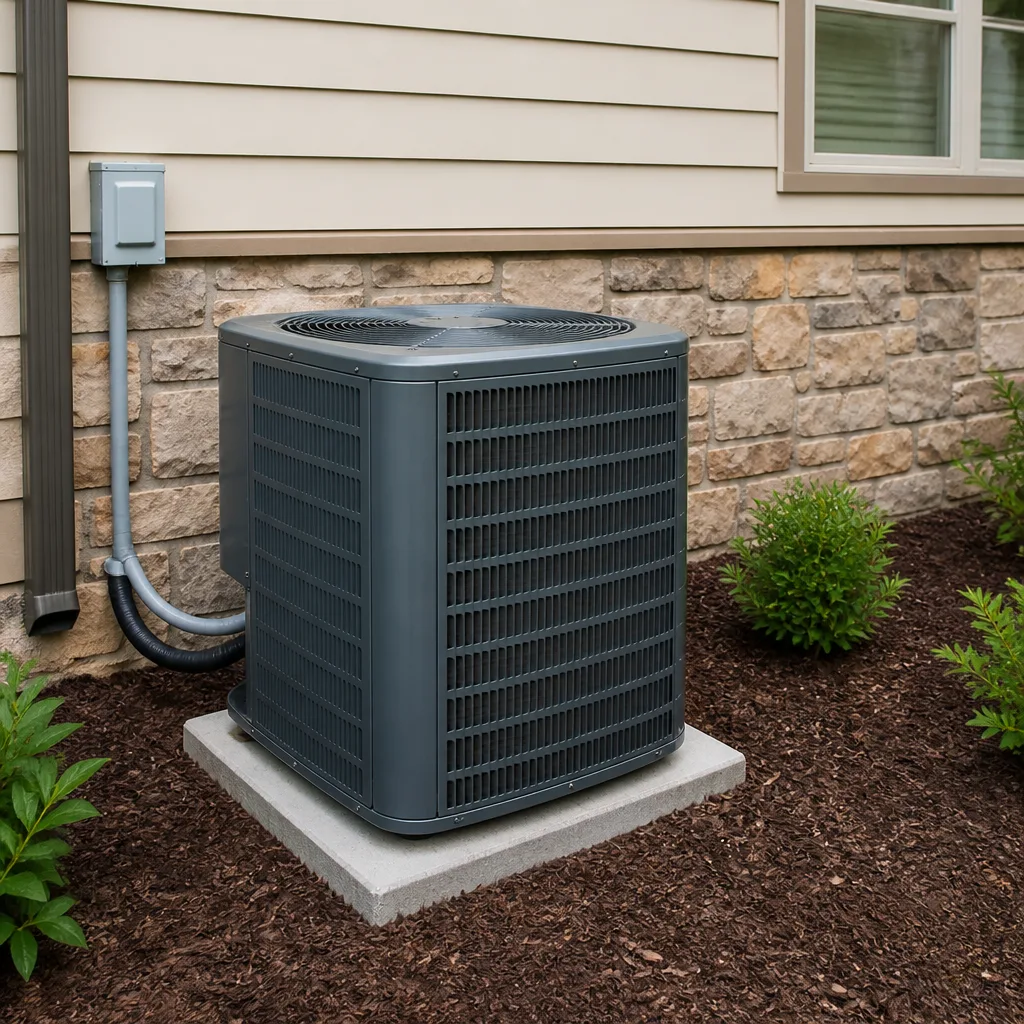 AC repair
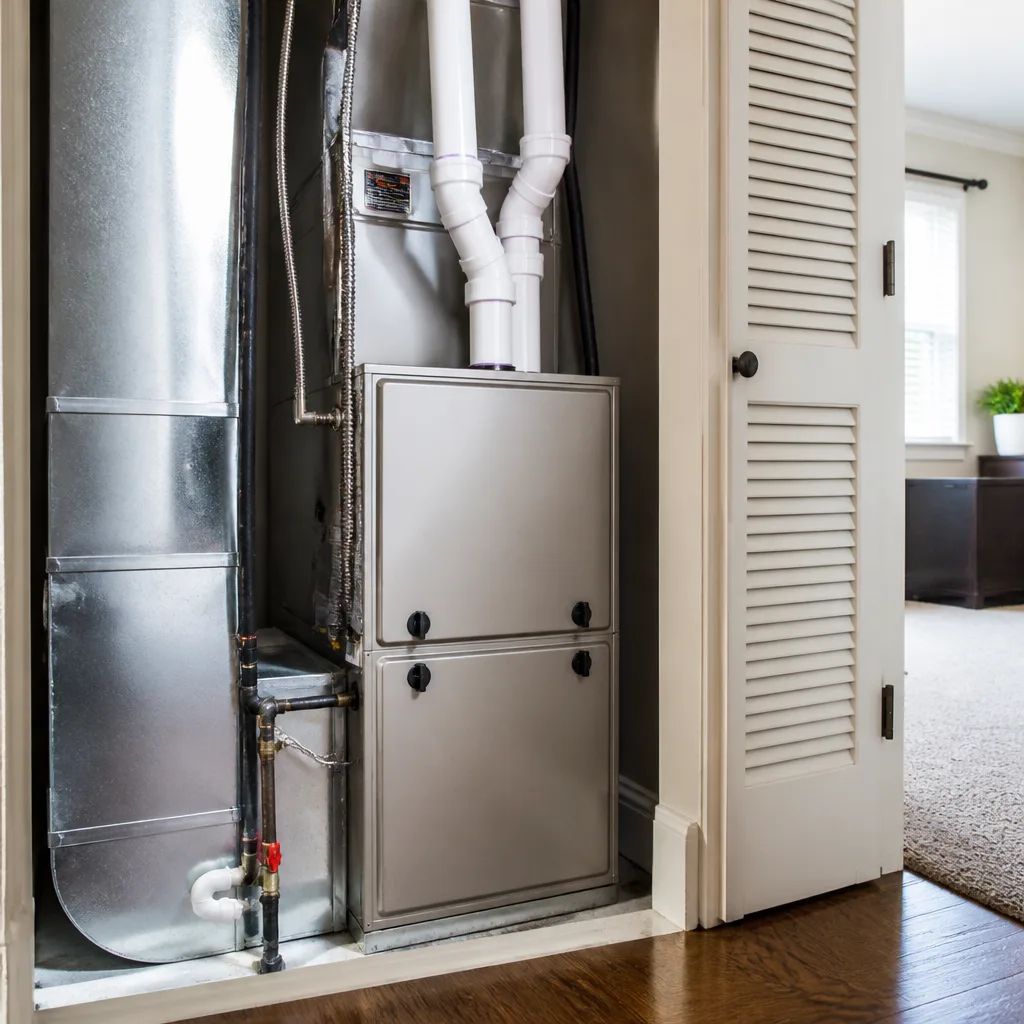 Furnace & heating
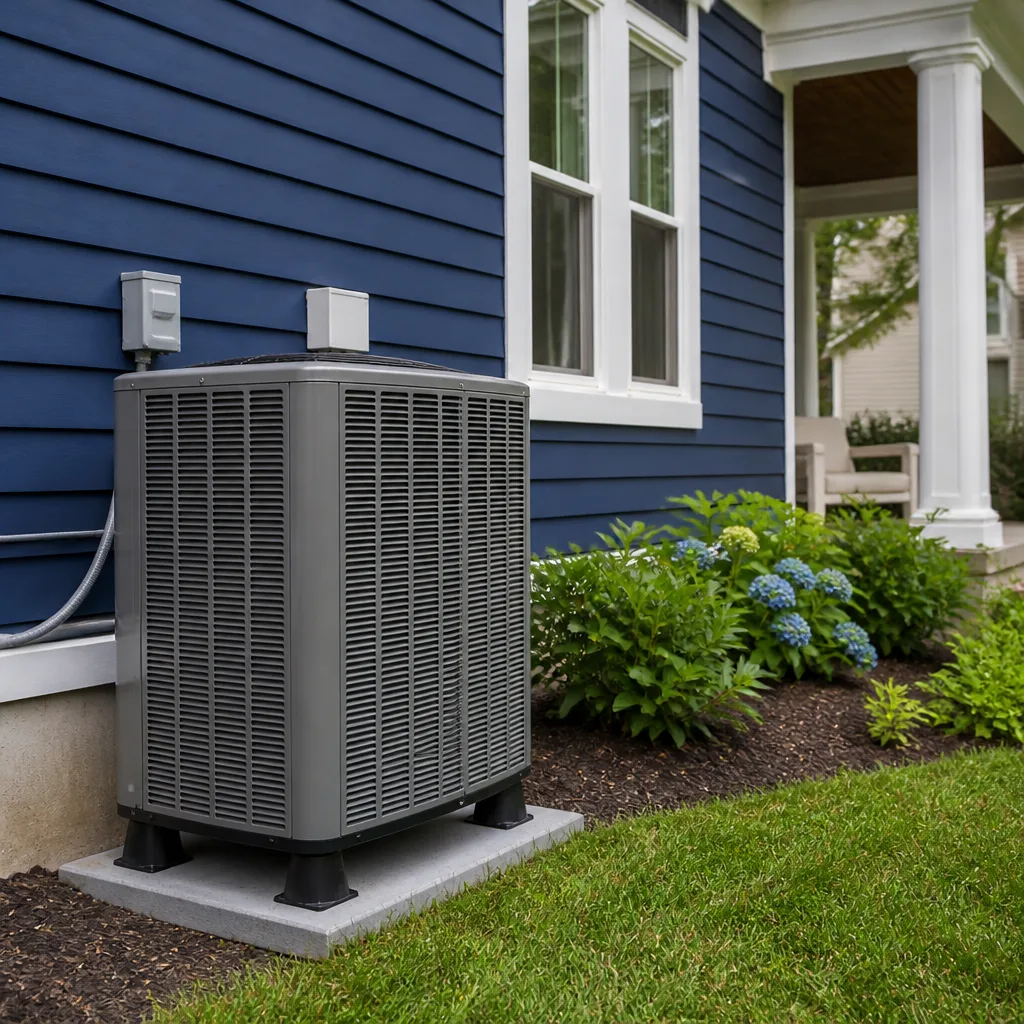 Heat pumps
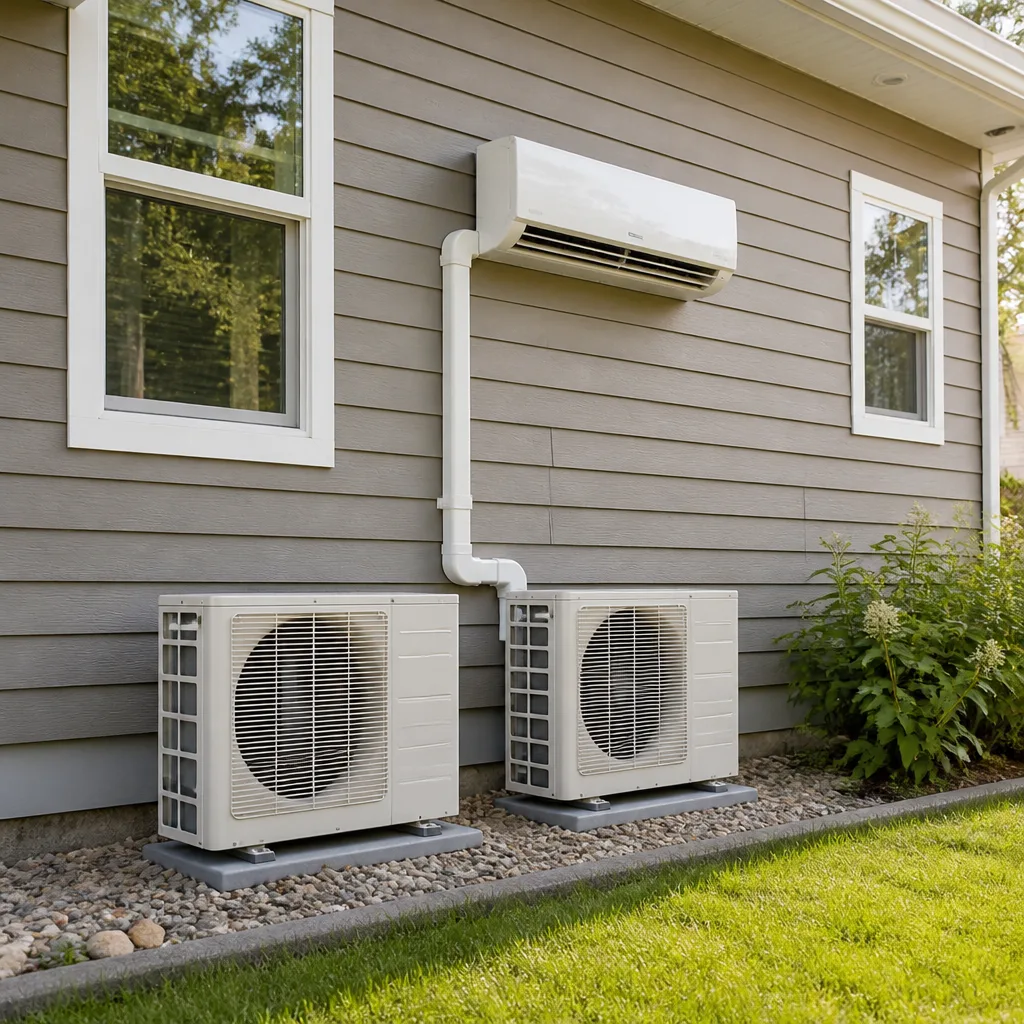 Ductless mini splits
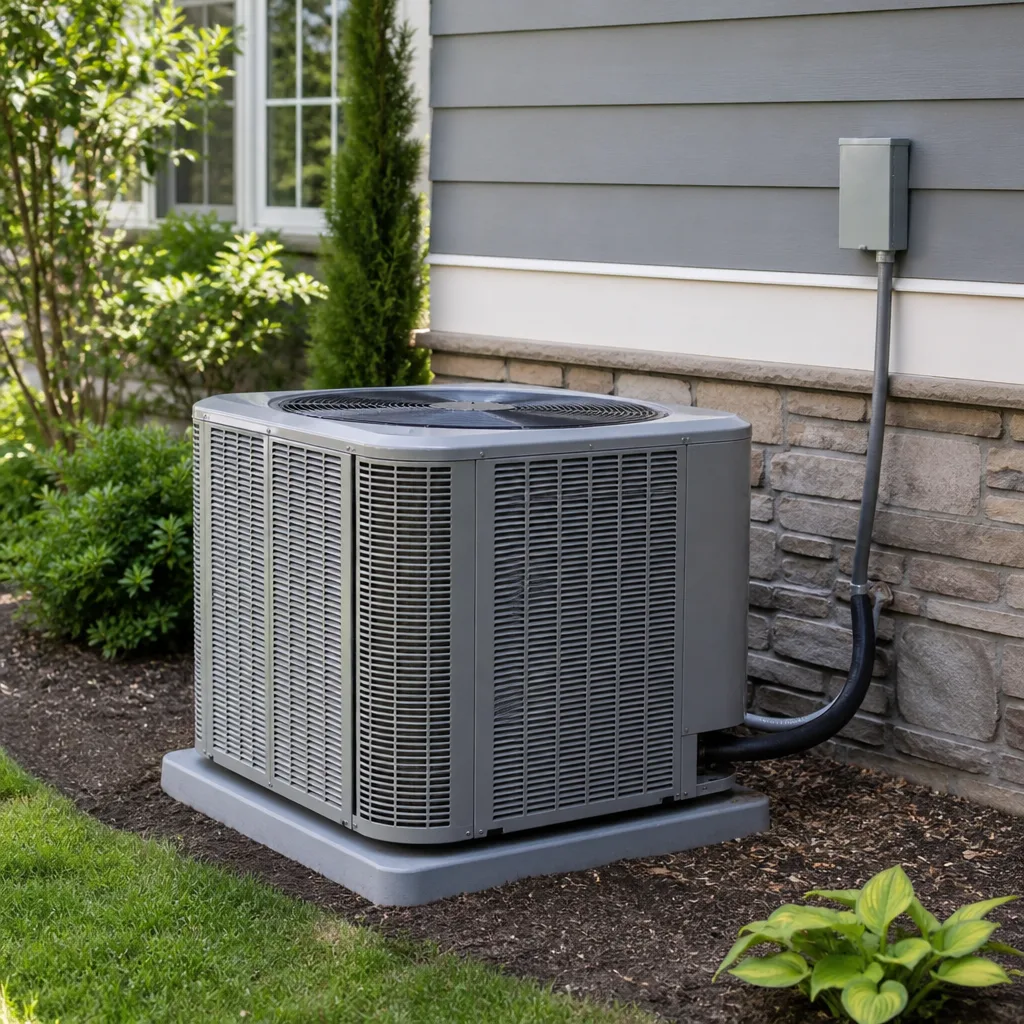 Carrier
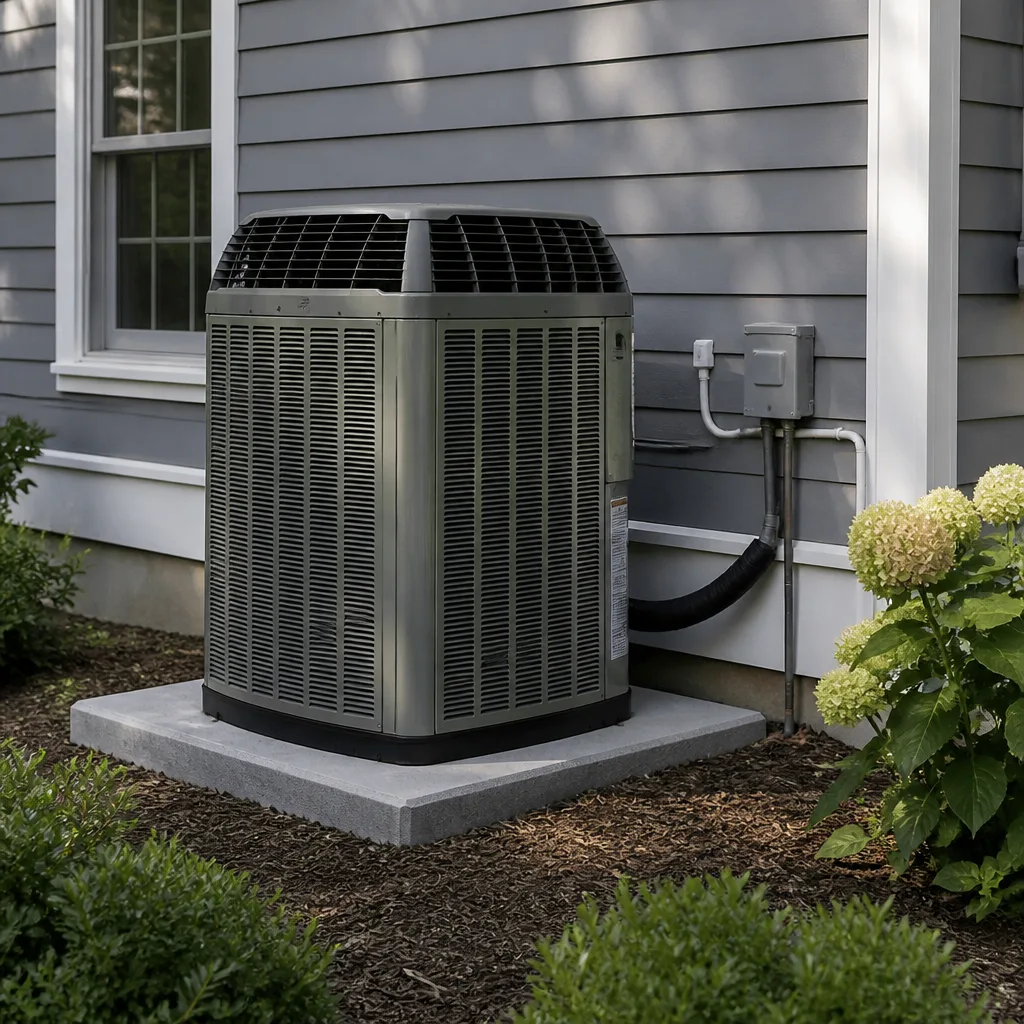 Trane
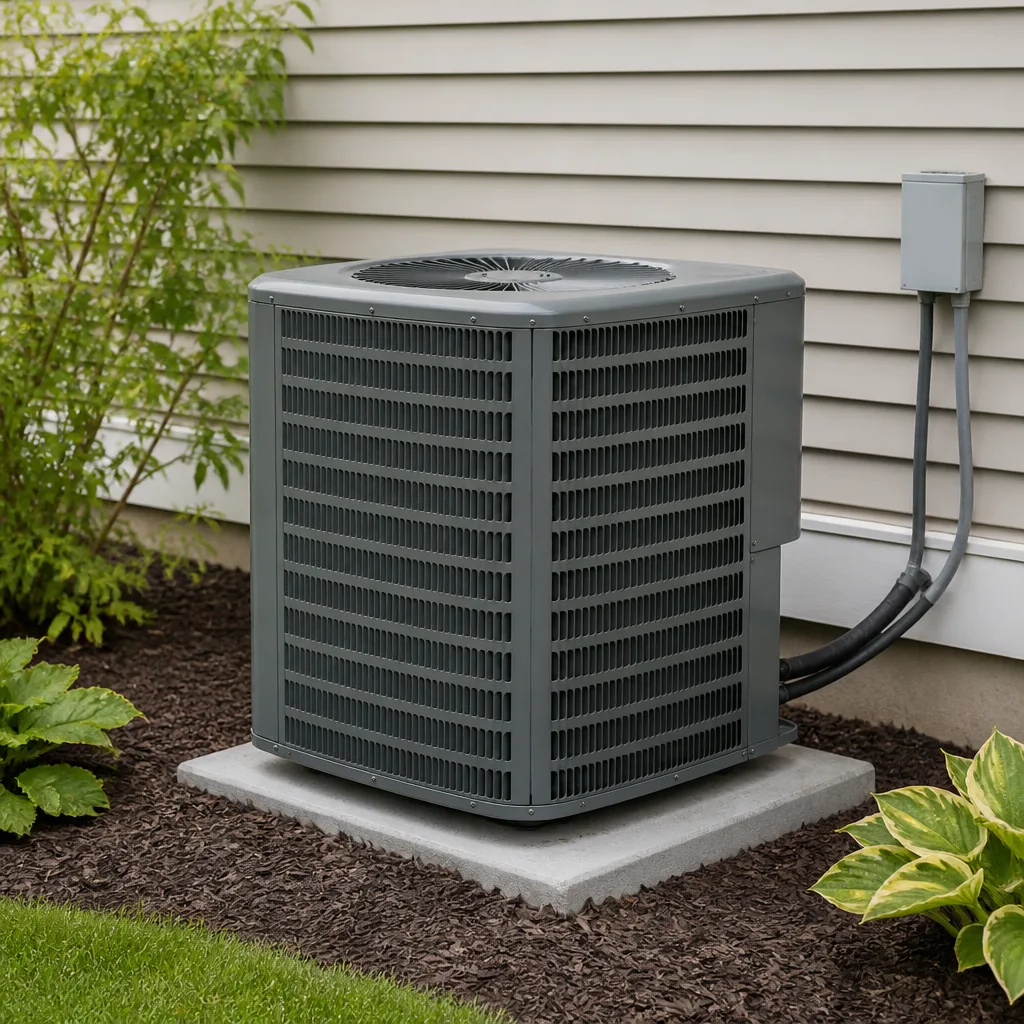 Goodman
Seasonal tune-up and full diagnostic on your Carrier, Trane, or Goodman system - readings shown to you before any repair is proposed
Diagnosis first, numbers second - you approve the repair price before a single part goes in.
Get your free estimateSeasonal HVAC Care for Santa Clara: Year-Round Homeowner’s Guide
The window to service your air conditioning before Santa Clara’s first heat spike is narrower than most homeowners realize. By the time temperatures hit the low 90s in late May, every HVAC company in the South Bay has a two-week backlog, and the homeowners who booked in March are the ones who get their systems checked before the rush. Here’s the part that surprises people: the standard “tune up in spring, tune up in fall” advice was written for climates with four equal seasons. Santa Clara doesn’t have those. It has a long mild stretch, a short and intense cooling season, and a heating season that lasts two or three months at most. This guide rebuilds the maintenance calendar around Santa Clara’s actual weather pattern, so you’re servicing equipment when it needs it rather than when a generic checklist says to.
Quick Answer
In Santa Clara, the highest-value HVAC service window runs from March through April, before cooling demand spikes, and again in late September through October, before the first heating calls. Annual maintenance should center on the AC system because it runs far more hours per year here than the furnace, and the furnace check matters most for catching problems caused by long periods of disuse rather than heavy wear. Homeowners who schedule in those two windows avoid the seasonal backlog and typically get more thorough attention on their equipment.
Styles & brands we work with
- AC repair
- Furnace & heating
- Heat pumps
- Ductless mini splits
- Carrier
- Trane
- Goodman
Table of Contents
- Why the Standard Seasonal Calendar Doesn’t Fit Santa Clara
- Month-by-Month HVAC Calendar for Santa Clara
- Spare the Air Days, Flex Alerts, and What to Set Your Thermostat To
- Fall Heating Checks: What Degrades From Disuse in Santa Clara
- Marine Layer, Humidity, and Coil Behavior Near the Bay vs. Inland
- Wildfire Smoke Season and Cooling Season Overlap: What Filters Actually Help
- Brand-Specific Care for Carrier, Trane, Lennox, and American Standard Systems
- How to Build Your Own Santa Clara Service Schedule
Why the Standard Seasonal Calendar Doesn’t Fit Santa Clara
Most HVAC maintenance advice assumes a climate where heating and cooling split the year roughly evenly. Santa Clara doesn’t work that way. A typical year here gives you a cooling season that stretches from May into October, with the hardest weeks concentrated between late May and September. Heating demand, by contrast, shows up in short bursts between December and February, and many homes run the furnace for only 60 to 90 days total. That asymmetry changes everything about how you should think about maintenance.
An air conditioner in Santa Clara might rack up well over a thousand hours of runtime in a single cooling season. The same home’s furnace might run a fraction of that. So when a homeowner asks whether the AC or the furnace needs more attention, the honest answer in this climate is the AC, by a wide margin. That doesn’t mean the furnace gets ignored. It means the furnace check is about catching problems that develop during long idle periods, while the AC check is about keeping a heavily used machine running efficiently through a demanding stretch.
There’s a second factor specific to Santa Clara: the seasonal backlog. When the first hot week hits, demand for AC Repair Santa Clara jumps sharply and appointment slots fill fast. Homeowners who booked their maintenance in March and April are already covered. The ones who waited until their system started short-cycling in June are competing with everyone else whose system picked the same week to fail.
The calendar that follows is built around Santa Clara weather, not a national template. If you follow nothing else from this guide, follow the timing.
Month-by-Month HVAC Calendar for Santa Clara
This is the calendar we’d hand a Santa Clara homeowner if they asked us to lay out the year. It assumes a typical home with a central AC system and a gas furnace, which covers most of what we see in this city.
- January – February: Peak heating demand, though still mild compared to most of the country. Watch for furnace short-cycling, unusual noises at startup, and weak airflow from vents. If your system hasn’t had a filter change since fall, change it now.
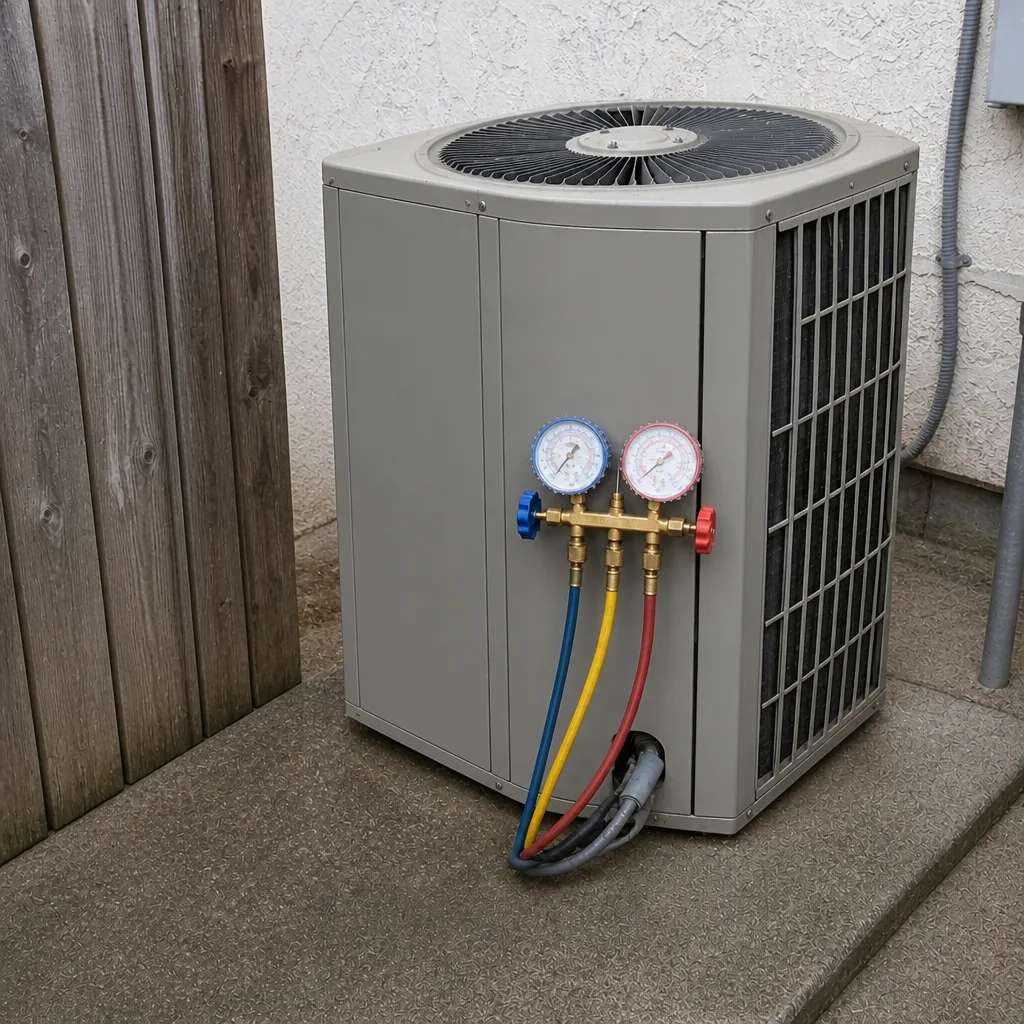
- March – April: The most important window of the year. Book your AC maintenance here. Technicians check refrigerant charge, clean the condenser coil, test capacitors and contactors, and catch worn parts before the cooling season. This is also the time to clean debris from the outdoor unit after winter.
- May: Last call before the heat. If you haven’t serviced the AC yet, do it in the first two weeks. After mid-May, appointment availability tightens quickly.
- June – September: Peak cooling season. Filter changes every 30 to 60 days. Watch for rising energy bills, which often signal a system working harder than it should. Keep the outdoor unit clear of leaves and landscaping.
- October: The second important service window. Book a furnace check before heating demand arrives. This is when we catch cracked heat exchangers, dirty burners, and ignition problems that developed over the summer.
- November – December: Heating season. If you skipped the October check, do it now. Watch for odd smells at startup, which can indicate dust burning off or a more serious combustion issue.
If you’re scheduling AC repair during peak season, expect longer waits. The March through April window exists precisely so you don’t have to find out how long those waits get.
Spare the Air Days, Flex Alerts, and What to Set Your Thermostat To
Santa Clara Valley has air quality challenges that affect how you should run your HVAC system on certain days. Spare the Air days, called by the regional air district when pollution is expected to reach unhealthy levels, and PG&E Flex Alerts, issued when the grid is strained, both change the smart play for your thermostat.
On a Spare the Air day, the recommendation is straightforward: reduce unnecessary driving, avoid outdoor exercise in the afternoon, and keep windows closed. For your HVAC system, that means running the fan on low or auto with a decent filter rather than pulling in outside air. If you have a fresh-air intake or an economizer, it’s better to keep it closed on those days.
During a Flex Alert, the grid operator is asking households to reduce electricity use during the late afternoon and early evening. For HVAC, that means pre-cooling the house earlier in the day, then raising the thermostat setpoint by a few degrees during the alert window. A setting of 78°F during a Flex Alert is a common and reasonable compromise: warm enough to reduce load on the grid, cool enough to stay comfortable. Turn off unnecessary lights and appliances during the same window, and the AC doesn’t have to work as hard to compensate.
- Spare the Air day: windows closed, fan on low, filter clean, no fresh-air intake.
- Flex Alert: pre-cool before the alert window, raise the setpoint a few degrees during it, reduce other electricity use.
- Both at once: the filter and fan strategy wins; keep the house closed and let the system circulate filtered air.
These aren’t one-off events. In a typical Santa Clara year, you’ll see several Spare the Air days and multiple Flex Alerts during the cooling season. A programmable or smart thermostat makes them much easier to handle.
Fall Heating Checks: What Degrades From Disuse in Santa Clara
Most Santa Clara homes run their furnace for 60 to 90 days a year. That’s not much runtime, and it means the dominant failure mode for furnaces here is not wear. It’s disuse. A furnace that sat idle for nine months can develop problems that a furnace running every day never would.
What degrades during the off-season:
- Dust and debris accumulation on burners, the flame sensor, and the blower. This is the single most common cause of ignition problems when a furnace first fires up in the fall.
- Pilot and ignition components that get sticky or corroded from sitting. A flame sensor that reads fine in March can fail to sense the flame in November.
- Blower motor bearings that stiffen from long idle periods. A blower that runs all summer runs smoothly; one that sits can start hard.
- Ductwork and registers that collect dust and, in some cases, pests over the summer. A fall check should include a look at airflow at the registers.
- Condensate lines and drain pans that can grow algae or dry out over the summer, especially in high-efficiency furnaces.
A proper fall heating check catches all of this before the first cold morning. It’s also when we look for the issues that matter most for safety: a cracked heat exchanger, a blocked flue, or a combustion problem. Those are not things to troubleshoot yourself. Carbon monoxide is odorless, and a heat exchanger failure is not a homeowner repair. If you smell gas, hear a loud rumble, or your carbon monoxide detector goes off, shut the system down and call a professional. For routine Santa Clara furnace checks, booking in October keeps you ahead of the first cold snap and the calls that come with it.
We work on the heating and cooling sides of the same system, so a fall visit that finds an airflow problem can be resolved in the same appointment rather than handed off to a different contractor. That’s one reason we focus only on heating and cooling: nothing else competes for the technician’s attention.
Marine Layer, Humidity, and Coil Behavior Near the Bay vs. Inland
Santa Clara sits between the bay and the Santa Cruz Mountains, and where a home lands in that geography affects how its HVAC system behaves. Homes closer to the bay get more marine layer intrusion: the morning fog and cool, damp air that rolls in from the Pacific and can keep humidity in the 60s and 70s well into the day. Homes further inland, especially toward the Great America area and the eastern side of the city, dry out faster and see hotter afternoon temperatures.
That difference matters for your air conditioner’s evaporator coil. The coil is cold during operation, and in humid conditions, moisture condenses on it constantly. The condensate drain has to carry that water away. In bay-side homes, the coil and drain work harder and longer, and a partially clogged drain line or a dirty coil gets noticed fast. In inland homes, the coil is drier, but the system runs longer and harder during hot afternoons, and the condenser coil outside takes more heat stress.
Practical implications:
- Bay-side homes: watch for condensate backup, standing water near the air handler, and musty smells that suggest coil or drain-pan growth. Spring maintenance should include a drain flush.
- Inland homes: watch for overheating shutdowns on the hottest afternoons and for condenser coils clogged by dry dust and pollen. Cleaning the outdoor coil in March matters more here.
- Both: a filter change schedule of every 30 to 60 days during cooling season, tighter in dusty conditions or during wildfire smoke events.
If you’re not sure which pattern your home follows, look at your outdoor unit’s location and how humid your mornings feel in June. The bayside fog is a reliable tell.
Wildfire Smoke Season and Cooling Season Overlap: What Filters Actually Help
Santa Clara Valley has a specific problem that many HVAC guides skip: wildfire smoke season overlaps with cooling season. You can’t just open windows to clear your house when the air outside is smoky and it’s 95°F. The AC has to run, the windows have to stay closed, and the filter has to do more work than usual.
Here’s what actually helps, from an equipment standpoint:
- Upgrade to a filter with a higher MERV rating, but not blindly. A MERV 11 to MERV 13 filter catches the fine particles that matter most in smoke, but higher-MERV filters restrict airflow. On a system not designed for it, a MERV 16 filter can cause the evaporator coil to freeze and the blower to strain. A MERV 13 is the practical limit for most residential systems.
- Change the filter more often during smoke events. A filter that would last 60 days normally can load up in 20 during a heavy smoke episode. Check it, and swap it out if it’s visibly grey.
- Seal return-air gaps before adding filtration. A high-MERV filter in a leaky return duct draws dirty air around the filter, not through it. Sealing obvious gaps at the air handler and return plenum makes any filter work better.
- Run the fan on continuous low during heavy smoke days. Circulating filtered air keeps particles moving through the filter instead of settling. It also keeps the house from getting stuffy.
- Skip the fresh-air intake if you have one. An economizer or fresh-air duct is great for most of the year and counterproductive during smoke events. Close it.
Air quality during cooling season is a real consideration in this valley. A filter strategy that treats smoke events as a normal part of the year, not an outlier, keeps the system running safely through them.
Brand-Specific Care for Carrier, Trane, Lennox, and American Standard Systems
Every piece of equipment has weak points, and knowing them helps you ask the right questions during a service visit. We’re familiar with Carrier, Trane, Lennox, and American Standard systems, along with the other common residential brands, and we see the same failure patterns repeat across models.
Carrier systems tend to hold up well but are prone to capacitor failures in the outdoor unit as they age. A technician checking a Carrier AC in April should test capacitors rather than wait for a no-start in July. Carrier’s communicating systems also have a control board that occasionally needs a firmware reset.
Trane units have a reputation for good efficiency and a corresponding sensitivity to airflow. Restrictive filters or undersized returns show up as frozen coils faster on a Trane than on some other brands. If you’ve been running a high-MERV filter on a Trane with marginal ductwork, the coil icing in June is a clue, not a mystery.
Lennox systems often use variable-speed blowers and communicating thermostats. Those features save energy, and they depend on the thermostat staying properly mated to the air handler. A thermostat swap on a Lennox system without matching the configuration can degrade performance quietly, so any control work should be brand-aware.
American Standard shares design lineage with Trane, so many of the same airflow sensitivities apply. Drain pan and condensate issues are common on both, especially in bay-side homes with higher humidity.
None of these is a reason to replace a system. Most of the time, a brand-aware technician finds the specific fix and keeps the existing equipment running. We take a repair-first approach because that’s what makes sense for the homeowner, not because it’s the easiest answer to give. If you’re looking at AC installation, brand-aware service means the new system starts from a realistic load calculation rather than a guess.
How to Build Your Own Santa Clara Service Schedule
A maintenance schedule should fit your house, not a generic template. Here’s how to build one that fits a Santa Clara home:
- Write down both units and their brands. Model and serial numbers from the outdoor condenser and the furnace. You’ll want these when you call, because they tell a technician exactly which common failures to look for.
- Put two dates on the calendar. The first week of March for AC maintenance, the first week of October for furnace. Set reminders, not just intentions.
- Set a filter change schedule based on your home. Every 30 to 90 days during cooling season for most homes; more often if you have pets, live near a busy road, or face smoke events.
- Note your home’s microclimate. Bayside or inland changes what to watch: drain and coil cleanliness on one side, dust and condenser stress on the other.
- Keep a simple log. Dates serviced, filter changes, anything a technician noted as “watch this next time”. A log shortens every future visit.
- Book before you need it. The system doesn’t call you when it’s about to fail. The calendar does.
Our technicians have up to 11 years of experience, and the one thing years of experience repeats is this: the homeowners who book in March and October have fewer emergency calls than the ones who don’t. It’s not a guarantee, but it’s the pattern.
Common Mistakes to Avoid
- Waiting until the first hot week to schedule AC service. By late May, Santa Clara appointment slots are filling, and the homeowners who booked in March get the thorough visits. Book ahead and you avoid the squeeze.
- Skipping the fall furnace check because “we barely use the heat”. Light use is exactly why the check matters here. Dust, corrosion on ignition components, and blower stiffness show up after nine months of idleness far more than after heavy wear.
- Installing the highest-MERV filter you can buy. A MERV 16 filter on a system designed for MERV 8 can starve the coil of airflow and freeze it. MERV 13 is the practical ceiling for most homes.
- Ignoring the condensate drain in a bay-side home. Humid marine layer air loads the drain more than most homeowners expect. A slow drain is easy to check and cheap to clear; a backed-up one is not.
- Treating Spare the Air days and Flex Alerts as irrelevant. These events repeat every cooling season. Pre-cooling before a Flex Alert and keeping windows closed during a Spare the Air day both reduce strain and protect air quality inside.
- Skipping the outdoor unit’s spring clean. Debris that collects in the winter reduces condenser efficiency, and it’s easy to clear in March. Waiting until the system underperforms wastes cooling season efficiency.
- Letting a fresh-air intake stay open during smoke. If your system has an economizer or outside-air duct, it needs to be closed on smoke days. Otherwise you’re pulling particles in.
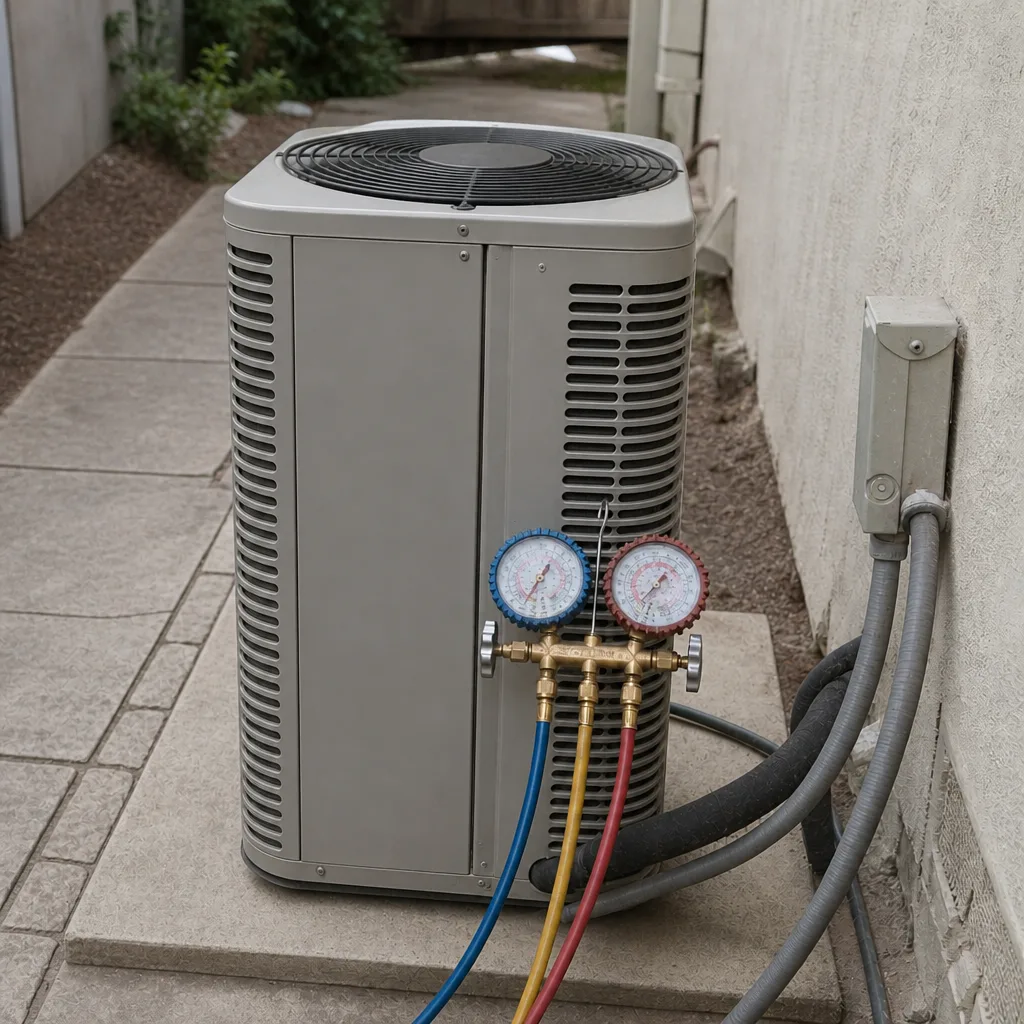
See the difference
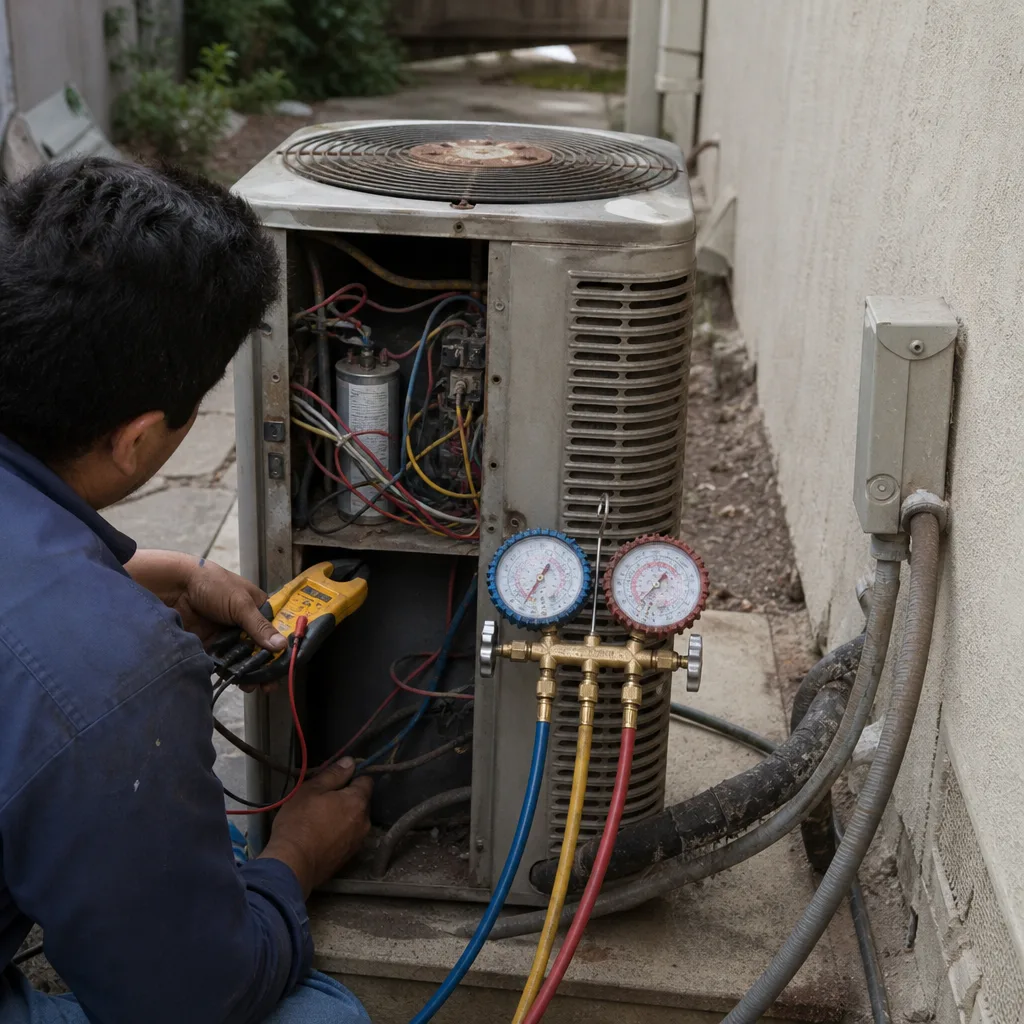 Before
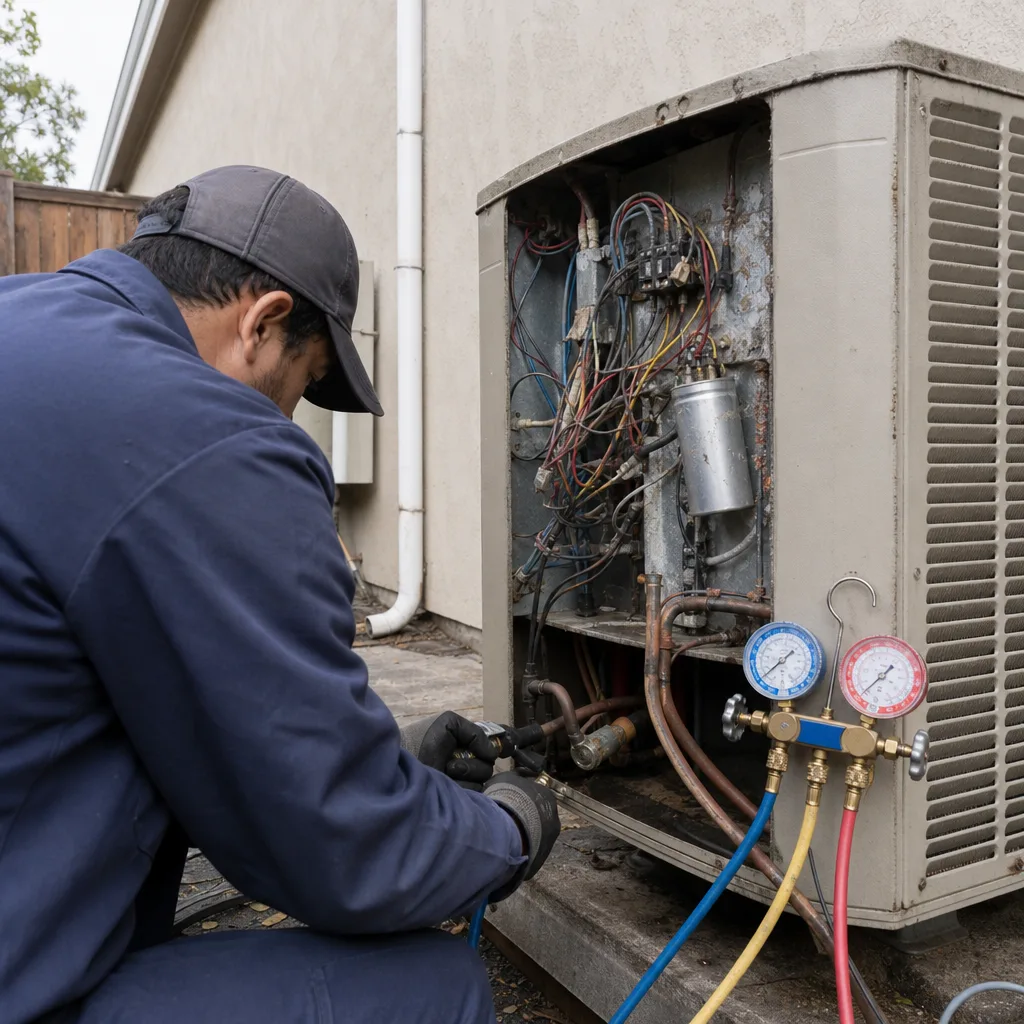
 After
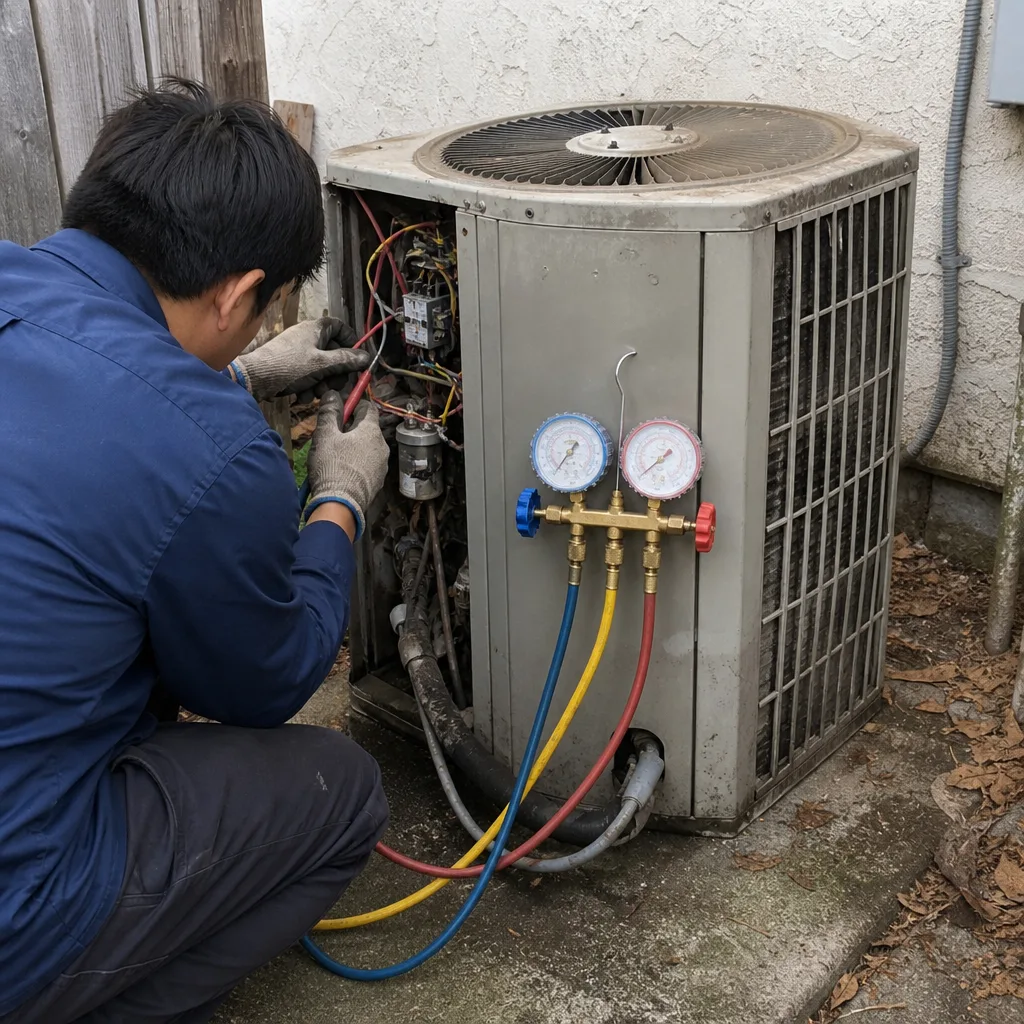
 Before
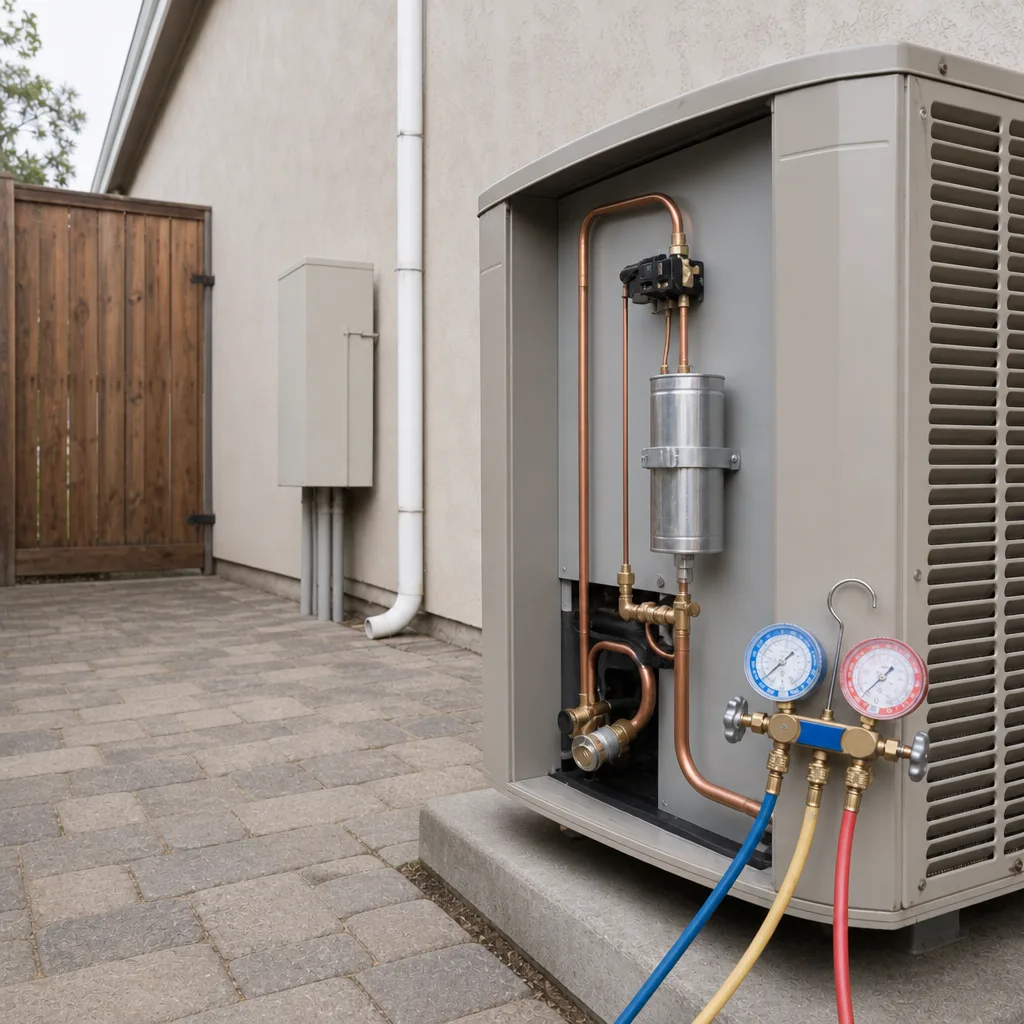 After
 Before
 After
When to Call a Professional
Some issues are maintenance; some are emergencies. Call a professional if you notice a smell of gas near the furnace, a carbon monoxide detector alarm, a loud rumble or bang at startup, or repeated short-cycling that doesn’t clear after a filter change. Call if your AC blows warm air in July, if ice forms on the indoor coil, or if the outdoor unit trips the breaker repeatedly. Call if your furnace won’t ignite, if you see soot, or if the flame looks yellow rather than blue. These are not homeowner troubleshooting situations, especially the gas and combustion ones.
AC Repair Santa Clara offers free estimates in Santa Clara. Call (833) 439-0749. We answer 24/7. Fast dispatch from 7am to 7pm, Sunday through Friday. If a system fails outside those hours, a call gets you booked into the next opening rather than sent to voicemail.
Frequently Asked Questions
March and April, before cooling demand spikes. Santa Clara’s cooling season starts early, and by late May appointment availability tightens. Booking in early spring gets you a thorough service visit and covers the system before the first hot stretch.
Yes, and the reason is disuse rather than wear. A furnace that sits idle for nine months collects dust on burners and ignition components, and condensate lines can dry out or grow growth. A fall check catches these before the first cold morning. Call (833) 439-0749 for a free estimate.
Around 78°F during the alert window, with pre-cooling earlier in the day. The goal is to reduce grid load during the late afternoon and early evening peak without letting the house get uncomfortable. Reduce other electricity use during the same window to help the AC keep up.
MERV 13 is the practical ceiling for most residential systems, and MERV 11 to 13 catches most fine smoke particles. Higher ratings restrict airflow and can freeze the coil on systems not designed for them. Change the filter more often during smoke events.
Coil icing usually means restricted airflow, low refrigerant charge, or both. A clogged filter, an undersized return, or a failing blower can cause it just as easily as a refrigerant leak. It’s worth a diagnostic visit rather than a filter swap alone.
Yes, and that’s how it should work. Our service covers AC installation and AC repair, plus furnace repair, so interconnected heating and cooling issues get resolved in one visit. Call (833) 439-0749 and we’ll book it.
The Bottom Line
Santa Clara’s climate is not a four-season climate, and a maintenance calendar that pretends otherwise misses the two windows that actually matter: March through April for the AC system and October for the furnace. The AC does heavy work here; the furnace does light work and is vulnerable to disuse. Marine layer humidity on the bayside and dry inland heat change what to watch, and Spare the Air days and Flex Alerts are regular events to plan around rather than ignore. Get the calendar right, use the right filter, and call a professional when the symptoms point at gas, combustion, or repeated failures. That’s the whole guide in one paragraph.
Call (833) 439-0749 for a free estimate. We answer 24/7. Fast dispatch from 7am to 7pm, Sunday through Friday.
Written by the team at AC Repair Santa Clara.