
Last updated November 14, 2026
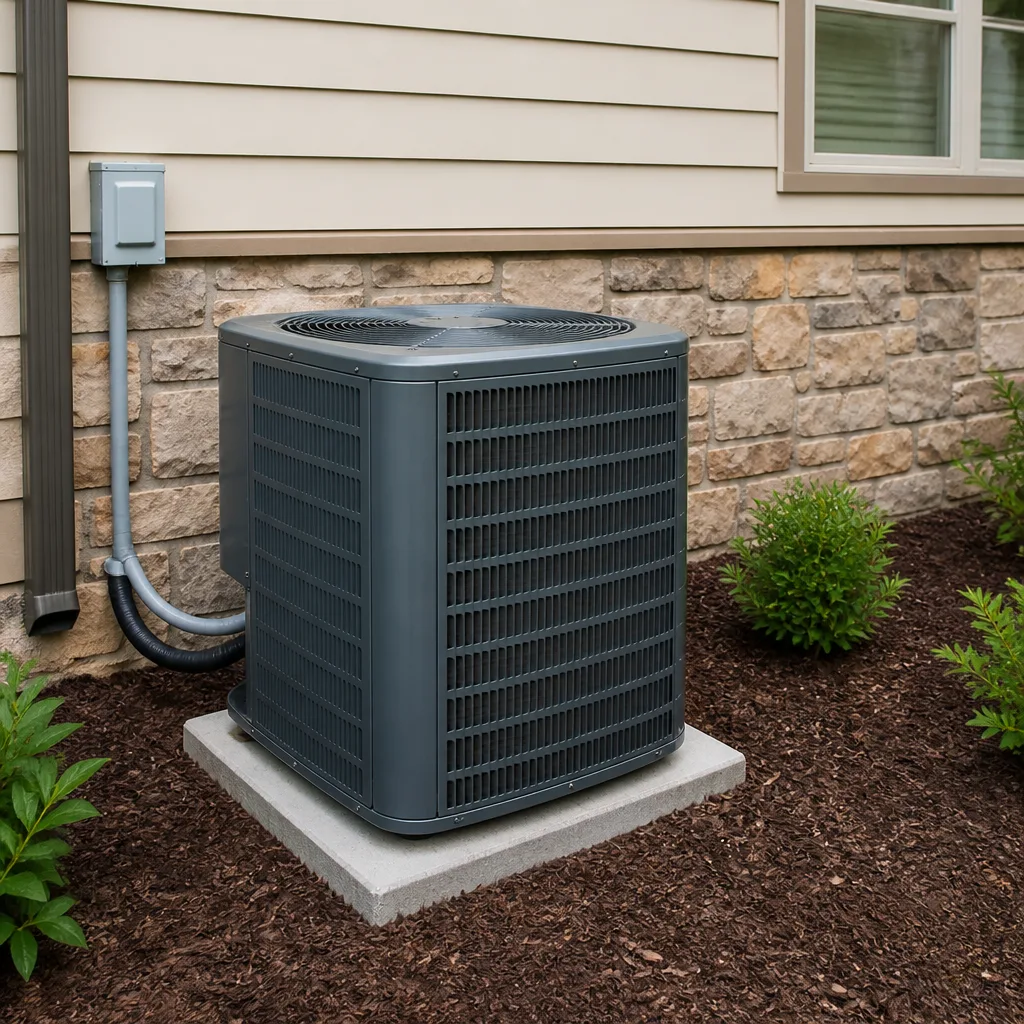 AC repair
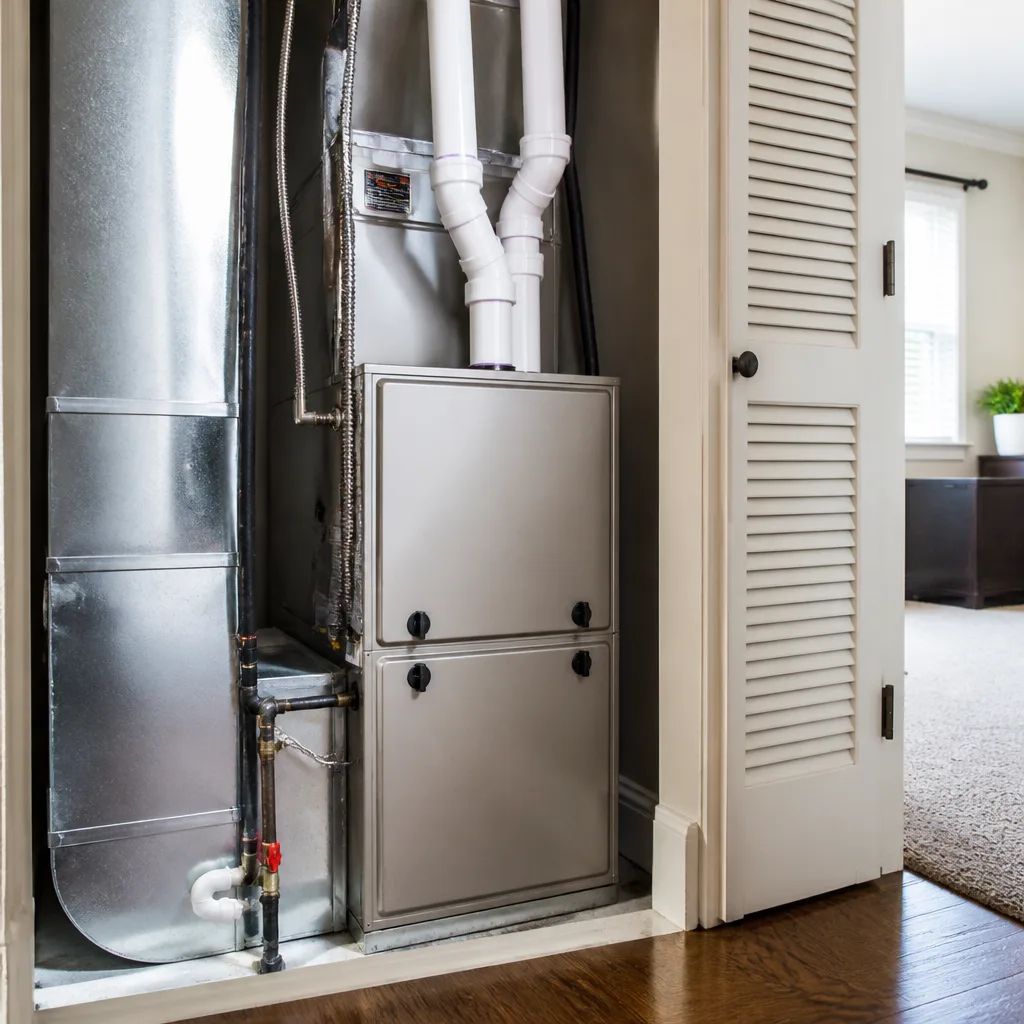 Furnace & heating
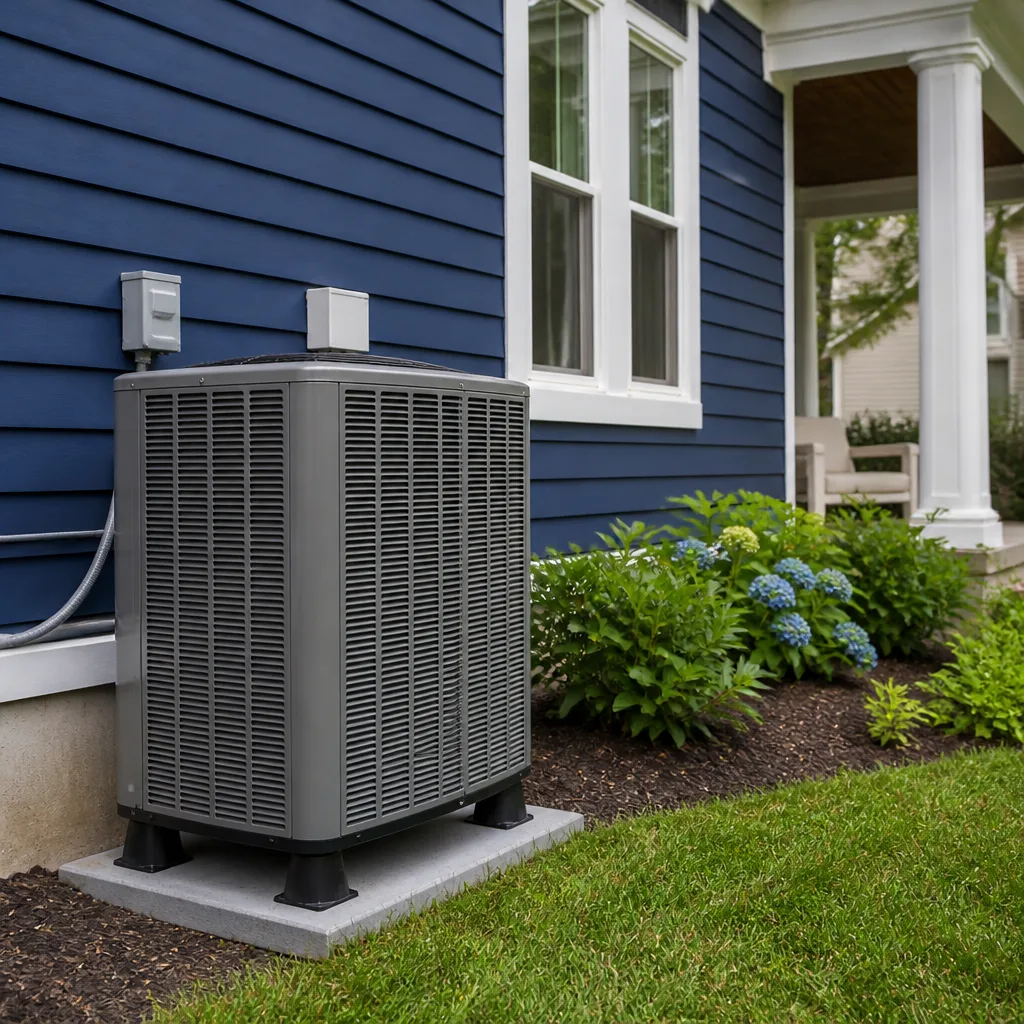 Heat pumps
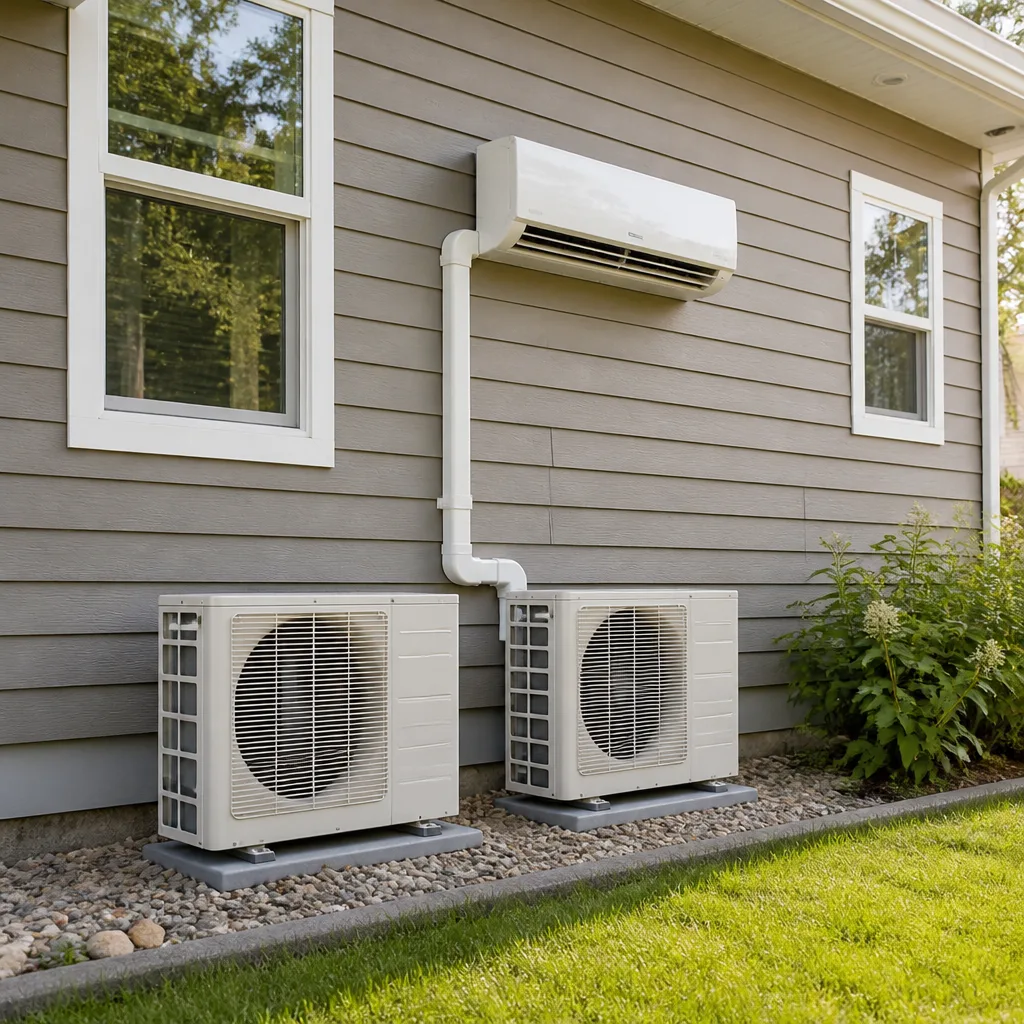 Ductless mini splits
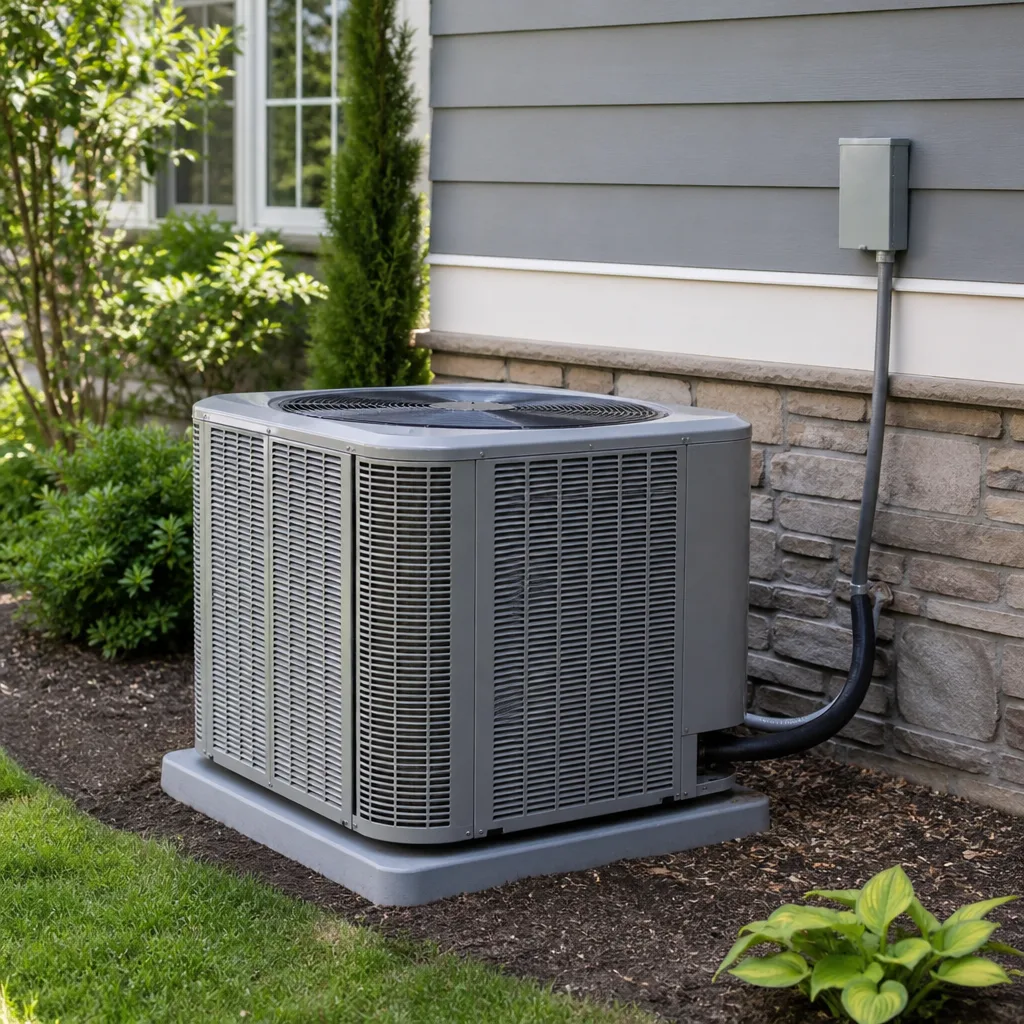 Carrier
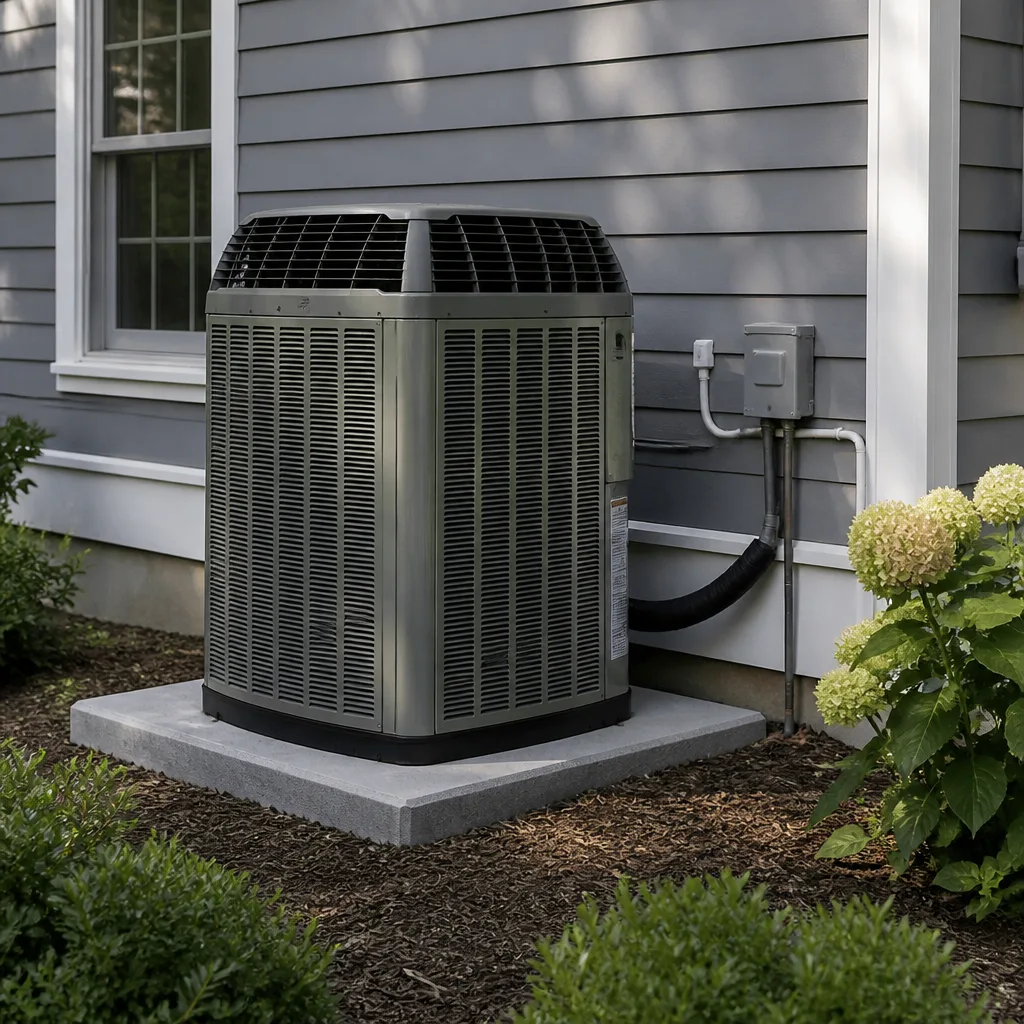 Trane
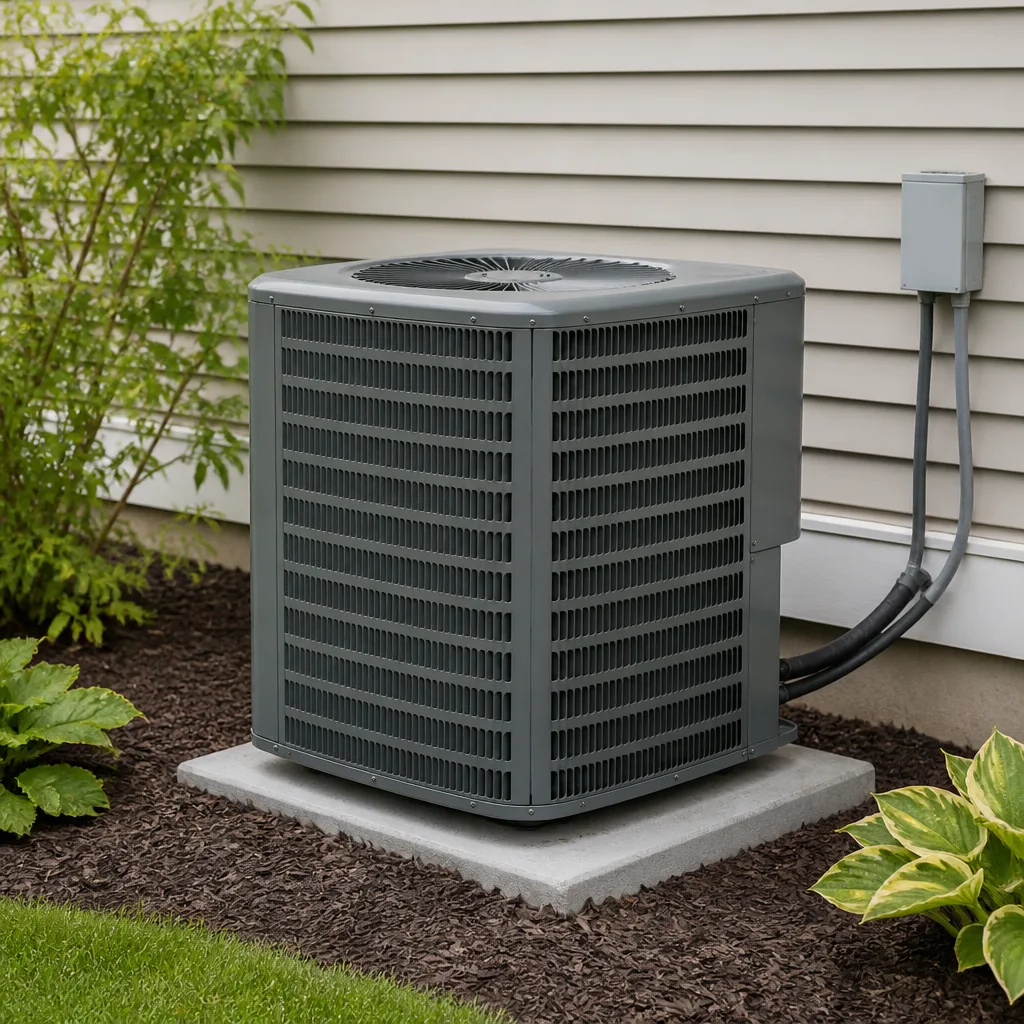 Goodman
Seasonal tune-up and full diagnostic on your Carrier, Trane, or Goodman system - readings shown to you before any repair is proposed
Diagnosis first, numbers second - you approve the repair price before a single part goes in.
Get your free estimateHow to Hire an HVAC Contractor in Santa Clara: A Step-by-Step Guide
Most homeowners in Santa Clara shop for HVAC contractors the same way they shop for a car: collect three bids, pick the lowest one, hope for the best. That approach fails more often than it should, because the number at the bottom of a quote tells you almost nothing about whether the equipment was sized correctly or whether a permit will ever be pulled. A contractor who skips the load calculation and a contractor who does it can hand you quotes that look comparable on paper and differ by thousands in real-world performance. This guide walks through how to disqualify the wrong contractor before you ever compare prices, and what to ask so the quote you accept is actually the one you need.
Quick Answer
To hire an HVAC contractor in Santa Clara, verify their California license through the CSLB and confirm it covers HVAC work, ask for a Manual J load calculation before any replacement quote, confirm they will pull the required permit with Santa Clara County, and insist on a written estimate that itemizes equipment, labor, and warranty terms. A contractor who resists any of these four steps is telling you something useful before the work starts.
Styles & brands we work with
- AC repair
- Furnace & heating
- Heat pumps
- Ductless mini splits
- Carrier
- Trane
- Goodman
Table of Contents
- Why the CSLB License Check Comes First
- The Manual J Question That Separates Contractors
- Permits, Inspections, and Santa Clara County Requirements
- How to Compare Quotes Fairly
- Questions to Ask Before You Sign
- Brand Match Matters More Than You Think
- Post-Installation Support and Warranty Registration
- Santa Clara Red Flags to Watch For
Why the CSLB License Check Comes First
Every legitimate HVAC contractor working in Santa Clara holds a license issued by the Contractors State License Board, and checking that license takes about two minutes on the CSLB website. This matters more than most homeowners realize because California’s licensing system has specific classifications, and not every contractor who advertises HVAC work carries the right one.
The classification you’re looking for is C-20, Warm-Air Heating, Ventilating and Air-Conditioning. That classification is the one specifically issued for HVAC work, and it covers the installation, alteration, and repair of central heating, ventilating, and air-conditioning systems. A contractor holding a general building license (B) or a specialty license in an unrelated trade may be able to legally sign certain contracts, but the C-20 classification is the one that signals this contractor’s actual trade is heating and cooling.
When you pull up a license on the CSLB site, check four things:
- The classification listed next to the license number. C-20 is the one that matches the work you need.
- The status, which should read “Active.” A suspended, expired, or revoked license is an automatic disqualifier.
- The name on the license matching the name on the quote. Subcontracting the actual install to a different, unlisted company is a legitimate concern.
- Bonding status. California requires licensed contractors to carry a contractor’s bond, and the CSLB record shows whether it’s current.
A properly licensed Santa Clara HVAC contractor will give you the license number without hesitation, confirm the classification, and expect you to check it. If a contractor gets defensive about the request, that reaction is your answer.
The Manual J Question That Separates Contractors
A Manual J load calculation is the engineering step that determines how much heating and cooling capacity a home actually needs. It’s not optional, and it’s not a formality. It takes into account square footage, window placement and glazing, insulation levels, ceiling height, duct condition, and local climate data. Without it, a contractor is guessing at the size of equipment, and guessing produces two outcomes, both bad: an oversized system that short-cycles, runs inefficiently, and struggles with humidity control, or an undersized system that runs constantly and never quite keeps up.
This is the single question that most cleanly separates a qualified contractor from a shortcut artist. When a contractor arrives to quote a ac installation, ask directly: will you run a Manual J load calculation before recommending equipment? Three responses are possible, and each means something different:
- “Yes, we’ll run it and share the results with you.” This is the right answer. You should expect to see a load calculation with the equipment recommendation, not just a replacement of the same tonnage as what’s there now.
- “We’ll match what you currently have.” This assumes the original installation was correctly sized, which is not always true. Homes in Santa Clara add windows and additions, and equipment installed decades ago may not reflect the current envelope of the house.
- “We just use square footage.” A rough rule of thumb, and an unreliable one. It skips window exposure and insulation entirely.
Here’s the specific detail worth knowing in Santa Clara: summer afternoon sun through west-facing windows can add significant cooling load that a simple square-footage estimate will miss entirely. Homes near neighborhoods like Old Orchard or developments off Lawrence Expressway that were built with large western window arrays often need more cooling capacity than a quick square-footage formula would suggest. A contractor who accounts for window orientation in the load calculation is doing the work properly.
Ask for the load calculation in writing as part of the quote. It’s the document that justifies the equipment, and having it means you can hold the contractor accountable if the installed system underperforms.
Permits, Inspections, and Santa Clara County Requirements
HVAC replacement work in Santa Clara typically requires a permit, and this is one of the clearest signals of whether a contractor operates honestly. The rules vary by jurisdiction and by exactly what’s being done, so confirm the specifics with the City of Santa Clara Building Division, but a contractor who tells you a permit isn’t needed for a full system replacement is a contractor who is going to leave you holding the liability.
Why it matters, even if the permit is (from your perspective) “just paperwork”:
- Inspection catches installation errors. A passed inspection means someone independent looked at the electrical connections, clearances, and code compliance.
- Resale and resale-time disclosure. Unpermitted HVAC work can complicate a home sale in Santa Clara’s active real estate market when a buyer’s inspection turns up a permit discrepancy.
- Warranty protection. Equipment manufacturers often require licensed, permitted installation for warranty coverage to remain valid.
Ask your contractor directly: “Will you pull the permit, and is that permit cost included in this quote?” A trustworthy answer will be a plain yes. If the quote is “permit not included, you’ll need to pull it yourself,” that’s a contractor telling you whose problem this will be if something goes wrong.
For repair work, permits are typically not required and the process is much simpler. If you’re dealing with a system that’s failing and just need it looked at quickly, our AC repair team handles diagnosis and repair without the permit overhead of replacement. But for anything described as a full system changeout, the permit conversation should be part of the quote process.
How to Compare Quotes Fairly
Comparing HVAC quotes from different contractors is where most homeowners lose money, because the quotes almost never describe the same scope of work. One quote might list a Carrier system with a specific model number and SEER rating. Another might list a Daikin system at a different efficiency level. A third might just say “3-ton AC unit.” Those aren’t comparable, and the price differences between them are not meaningful until you normalize them.
Here’s the method that works. Before you compare prices, build a comparison table with these columns:
- Equipment brand and model number for both the condenser and the air handler or furnace.
- System capacity in tons (cooling) or BTUs (heating).
- SEER rating for cooling equipment (or AFUE for furnaces).
- Labor scope including any ductwork, line-set replacement, or electrical work needed.
- Permit included, yes or no.
- Warranty terms for both parts and labor, including duration.
- Post-install service terms, including who to call and what response time is expected.
Two columns get skipped most often. The first is warranty on labor. Equipment manufacturers typically warrant the parts for years, but the labor to replace those parts under warranty is often covered for a much shorter period, or not at all. If a quote says “10-year warranty” without clarifying whether that’s parts only, ask. The second is system capacity matched to load calculation. A quote for a 3-ton system in a home whose load calculation showed 2.5 tons is a quote for an oversized system, and the price should not be compared to a properly sized quote.
When a quote is for a AC Repair Santa Clara replacement, ask each contractor to provide their Manual J output alongside their equipment proposal. Once you have those numbers side by side, the price conversation becomes much clearer.
Questions to Ask Before You Sign
These are the questions that surface whether a contractor will be accountable after the work is done. Ask them before signing, not after.
- Will you register my equipment warranty, or do I need to do that myself? Manufacturer warranties for brands like Bryant or American Standard often require registration within a short window after installation. A contractor who handles this on your behalf saves you a headache.
- Who do I call if the system isn’t performing correctly after installation? The answer should be straightforward: the same company, with a defined process for coming back to diagnose the issue.
- What’s the labor warranty on installation? Get this in writing with a specific duration.
- What if the system ices up or won’t reach setpoint in the first month? The contractor should be able to explain the diagnostic process they use to check refrigerant charge, airflow, and load assumptions.
- Is a commissioning checklist provided at install completion? A proper install includes documenting refrigerant charge, airflow measurements, and static pressure. Ask whether the contractor provides this.
- Are there any local utility or efficiency program requirements affecting this installation? Rebate and efficiency programs are frequently changing, and a well-informed contractor can tell you whether the equipment you’re choosing qualifies for any current programs.
The quality of the answers matters more than whether they’re immediately “yes” or “no.” A good contractor may say “let me check on that and get back to you today” when a question is outside their immediate knowledge, but they will never dismiss the question.
Brand Match Matters More Than You Think
HVAC brands are not interchangeable in the technician’s mind. Carrier, Trane, Lennox, Goodman, Rheem, York, Daikin, Bryant, and American Standard each have characteristic design details, diagnostics quirks, and common failure points. A technician who works on your specific brand well knows where to look first when something fails, uses the right diagnostic sequence, and recognizes which components are designed as a matched system rather than interchangeable parts.
When you’re evaluating contractors, ask which brands the company is certified or trained to work on. Then listen for specificity. A contractor who says “we work on all brands” might mean anything from “we can figure it out” to “we’re trained across a wide portfolio of equipment.” A contractor who lists specific brands, like Daikin, Bryant, or Carrier, and can describe what differentiates work on those systems, is telling you their technicians actually understand the equipment.
There’s also a financial reason this matters. When a contractor isn’t familiar with your brand, they’re more likely to recommend replacement over repair because replacement is the easier path. When they know the specific failure points on an American Standard condenser or a Carrier air handler, they’re more likely to isolate the problem and quote a repair that makes sense.
Post-Installation Support and Warranty Registration
Getting a new system installed is not the end of the relationship with your HVAC contractor. It’s the start of a warranty period during which you’ll want a contractor you can rely on. This is where written commitments matter more than the sales conversation.
Ask for these three things in writing before you sign:
- Equipment warranty terms, in writing, with specific duration. This should match the manufacturer documentation.
- Labor warranty terms, in writing, with specific duration and what qualifies. For example, whether the labor warranty covers diagnostic visits to check the system after installation.
- Contact information and process for post-installation issues. Who to call, and what happens next.
Also ask whether the contractor will register your warranty on your behalf. Manufacturer warranties for systems in Santa Clara homes often have a registration requirement within a specific window of installation, and miss that window and the warranty period can shorten. Getting this handled by the installer is worth asking for.
Finally, ask for the commissioning report. A completed installation includes tested refrigerant charge, verified airflow, and a documented static pressure reading. If your contractor doesn’t typically provide this, that’s a gap worth knowing about before and not after installation.
Santa Clara Red Flags to Watch For
Some red flags are universal to the trade. Others are more specific to working in Santa Clara, where the climate, the housing stock, and the local competitive landscape create particular patterns worth knowing.
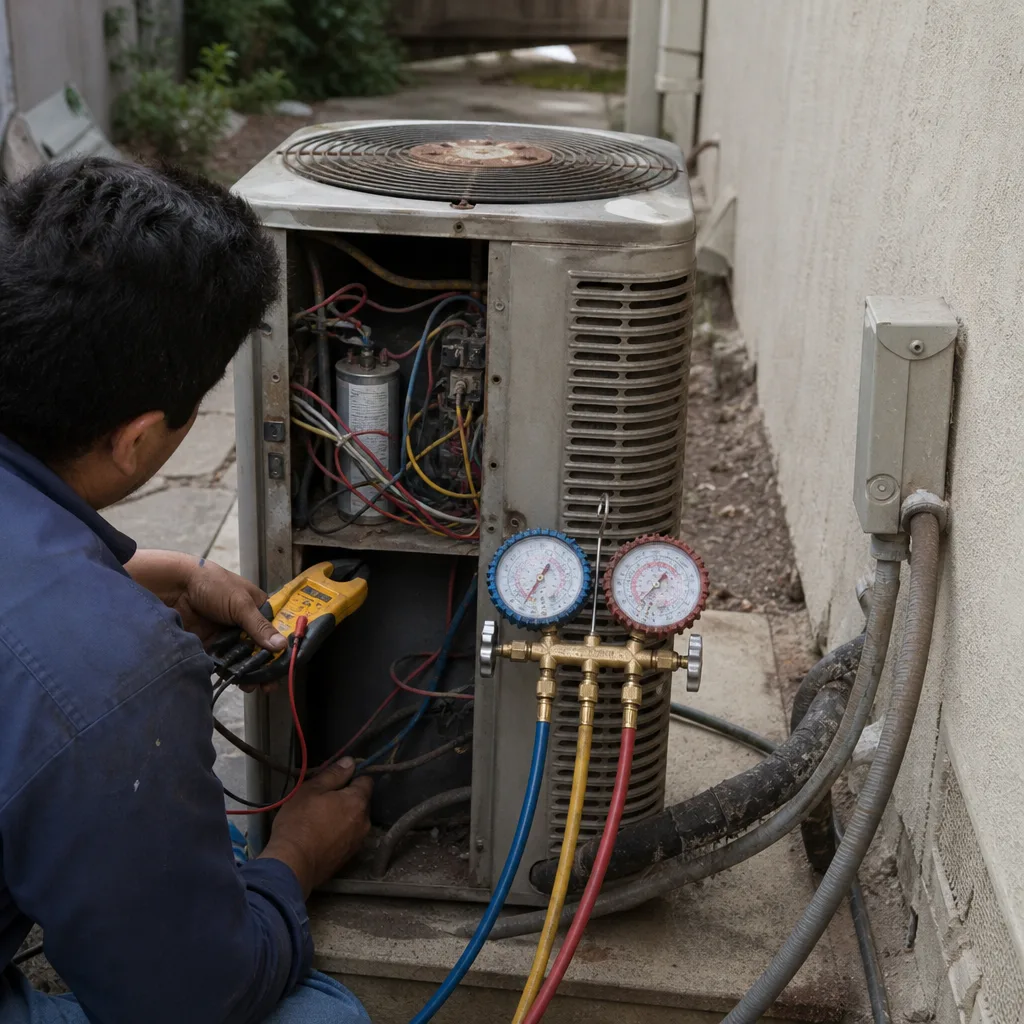
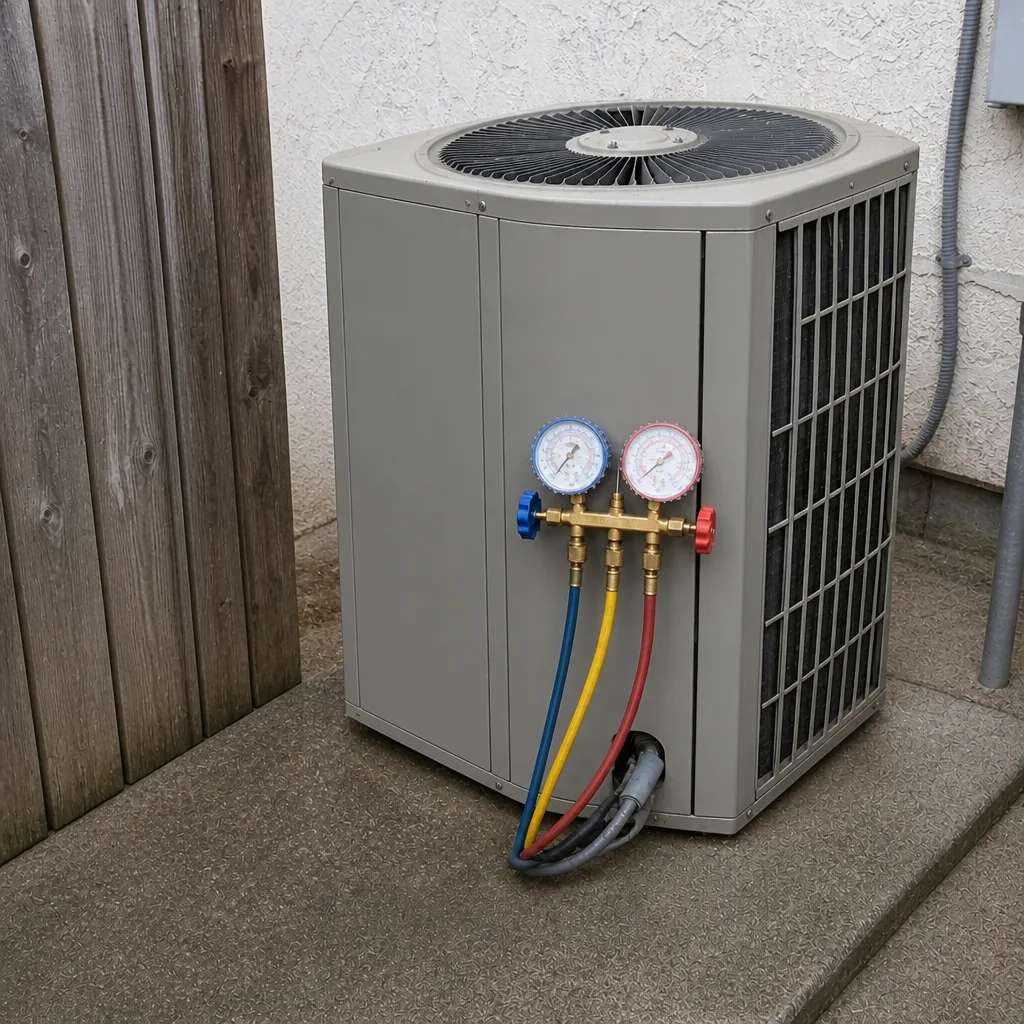
Watch for contractors who quote replacement on a first visit without diagnostic testing. This is especially common in the summer, when the AC fails and a contractor sees an opportunity to sell a new unit rather than diagnose the existing one. A contractor who hasn’t tested refrigerant pressures, verified airflow, and checked the compressor before recommending replacement is skipping the diagnosis.
Watch for the phrase “you don’t need a permit for that.” In Santa Clara, permits are the norm for replacement work and skipping them protects the contractor’s paperwork, not yours.
Watch for quotes with no load calculation attached. A quote that specifies a tonnage but not a load calculation is a quote built on assumption.
Watch for brands and models that don’t match. If the sales material lists a Carrier system but the actual model in the quote is a less expensive brand without that being discussed, that’s a bait-and-switch pattern.
Watch for verbal promises about warranty that don’t show up in writing. If the warranty terms described in the sales visit aren’t set out in writing, the terms don’t exist.
Common Mistakes to Avoid
- Picking the lowest bid without checking what’s included. The lowest number often excludes the permit, the load calculation, or a matched system. Two sentences later, the quote is doing less than a higher one. Ask what the quote includes before assuming its price is comparable.
- Skipping the CSLB check because the contractor “seems reputable.” The CSLB lookup takes minutes. The license record is the only real verification of classification, status, and bonding. A contractor’s manner on the phone is not a license check.
- Accepting a like-for-like replacement without a load calculation. If the home has had windows added, insulation upgraded, or an addition built since the last installation, the old tonnage may not be right for the current house. Always ask for Manual J.
- Believing “we can pull the permit later” is just as good. It’s not. Pulling permits after the fact is more expensive and can involve re-inspection. The permit process is part of the installation work, not an optional add-on afterward.
- Assuming all brand technicians are interchangeable. A technician who’s worked on Carrier systems for years will diagnose a Carrier condenser faster and more accurately than a technician who’s seeing the brand rarely. Ask which brands they work on and listen for specificity.
- Ignoring what happens after the install. The home’s comfort is the point, and the first four weeks tell you whether the system was installed correctly. A contractor who’s already inattentive to post-install questions is telling you what your future will look like.
- Letting the sales visit dictate the terms. Verbal guarantees are worth nothing after the contractor has been paid. Get everything in writing before the work begins, including warranty length, what triggers a call-back visit, and what the response commitment looks like in practice.
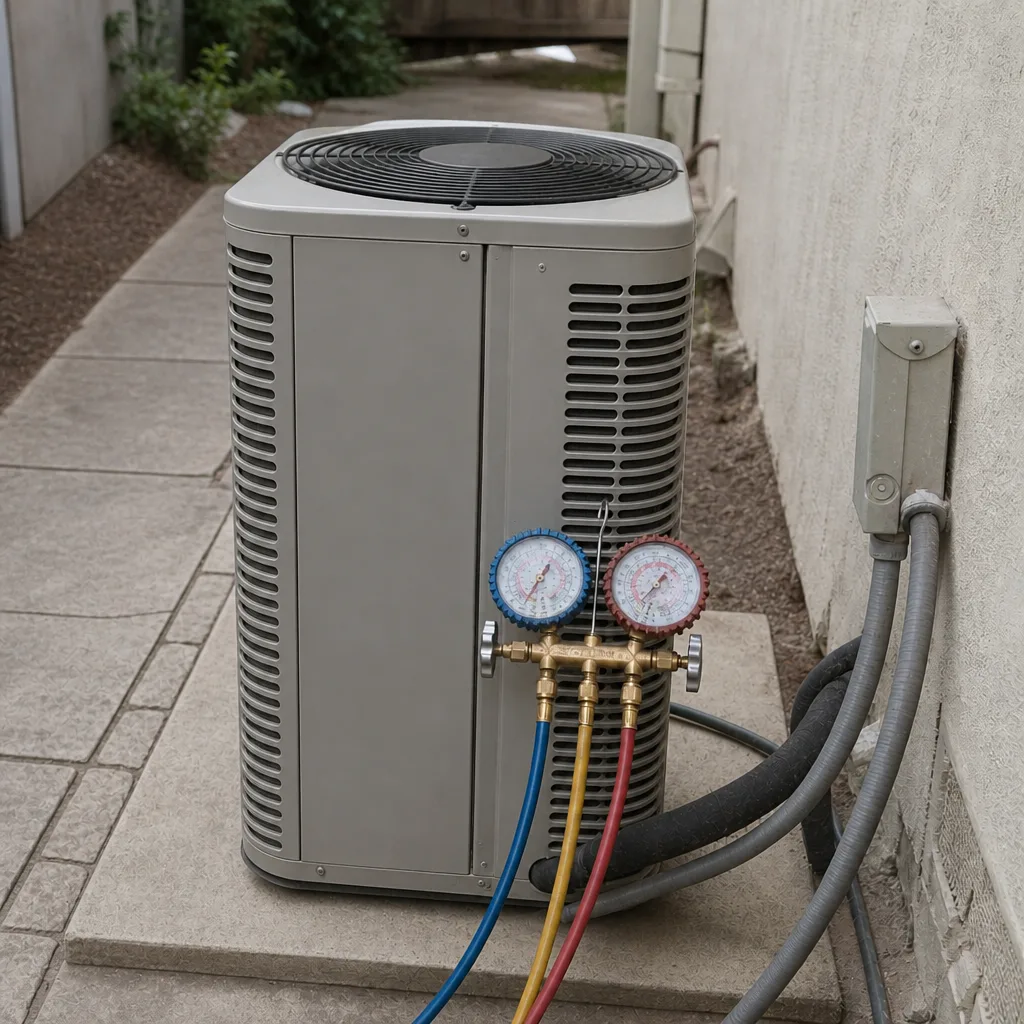
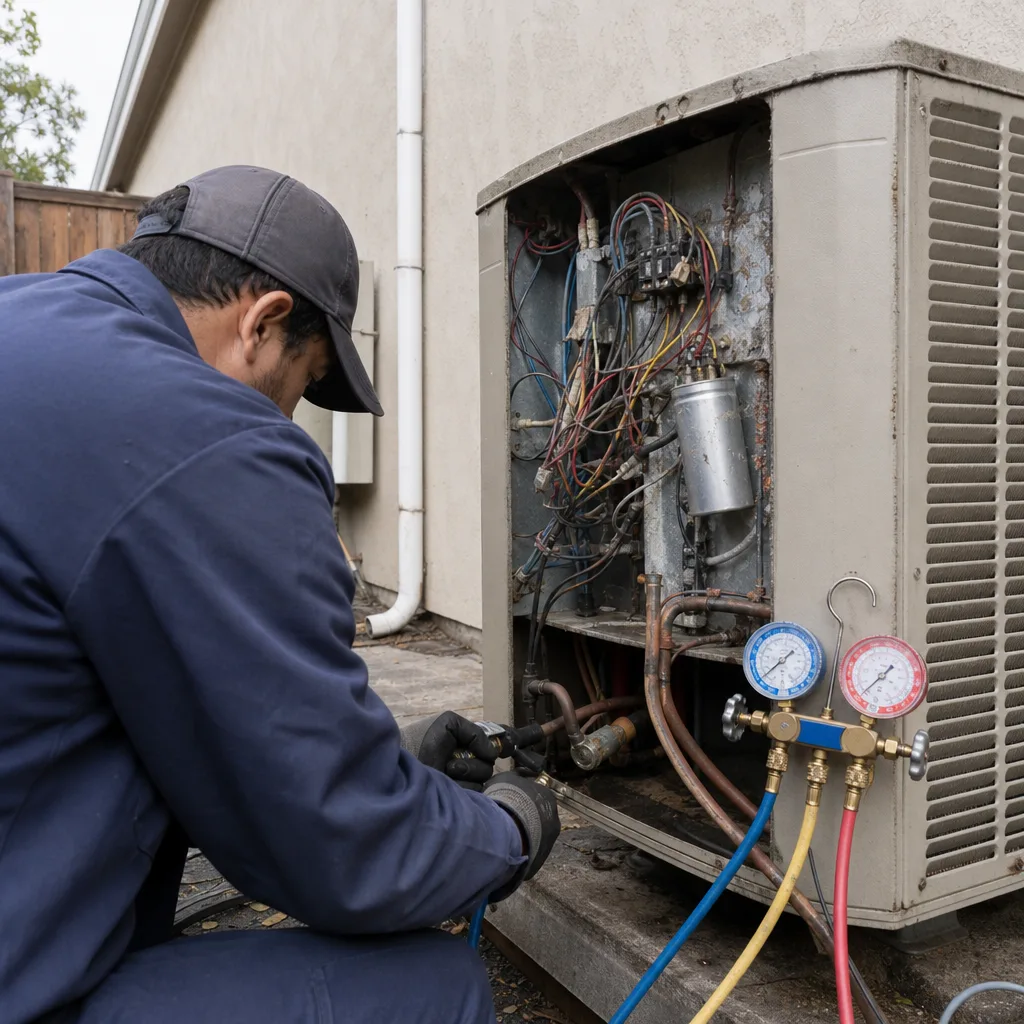
See the difference
 Before
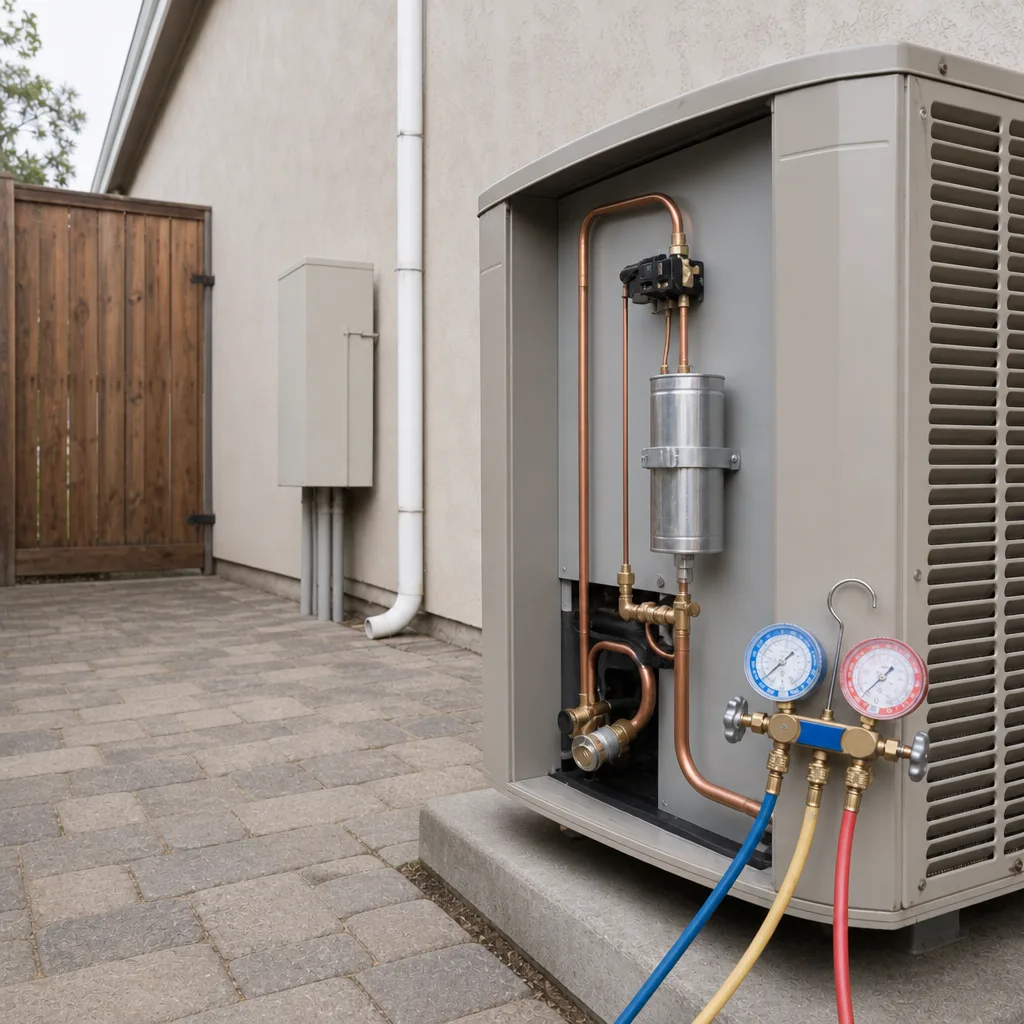
 After
 Before
 After
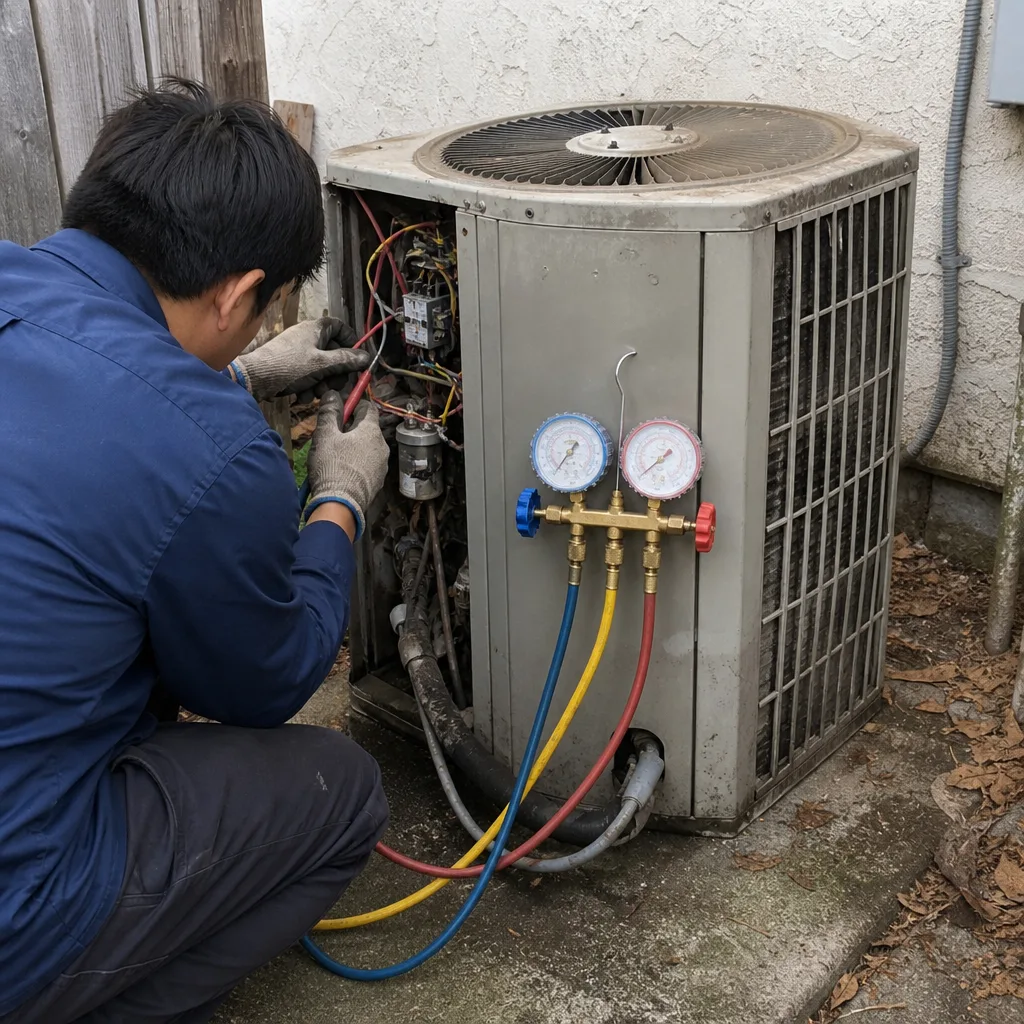 Before
 After
When to Call a Professional
Some HVAC decisions can be negotiated with time. Others need a technician. Call a professional immediately if the system is producing no cooling on a hot Santa Clara afternoon, if the compressor is short-cycling, if there’s refrigerant odor or visible oil residue near the indoor coil, or if the system is tripping a circuit breaker on startup. Call as well if a gas furnace is producing a yellow flame, giving off carbon monoxide alarm signals, or making rattling noises from the heat exchanger area, since gas and combustion equipment involves genuine safety stakes that should not be evaluated by a homeowner. If a system is 15 years or older and the decision is between another repair and a replacement, that’s the moment for a professional evaluation rather than a quick guess. Our technicians are trained on nine of the industry’s most widely installed residential brands, so a single call can address both the cooling and heating side of a comfort problem.
AC Repair Santa Clara offers free estimates in Santa Clara. Call (833) 439-0749. We answer 24/7. Fast dispatch from 7am to 7pm, Sunday through Friday.
Frequently Asked Questions
Visit the Contractors State License Board website and search by the license number the contractor provides, then confirm three things: the license is active, the classification is C-20 (the HVAC-specific classification), and the name on the license matches the company issuing the quote. Bonding status should also appear on the record. Ask the contractor for their license number directly, and expect a straightforward answer.
Not always mandated by local code, but it should be your own requirement for any HVAC contractor you hire in Santa Clara. A load calculation is the only engineering basis for choosing system capacity, and quoting a replacement without one means sizing is a matter of guesswork or assumption. Ask for the Manual J output in writing as part of the quote.
In most cases, yes. Santa Clara generally requires a permit for HVAC system replacements, and your contractor should be the one pulling it. Confirm the specific requirements with the City of Santa Clara Building Division for your project. A contractor who recommends skipping the permit is a contractor worth disqualifying before signing anything.
There’s no single required brand portfolio, but you should choose a contractor whose technicians are actually trained and experienced on the brand of equipment installed in your home. Many qualified contractors work across a range of common brands including Carrier, Trane, Lennox, Goodman, Rheem, York, Daikin, Bryant, and American Standard. Ask which brands the contractor is trained on and listen for how specifically they can describe work on your brand.
The tell is whether the contractor ran a real diagnostic before recommending replacement. If they tested refrigerant charge, airflow, compressor function, and electrical connections and the findings point to an internal failure, replacement may genuinely be the right call. If they recommended replacement on the first visit without diagnostics, ask them to run the full diagnostic sequence first. If they can’t, that’s a sign to get a second opinion.
Build a side-by-side comparison of equipment model numbers, system capacity from load calculation, SEER rating, labor warranty, and permit inclusion before you look at any prices. Once the specs are normalized, the quote that includes the load calculation, permit, and labor warranty is the one to weigh against the lower number. A lower bid that omits any of those is not delivering the same scope.
Call (833) 439-0749 to speak with our team about your Santa Clara project. Estimates are free, and we’ll walk through the diagnostic findings and the options with you.
The Bottom Line
Hiring the right HVAC contractor in Santa Clara comes down to four checks: a verified C-20 license, a Manual J load calculation before any replacement quote, confirmation that permits will be pulled and included, and a written estimate with equipment model, capacity, warranty terms, and labor scope all specified. Those checks disqualify the wrong contractors before you compare prices, and disqualification is the point. Once you’re working with a qualified contractor, the quote comparison becomes straightforward. For Santa Clara homeowners dealing with a system that’s actively failing, our teams work on both the cooling and heating sides of the system, so a single call can resolve the whole picture.
Call (833) 439-0749 for a free estimate. We answer 24/7. Fast dispatch from 7am to 7pm, Sunday through Friday.
Written by the team at AC Repair Santa Clara.