
Last updated November 14, 2026
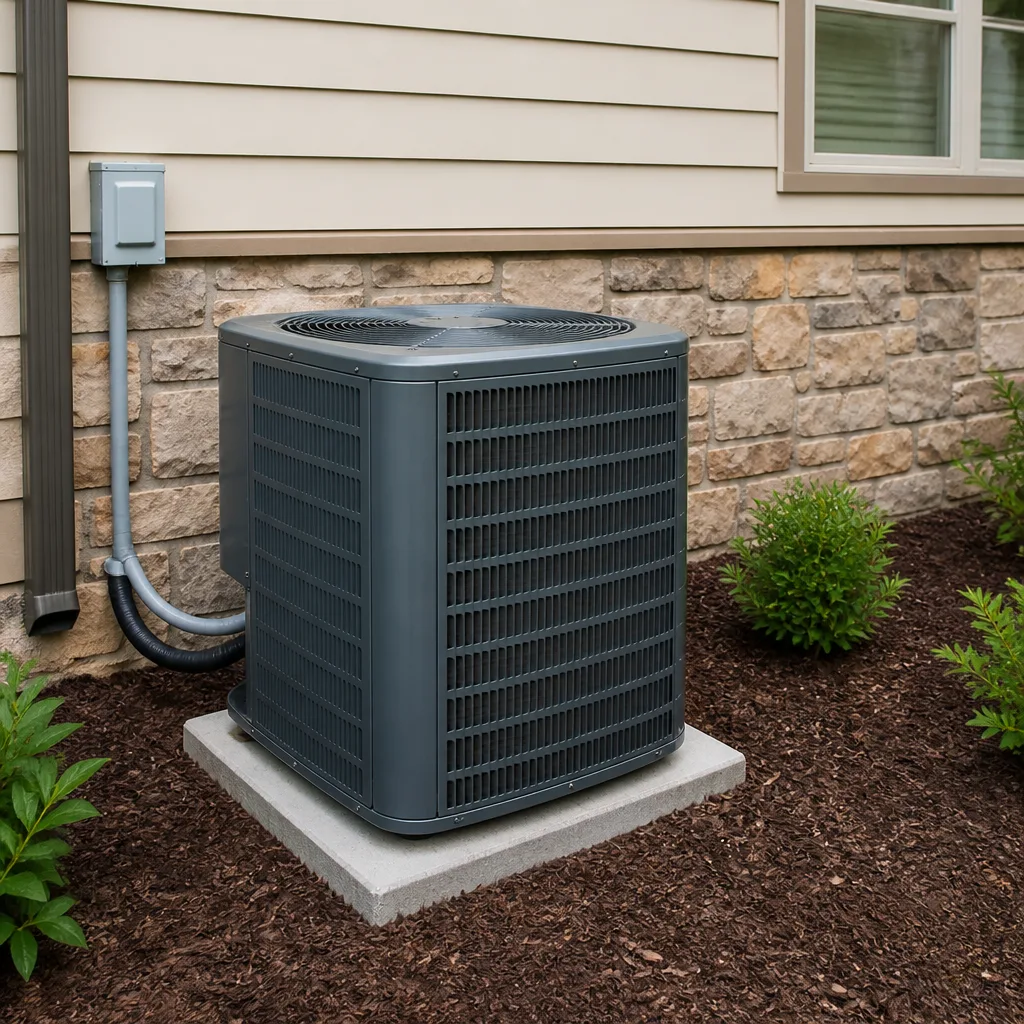 AC repair
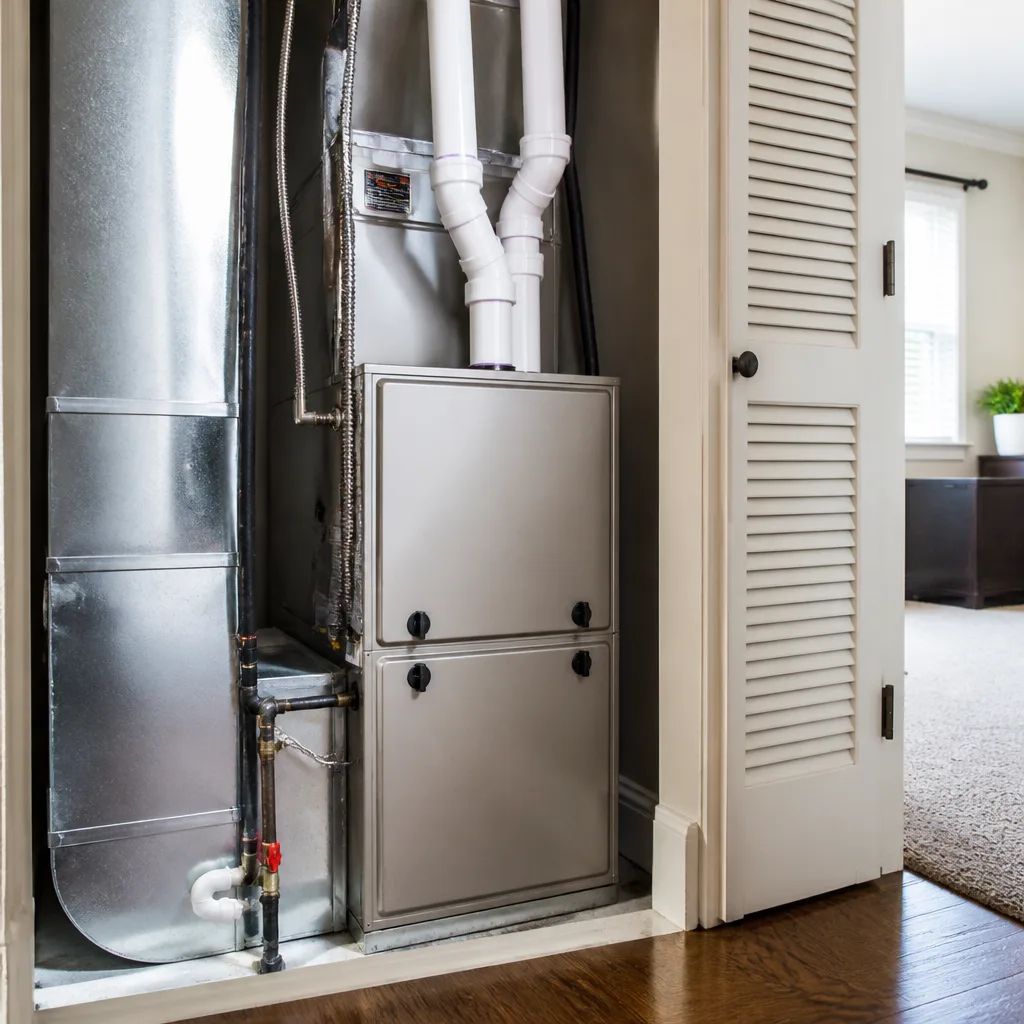 Furnace & heating
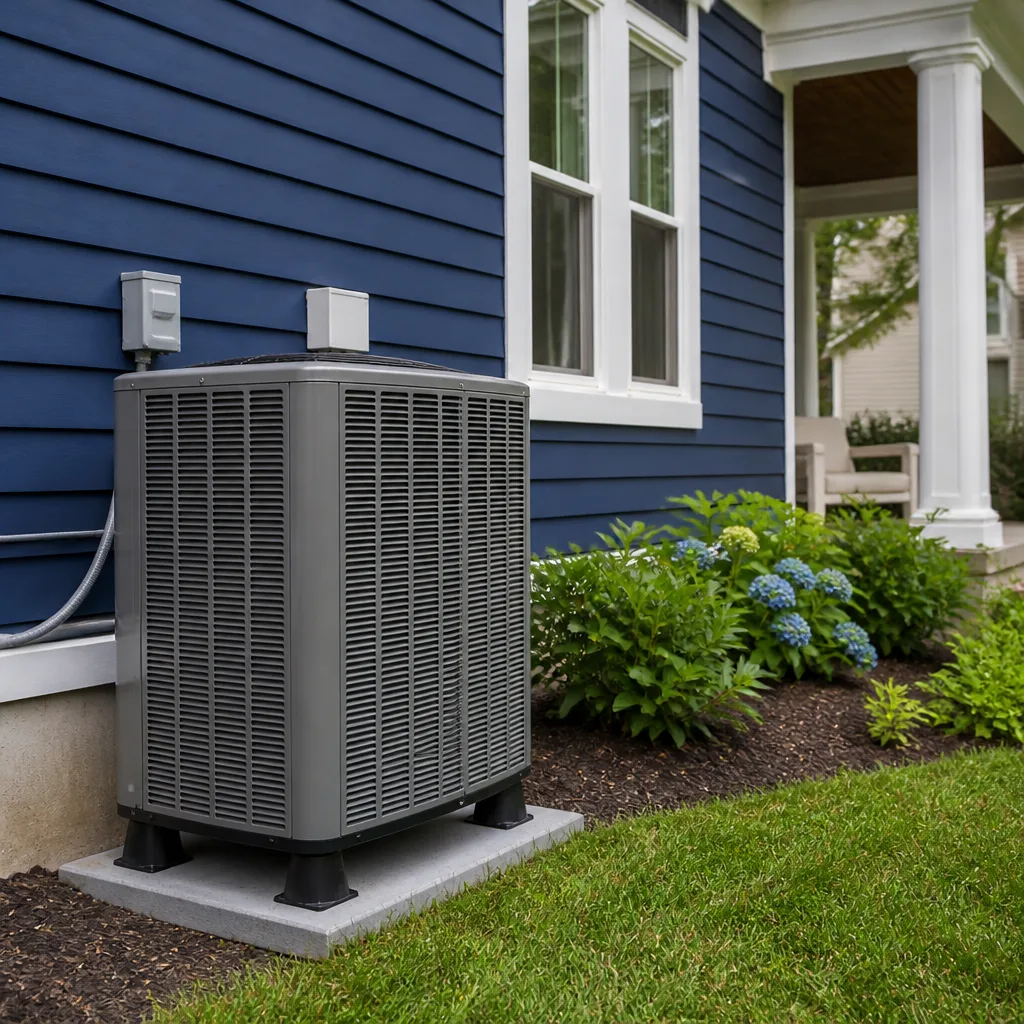 Heat pumps
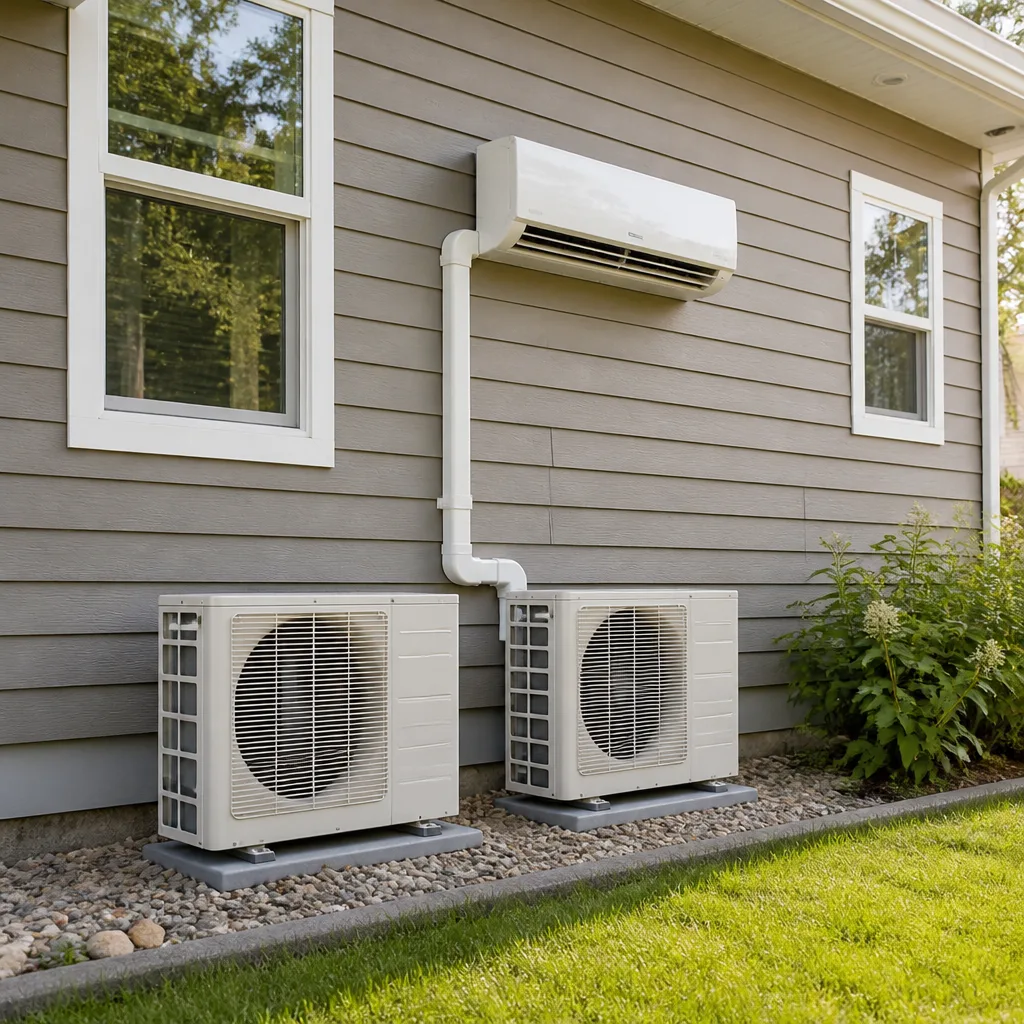 Ductless mini splits
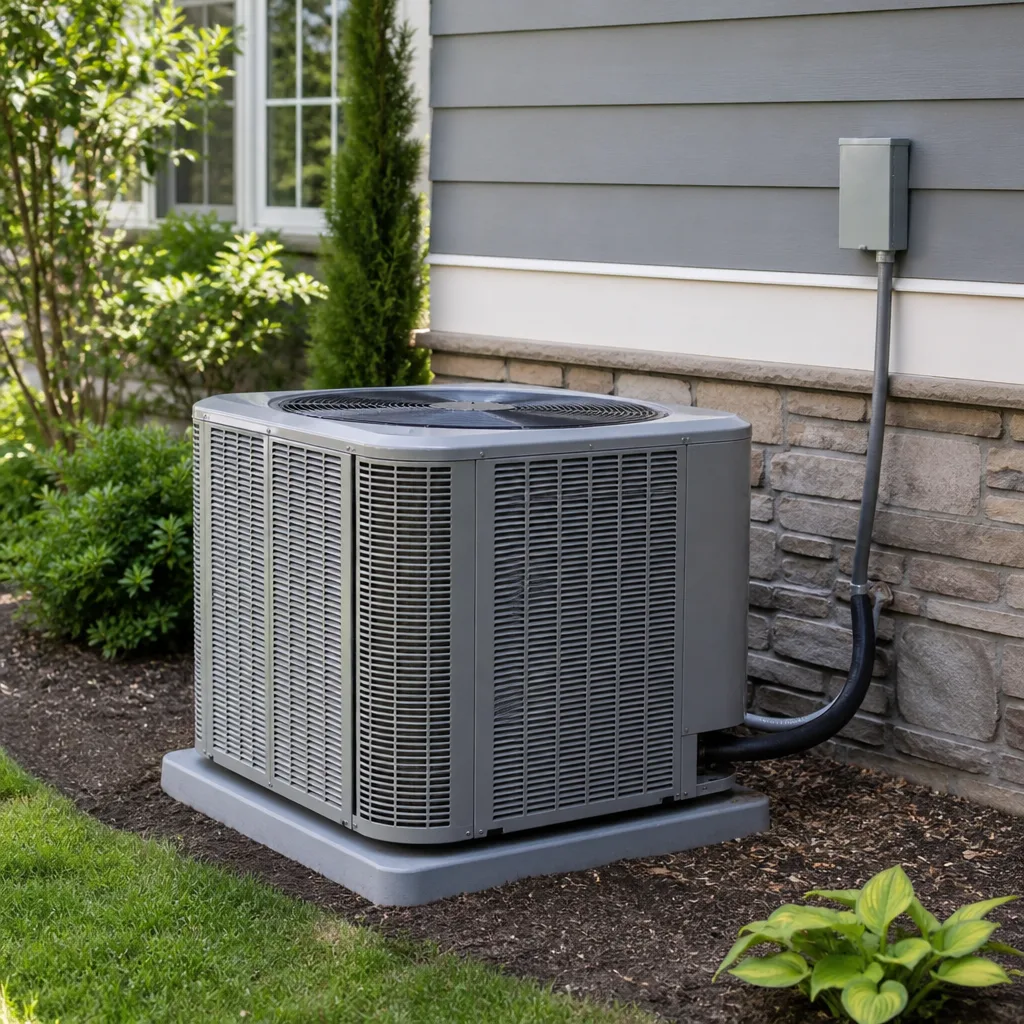 Carrier
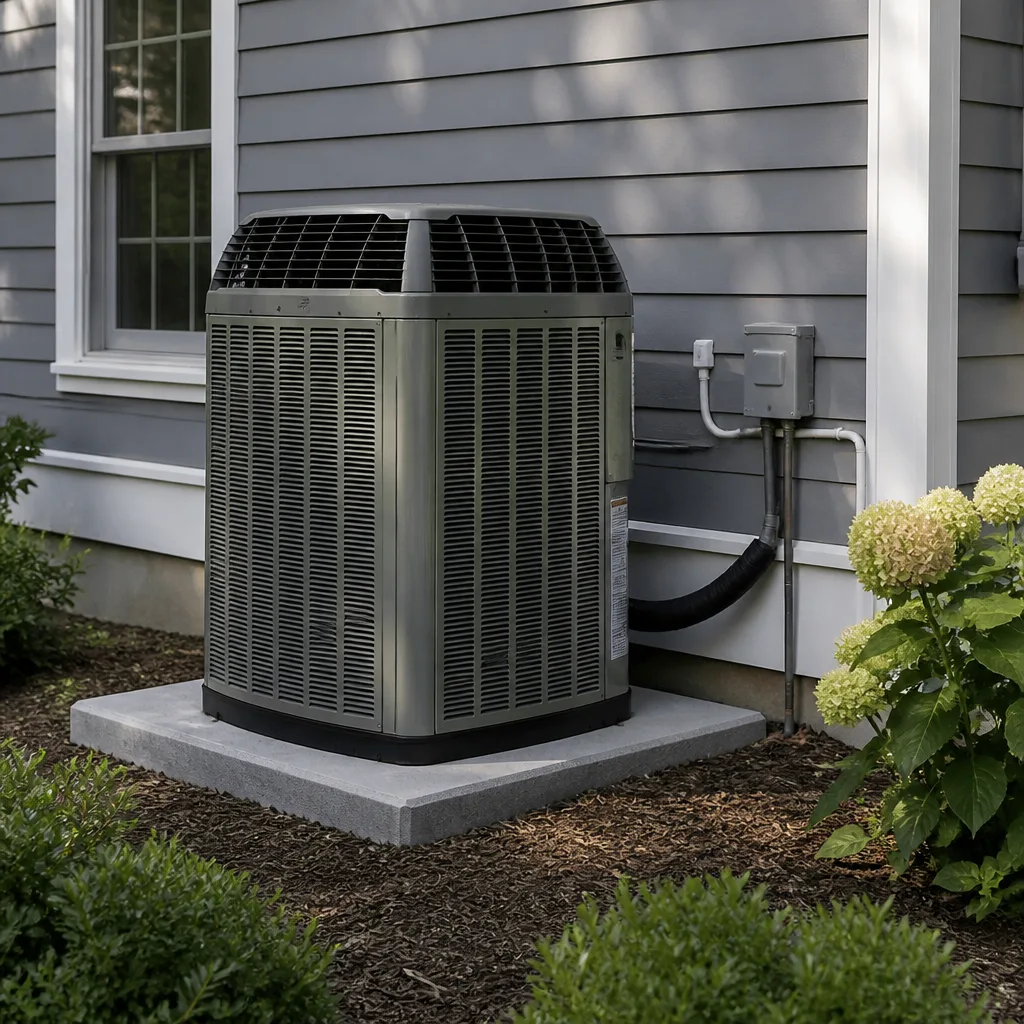 Trane
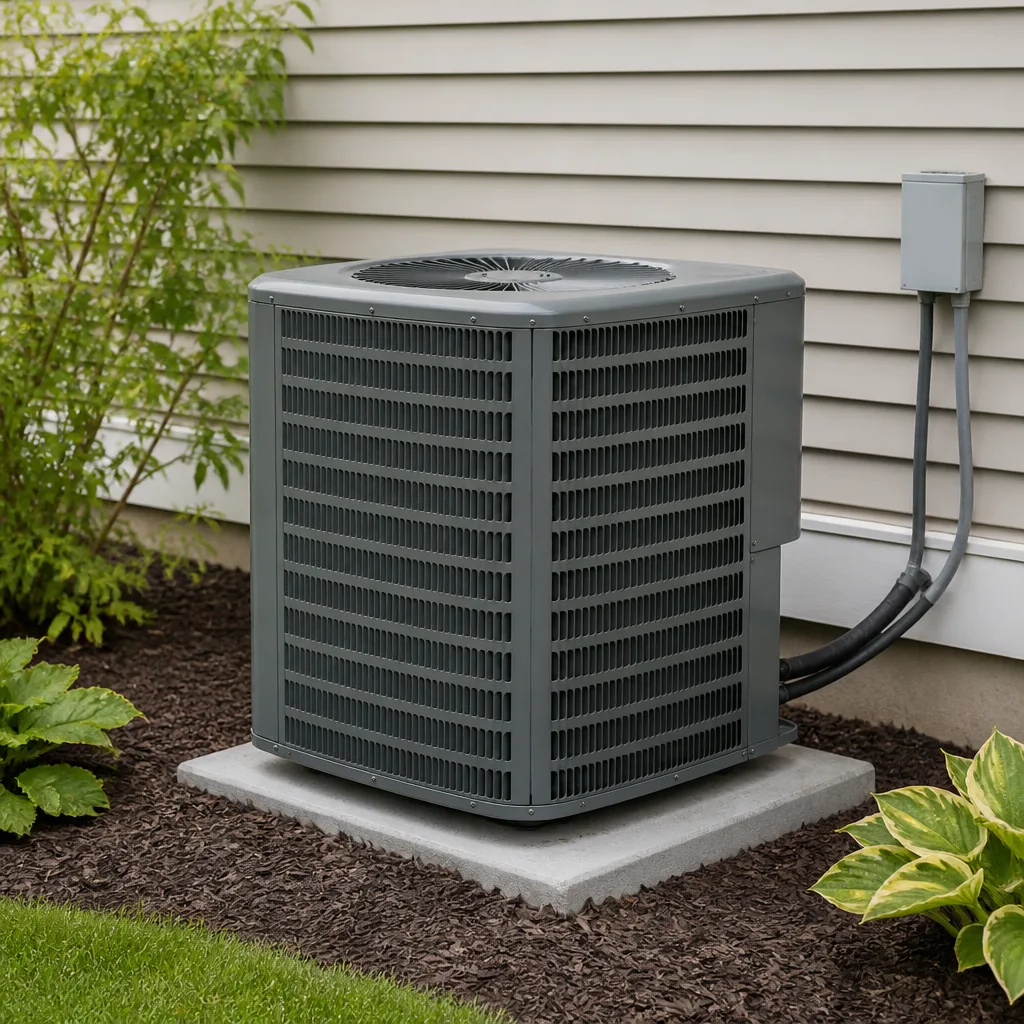 Goodman
Seasonal tune-up and full diagnostic on your Carrier, Trane, or Goodman system - readings shown to you before any repair is proposed
Diagnosis first, numbers second - you approve the repair price before a single part goes in.
Get your free estimateHVAC Cost Breakdown: The Santa Clara Homeowner’s Reference for 2026
Two contractors look at the same failing system in a Santa Clara home and hand over quotes of $6,800 and $11,400. Both quotes are a single page. Neither one separates the equipment from the labor from the permit from the disposal fee. Neither one is automatically wrong, and the cheaper bid isn’t automatically the honest one. The problem is that a lump-sum number gives you nothing to compare. What follows is the actual anatomy of an HVAC quote in Santa Clara for 2026: how much of your money goes to the box, how much to the hands installing it, what the city charges, what the rating on the label really costs you over ten years in this climate, and the questions that turn a vague total into something you can evaluate line by line.
Quick Answer
A typical full HVAC replacement in Santa Clara in 2026 runs roughly $7,500 to $14,500 installed for a standard split system, with equipment accounting for about 45 to 60 percent of that, labor 25 to 35 percent, permit and inspection a few hundred dollars, and disposal and haul-away the remainder. Repair costs are far smaller: most common AC and furnace fixes land between $180 and $850 depending on the part. The final price is always set by the written estimate, and the breakdown matters more than the total.
Styles & brands we work with
- AC repair
- Furnace & heating
- Heat pumps
- Ductless mini splits
- Carrier
- Trane
- Goodman
Table of Contents
- What Do the Most Common HVAC Jobs Cost in Santa Clara in 2026?
- How a Quote Splits Into Equipment, Labor, Permit, and Disposal
- How SEER2 Affects Upfront Cost vs. Operating Cost Here
- Why Santa Clara Housing Stock Adds Predictable Cost
- What Drives the Price Gap Between Contractors at the Same Equipment Tier
- Rebates, Credits, and Manufacturer Promotions in 2026
- Does the Brand Change the Price?
- Financing and How to Compare It Honestly
What Do the Most Common HVAC Jobs Cost in Santa Clara in 2026?
Repairs in Santa Clara cluster into a handful of predictable bands, and knowing them keeps you from being surprised. Replacements are larger and more variable, but they still follow a pattern once you understand how the components add up. These are estimated ranges for typical jobs, not quotes; the written estimate you receive is the number that counts.
Typical Repair Costs
- Capacitor or contactor replacement: $180 to $320
- Blower motor replacement: $400 to $750
- Condenser fan motor: $350 to $650
- Refrigerant leak search and recharge: $300 to $800, depending on how much refrigerant the system holds
- Furnace igniter or flame sensor: $200 to $400
- Furnace control board: $450 to $850
- Thermostat replacement (standard): $150 to $350
Typical Replacement Costs
- Standard split-system AC and furnace replacement, like-for-like: $7,500 to $14,500 installed
- Higher-efficiency equipment with a two-stage or variable-speed condenser: adds roughly $1,200 to $3,000 to the equipment line
- Air handler or evaporator coil replacement only (condenser stays): $1,600 to $3,200 installed
What trips people up in Santa Clara is that these ranges are wide on purpose. A Goodman or Rheem replacement in a straightforward closet install sits near the bottom. A York or Daikin system going into a second-floor attic with a tight return and a new line set sits toward the top, and it’s the same labor hours on paper. The difference is the house, not the homeowner’s negotiating skill. If you want to see how a specific repair stacks up, our page on AC repair walks through the common failure points we run into on each brand.
How a Quote Splits Into Equipment, Labor, Permit, and Disposal
Every honest HVAC estimate breaks into four lines. If a contractor hands you one number, ask them to separate it. This isn’t a trick to grind them down; it’s how you spot whether the money is going to the equipment you’re paying for, the crew installing it, or somewhere else.
1. Equipment
The condenser, the furnace or air handler, the evaporator coil, the thermostat, and any line sets, pads, and whips. On a standard replacement this is the largest single line, and the model number on the quote should match the model number on the box when it arrives. Ask what efficiency tier the equipment sits at and what the exact model is before you sign.
2. Labor
Removing the old system, running new refrigerant lines or reusing existing ones, brazing, evacuation, charging, startup, and cleanup. Labor is where efficiency and complexity show up: an attic air handler takes longer than a closet unit, a new line set takes longer than a reused one, and a 1960s return duct that needs resizing adds hours no one can see on the invoice line. Labor is not padding; it’s the actual time the job takes in your particular house.
3. Permit and Inspection
Most cities require a permit for a full system replacement, and Santa Clara is no exception. The contractor pulls it, the city inspects the install, and the cost sits on the quote. If a bid doesn’t mention a permit, ask why. An unpermitted install can cause problems when you sell and can void manufacturer warranty coverage in some cases.
4. Disposal and Haul-Away
Refrigerant recovery, removal of the old equipment, and recycling. This is usually a few hundred dollars and it should be visible rather than folded into “miscellaneous.”
Ask for a quote that shows these four lines separately. A contractor who can’t produce them is either guessing or hiding something. Our team is familiar with Carrier, Trane, and Lennox as well as the more budget-oriented Goodman and Rheem systems, so we can tell you quickly which line items are fixed and which are negotiable in your particular install.
How SEER2 Affects Upfront Cost vs. Operating Cost Here
SEER2 is the efficiency rating that replaced the older SEER standard for equipment sold in the United States, and it’s the number most likely to confuse a Santa Clara homeowner standing in front of two quotes. Higher SEER2 costs more upfront. Whether it pays for itself depends entirely on how much cooling and heating the house actually does, and in Santa Clara that math comes out different from most of the country.
The Santa Clara Use Pattern
Santa Clara sits in a mild climate. Winters rarely push the furnace hard, and summers are warm enough to run cooling for four to six months but nowhere near the brutal all-day loads of the Central Valley. That means the fuel you’re saving with higher efficiency is mostly electricity, mostly during cooling season, and the annual hours are moderate compared to hotter markets. The simple version: a higher SEER2 unit saves real money here, but you won’t see the payback speed that a homeowner in Fresno or Phoenix sees, because their run hours are higher.
A Rough Payback Calculation
Here’s how to think about it without a spreadsheet. If your current system runs at an older, lower efficiency tier and a new 16-SEER2 system would cut your cooling electricity use meaningfully, the annual savings on a typical Santa Clara cooling load are modest. Upgrading to a 17 or 18 SEER2 unit adds equipment cost that doesn’t fully repay itself inside the equipment’s expected life unless electricity rates rise sharply or your particular home runs hot (west-facing, no shade, single-pane windows). For most Santa Clara homes, the honest recommendation is a mid-tier 16 SEER2 system paired with a right-sized install, not the highest-efficiency box on the shelf.
What to Ask Before You Choose a Tier
- What SEER2 is my current equipment rated at, if you can read it off the label?
- What’s the actual difference in equipment price between mid-tier and high-tier for my size?
- What’s the difference in the manual J load calculation, or is my house the same load regardless?
- Does the high-tier unit still work with my existing furnace and thermostat, or does it need a new communicating thermostat?
An honest contractor will steer you toward the tier that pays back, not the one that pays them. Our approach is repair first, replace only when it makes sense, and that includes talking you out of a premium efficiency tier when your home won’t earn back the difference. When you’re ready to compare an actual AC installation, we’ll quote both tiers in writing so you can see the real gap.
Why Santa Clara Housing Stock Adds Predictable Cost
Santa Clara has a lot of older homes, and the HVAC systems in them were designed for a different era. Replacement costs rise when the new equipment has to work around what the house already has, and the premium is predictable once you know where to look. None of this is a surprise to a contractor who’s worked in Santa Clara for years, but it can be invisible to a homeowner comparing two bids on paper.
Attic Air Handlers
Many mid-century Santa Clara homes run the air handler and evaporator coil up in the attic rather than in a closet or garage. Attic installs take longer, require more careful duct sealing, and often need a new platform or access hatch to meet current code. Expect that to add labor, not equipment.
Undersized Return Ducts
Older homes were often built with undersized return ducts by modern standards. When the return is too small, the new system can’t move the rated airflow and the fix is duct work, not a bigger unit. A contractor who doesn’t check the return before quoting is a contractor who’ll discover the problem after the equipment is on site.
1960s-Era Ductwork
Ducts from the 1960s are often undersized, leaky, or both. A like-for-like replacement can work with the existing duct, but if the leak rate is high enough, you’re paying for efficiency the duct will throw away. Sealing accessible runs costs less than replacing the ductwork, and it’s often the right middle path. Anything claimed to be inside a wall or under the floor needs verification before it lands on a quote.
What to Ask Before Signing
- What’s the condition of my return duct, and did you measure it or assume it?
- Will the new air handler fit the existing attic platform, or will you need to modify it?
- Are you reusing the existing line set or running a new one, and why?
- What does the permit cover, and who schedules the inspection?
These questions separate the contractors who actually walked your house from the ones working off a drive-by. If you’d like to have someone look at the specific set of complications in your home, Santa Clara is the place we know best, and free estimates are the right starting point.
What Drives the Price Gap Between Contractors at the Same Equipment Tier
Two contractors quoting the same model number can still land thousands apart. That gap is real, and it’s not all profit. Understanding what’s underneath it is how you decide which quote is right for you.
Overhead Structure
Larger operations carry more overhead: office staff, vehicles, insurance, marketing. Smaller operations run leaner and can quote lower, but are more exposed if something goes wrong after the install. Neither is automatically better; what matters is that the price reflects a sustainable operation that can still be around to honor the work.
Warranty Terms
Manufacturer warranty is usually one thing (the equipment itself, typically five to ten years on the parts depending on tier and brand). Labor warranty is another, and it’s often where quotes differ most. One contractor includes a one-year labor warranty, another includes two, a third doesn’t state one at all. Ask specifically what’s covered if a part fails in year two: the part, the labor to install a new one, or both.
What Happens Post-Install
The real test of a quote is what happens when the system doesn’t work right in the first week, or the thermostat reads wrong two months later. A contractor who commissioned the system carefully is less likely to be back out. A contractor who skipped the load calculation and installed the wrong size is likely to be back out repeatedly, and that’s the hidden cost of a lower bid.
How to Evaluate Two Quotes Side by Side
- Confirm the model numbers match and are the tier you agreed to.
- Compare labor line items, not just totals.
- Confirm permit and inspection are included and named.
- Ask what the labor warranty is, in writing.
- Ask what happens if the system underperforms in the first year.
We work on Carrier, Trane, Lennox, Goodman, Rheem, York, Daikin, Bryant, and American Standard systems, and we quote each one on the same four-line basis. That makes quotes comparable, which is the whole point.
Rebates, Credits, and Manufacturer Promotions in 2026
There are three separate programs a Santa Clara homeowner can stack in 2026, and each has its own rules. We can help walk you through which apply to your job, but the definitive answer comes from the program administrators, not from a contractor’s brochure.
1. PG&E Rebates
PG&E runs efficiency rebate programs for HVAC upgrades, and the amounts and eligibility change year to year. The rules typically hinge on the efficiency tier of the new equipment, the size, and sometimes the existing system being replaced. The important thing to know is that rebates need to be applied for correctly, usually by the installing contractor, and equipment must be on the approved list. Ask the contractor whether they’ll handle the paperwork as part of the install.
2. Inflation Reduction Act Credits
Federal tax credits for high-efficiency HVAC equipment are available through the Inflation Reduction Act and can stack with utility rebates. The credit depends on the efficiency tier of the equipment installed and your personal tax situation. A contractor can’t tell you what you’ll qualify for on your taxes; a tax professional can. What a contractor can do is confirm which eligible models are on the approved list and document the install so you have what you need to claim it.
3. Manufacturer Promotions
Carrier, Trane, Lennox, Goodman, Rheem, York, Daikin, Bryant, and American Standard all run periodic promotions on equipment. These change month to month and are often tied to specific models and quantities. If a quote reflects a promotion, ask for the terms in writing so you know what happens if the install slips past the window.
The one thing we won’t do is promise a rebate we can’t verify. Ask for the specific program name and eligibility criteria, and check them yourself before signing.
Does the Brand Change the Price?
Yes, but less than most homeowners expect at the same tier and more than they expect when parts availability is involved. The brand on the label matters for three things: the equipment price, the availability of parts when something fails, and the familiarity a technician has with the specific failure points on that model.
- Goodman and Rheem tend to sit at the value end of the market. Equipment cost is lower and parts are widely available, which keeps both the install and the eventual repair more affordable.
- York and Daikin sit in the middle, with good parts availability and a growing installed base in the Bay Area.
- Carrier, Trane, Lennox, Bryant, and American Standard generally cost more upfront but carry strong parts networks and well-documented failure points that a trained technician recognizes quickly.
What actually changes the price of a repair, regardless of brand, is whether the technician knows your model. A technician who’s worked on the same Goodman condenser for years will diagnose the failed capacitor in one visit. One who’s seeing it for the first time may run a diagnostic sequence that costs more in labor. That’s the real reason brand familiarity matters, and it’s why we’re certified to work on all nine brands rather than steering you toward one.
Financing and How to Compare It Honestly
Financing is where a fair quote and an unfair quote often diverge most, because the interest rate and term can hide thousands in cost. If you’re financing a replacement, compare the total cost of the financed amount across options, not just the monthly payment.
What to Compare
- The interest rate (APR), not just the monthly payment.
- The total of payments over the full term.
- Whether there’s a prepayment penalty.
- Whether the rate is a promotional rate that steps up after a period.
- Whether the contractor’s financing carries fees that are baked into the cost.
A reputable contractor will show you the financing terms in writing before you sign anything. Ask for the total cost of credit in dollars. If the answer is “just the monthly payment,” ask again.
Common Mistakes to Avoid
- Accepting a one-line quote. A total without a breakdown is not a quote you can evaluate. Ask for the four lines: equipment, labor, permit, disposal.
- Choosing the lowest bid without comparing scope. A quote $2,000 lower often means a smaller system, reused line set, no permit, or no labor warranty. Compare scope first, price second.
- Skipping the load calculation. A contractor who sizes the new system off the old system’s label rather than a fresh load calculation is guessing. The wrong size costs more than the right size, every time.
- Assuming a permit is optional. Most Santa Clara replacements need one. An unpermitted install can complicate a future sale and sometimes voids manufacturer coverage.
- Ignoring the return duct. If the return is undersized, even a correctly sized system won’t deliver rated airflow. Have it checked before signing.
- Taking a rebate on faith. Rebate amounts and eligibility change. Ask for the program name and check it directly.
- Replacing before diagnosing. A failed capacitor, a bad thermostat, or a tripped pressure switch can look like a dead system. Repair first, replace only when it makes sense.
See the difference
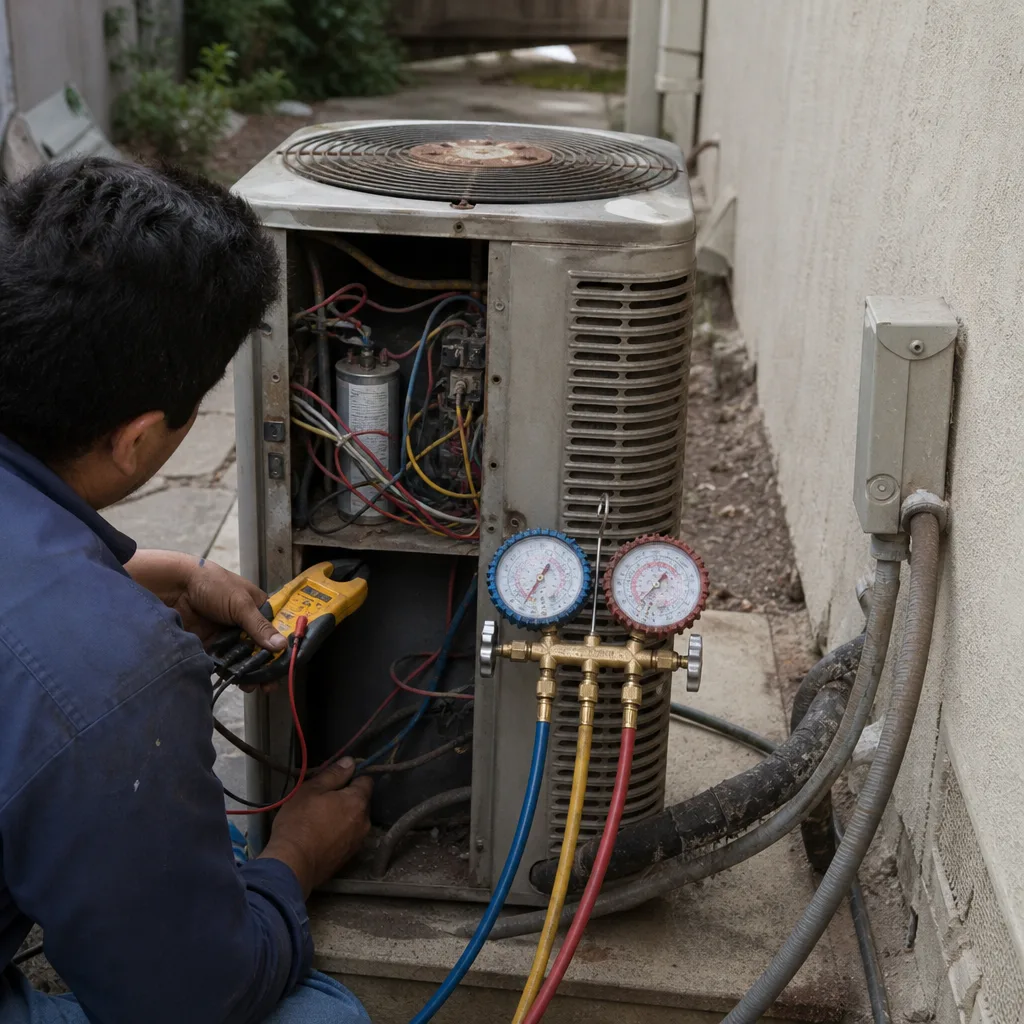 Before
 After
 Before
 After
 Before
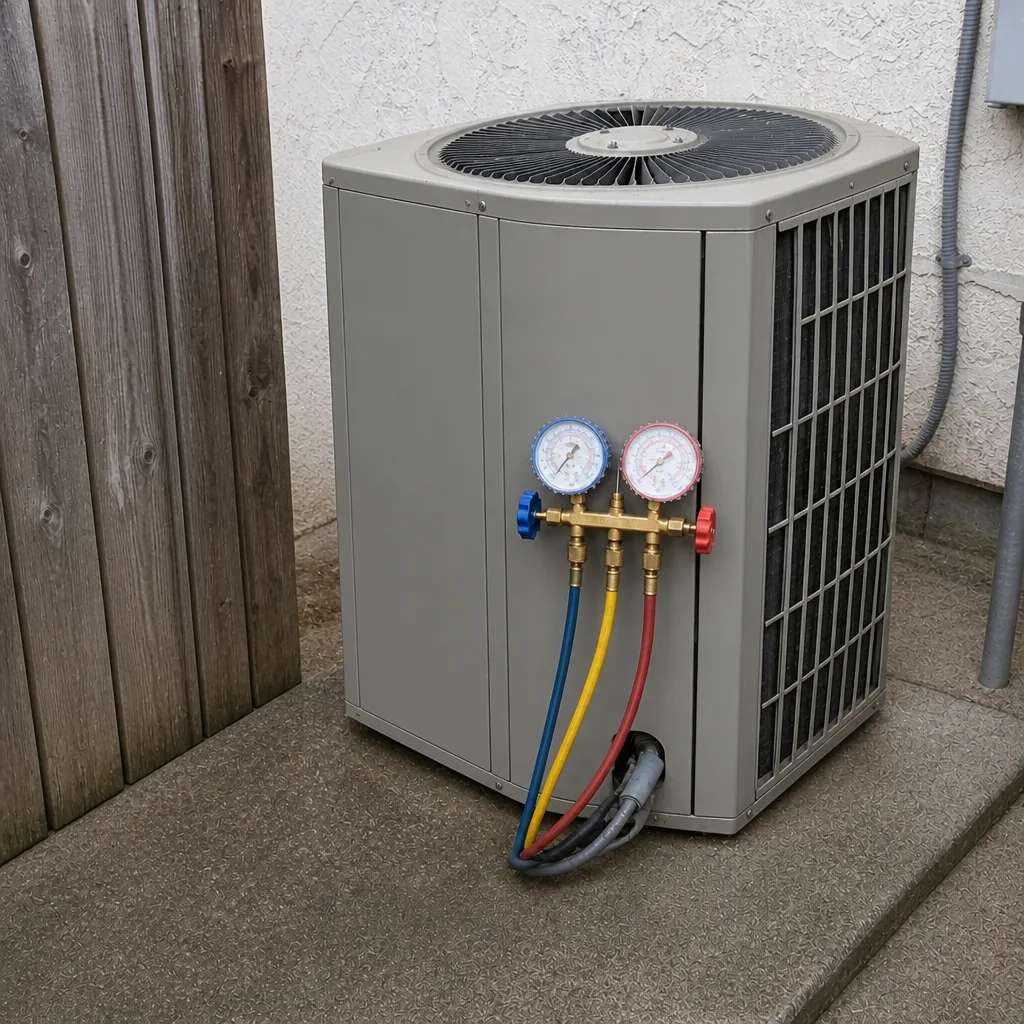 After
When to Call a Professional
Some HVAC issues are obvious: the system won’t turn on at all, the breaker trips repeatedly, or you smell burning from the furnace or see ice forming on the refrigerant lines. Others are quieter. A system that runs but doesn’t cool like it used to, a strange noise under the cabinet, a thermostat that won’t keep the set temperature, or a spike in your bill without any change in habits, all point to something a trained technician should look at. These are the moments to call, before a small problem becomes a failed compressor.
There’s also the safety side. Furnace work involves gas lines and combustion, and the electrical side of an HVAC system carries real voltage. If you smell gas or suspect a combustion problem, leave the house and call a professional rather than opening the panel yourself. For diagnostics and repairs, AC Repair Santa Clara offers free estimates in Santa Clara. Call (833) 439-0749. We answer 24/7. Fast dispatch from 7am to 7pm, Sunday through Friday.
Frequently Asked Questions
A typical full split-system replacement in Santa Clara runs roughly $7,500 to $14,500 installed in 2026, depending on equipment tier, housing complexity, and whether the air handler is in an attic or closet. The range reflects the difference between a straightforward like-for-like replacement and one that needs new duct work, a new line set, or platform modifications. The written estimate sets the final price. Call (833) 439-0749 for an exact quote, and estimates are free.
SEER2 is the current U.S. efficiency standard for residential HVAC equipment and it replaces the older SEER rating on newly sold units. For a Santa Clara homeowner, the practical change is that equipment is rated on a slightly stricter test, which means a mid-tier 16 SEER2 unit is roughly equivalent in operating cost to a higher legacy SEER rating. In this climate the honest recommendation is usually a mid-tier system installed correctly rather than the highest-efficiency box. Call us to compare the two tiers side by side.
We service Goodman, Rheem, York, and Daikin the same as Carrier, Trane, Lennox, Bryant, and American Standard. Our technicians are trained on all nine brands, and if your model has a known failure point, we recognize it. Call (833) 439-0749 for a free estimate.
Most full system replacements in Santa Clara require a permit and an inspection, and your contractor should include both in the written quote. The exact requirement depends on the scope of the work and the city’s current code, so confirm with the contractor and the city building department before signing. We pull permits as part of replacement quotes, and the cost appears as its own line item.
Rebate amounts and eligibility change year to year, and the federal tax credit depends on the equipment tier you install. What we can tell you is that the two can stack, and that the rebate paperwork needs to be completed correctly to qualify. Ask your contractor for the specific program names and check eligibility directly before relying on the amount. Call for a written quote that itemizes equipment so you know which tier you’re being quoted.
In most cases we can schedule same-day service for a failed system in Santa Clara, and a no-cooling call in warm weather gets priority. Call (833) 439-0749. We answer 24/7. A call outside dispatch hours is booked into the next opening, Sunday through Friday, 7am to 7pm. Dispatch is fast, and estimates are free.
The Bottom Line
HVAC pricing isn’t complicated once it’s broken down. Equipment accounts for the largest line on a replacement quote, labor follows closely behind, and permit and disposal fill the rest. Repairs are usually smaller than homeowners expect. The gap between contractors comes down to overhead structure, warranty terms, and how carefully the install is scoped to the actual house. A Santa Clara homeowner reading the four lines on a quote, asking where the return duct was measured, confirming the permit, and locking in the labor warranty has everything needed to compare bids honestly. Repair first, replace only when it makes sense, and never sign a quote that doesn’t show its work.
If you’d like to see what a real quote looks like for your home, call AC Repair Santa Clara at (833) 439-0749 for a free estimate. We answer 24/7. Fast dispatch from 7am to 7pm, Sunday through Friday. We work on your brand and we’ll show you the breakdown line by line.
Written by the team at AC Repair Santa Clara.